How to Use AI to Improve Your Sleep: A Practical Guide
AI can be a surprisingly good sleep coach, but a poor substitute for doing the work. Use it for the jobs it's good at — explaining sleep science, drafting a wind-down routine, debunking myths, and reviewing a sleep diary — while keeping diagnosis, treatment, and medical judgment with a qualified professional.
Medical disclaimer: This article is for general educational purposes only and is not medical advice. AI can support healthy sleep habits, but it cannot diagnose sleep disorders or replace qualified medical care. If you have persistent insomnia, loud snoring, gasping during sleep, excessive daytime sleepiness, or concerns about your mental health, speak with a healthcare professional.
Can AI really coach you to better sleep?
AI is suddenly being pitched as the answer to just about everything—including better sleep. Ask a chatbot why you're waking up at 3 a.m., how to build a bedtime routine, or whether your sleep tracker is telling the truth, and you'll probably get a thoughtful answer in seconds.
The catch? AI can be a surprisingly good sleep coach, but it's a terrible substitute for actually doing the work. Its real strengths are explaining sleep science, helping you build routines, debunking myths, and keeping you accountable. Diagnosis, treatment, and medical judgment still belong to qualified healthcare professionals.
That distinction matters because many people approach AI with the wrong expectation. They ask a chatbot to "optimize" their sleep, receive a polished answer, and feel as though they've made progress before changing anything in real life.
The research paints a more practical picture. Research suggests AI works best when it reinforces proven behavioral strategies instead of trying to replace them. Digital coaching, chatbot-guided habit change, and structured cognitive behavioral therapy for insomnia (CBT-I) programs all show encouraging results because they help people consistently perform the behaviors that already improve sleep.
Think of an AI sleep coach the way you'd think of a knowledgeable personal trainer who never gets tired of your questions. It can explain why a consistent wake time matters. It can help build a bedtime routine you'll actually follow. It can remind you of your goals after a stressful day.
It can't sleep for you.
And it definitely can't diagnose why you're sleeping poorly.
The best way to use AI is surprisingly simple: let it coach the process while you stay responsible for the decisions.
What an AI sleep coach actually is
An AI sleep coach isn't one product.
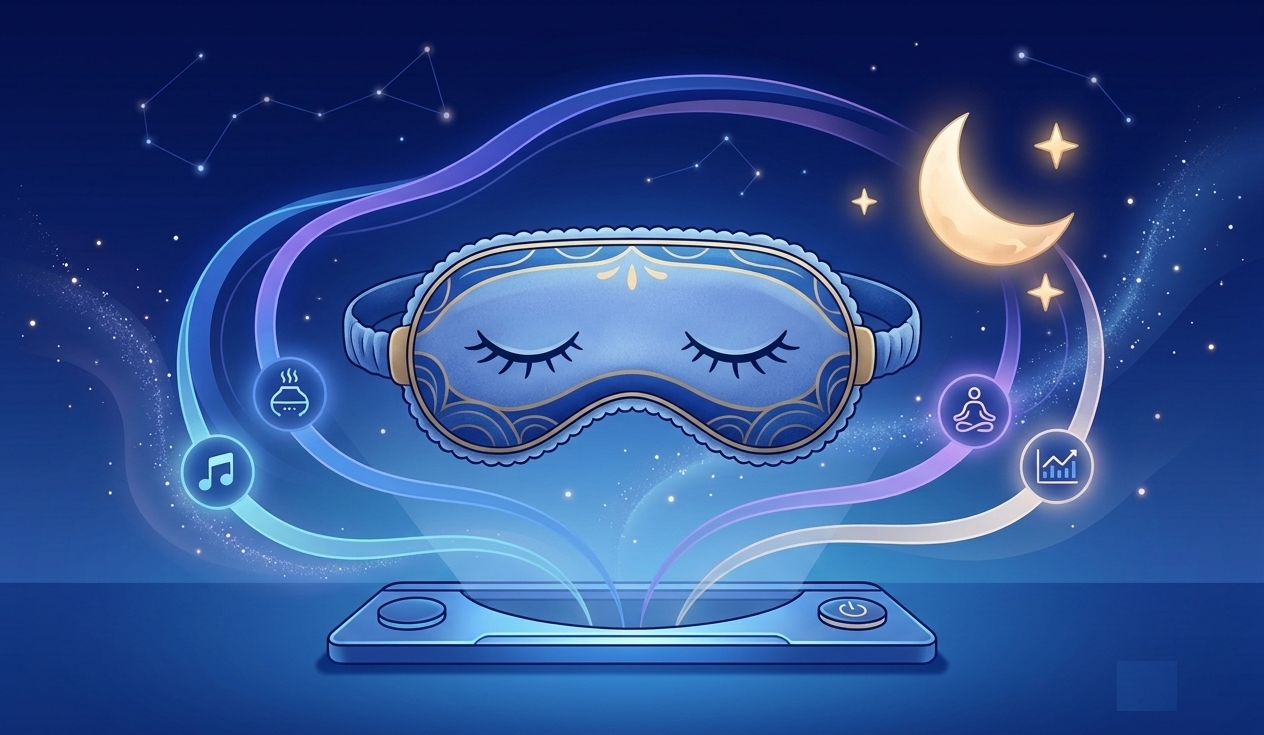
It could be a general chatbot that answers questions about sleep, a digital CBT-I program, a sleep app that helps you build routines, or software that combines wearable data with personalized suggestions.
Despite their differences, they all serve the same basic purpose: sleep coaching, not autonomous healthcare.
That's an important distinction if you're already exploring using AI to improve sleep. AI works best as a behavioral guide. It explains concepts, organizes information, suggests routines, and helps you reflect on patterns. It doesn't examine you, understand every aspect of your health history, or decide whether symptoms point to a medical condition.
If you're wondering how to use AI as a sleep coach, think of it as adding another source of accountability—not replacing your own judgment.
Most people don't need a more complicated sleep plan.
They need more consistency following a simple one.
The 5 jobs you can hand an AI sleep coach
Not every AI task deserves the same level of trust.
Some jobs are well suited to today's AI tools. Others still require a clinician—or at least a healthy dose of skepticism.
Job you hand the AI
Trust level
Why
Explain sleep science in plain language
HIGH
AI is generally good at summarizing established sleep concepts clearly.
Debunk a sleep myth you've heard
HIGH
It performs reasonably well at explaining evidence-based sleep information.
Draft a wind-down routine or AI bedtime routine
MEDIUM
Useful as a first draft, but you should personalize it to your schedule and preferences.
Reflect on your sleep diary and suggest patterns
MEDIUM
AI can spot trends, but don't overinterpret wearable sleep data or nightly scores.
Explain CBT-I concepts and help you practice them
MEDIUM
Helpful for understanding techniques, although structured digital CBT-I programs remain more effective than casual chatbot conversations.
Diagnose a sleep disorder
LOW
AI cannot examine you or recognize every medical red flag.
Personalize advice to your medical history
LOW
Consumer AI tools usually lack the context needed for truly individualized guidance.
Let's look at each of the higher-value jobs in more detail.
1. Explain sleep science (HIGH trust)
One of the best uses of an AI sleep coach is asking questions you've always wondered about but never bothered to research.
Instead of searching through dozens of articles, you can ask:
"Why does a consistent wake time matter more than sleeping in on weekends?"
or
"Explain sleep pressure and circadian rhythm as if I'm new to the topic."
This is one of AI's strongest uses. It can translate technical concepts into everyday language, helping you understand why certain habits work instead of simply telling you to do them.
That understanding often makes healthy behaviors easier to maintain.
Just remember that health information can occasionally be incomplete or incorrect. If the advice influences an important health decision, verify it using reputable sources instead of accepting every answer at face value.
2. Build your wind-down routine (MEDIUM trust)
Many people searching for using AI to improve sleep simply need help creating a realistic evening routine.
Rather than asking AI how to sleep perfectly, ask it something more practical:
"Help me build a 45-minute bedtime routine that fits someone who finishes work around 9 p.m. and wants less screen time."
That's a coaching request—not a medical one.
The first draft won't be perfect.
Maybe it suggests reading when you hate reading, meditation when you'd rather listen to relaxing music, or the BetterSleep Sound Mixer if relaxing audio helps you unwind. That's fine. Adjust the plan until it fits your life. The best routine is the one you'll actually follow.
3. Debunk sleep myths and answer questions (HIGH trust)
The internet is full of confident sleep advice. Some of it is excellent, and some of it simply isn't.
An AI coach can often help separate common myths from evidence, especially if you ask it to explain why something is true instead of simply giving you a yes-or-no answer.
For example:
"Do I really need exactly eight hours of sleep every night?"
or
"Is sleeping with the television on always harmful?"
These conversations can save you from chasing unnecessary rules that create more anxiety than better sleep.
4. Reflect on your sleep diary (MEDIUM trust)
Keeping a sleep diary remains one of the simplest evidence-based ways to understand your sleep.
AI can make reviewing it much easier.
After recording a week's worth of notes, you might ask:
"Here's my sleep diary. Can you summarize any patterns you notice and suggest one change to try next week?"
Notice the wording. Ask AI to notice patterns, not pronounce verdicts.
AI is often good at spotting trends that humans sometimes miss.
It's much less reliable when asked to determine why those patterns exist.
This is especially important if you're also feeding it wearable sleep data. Smartwatches and sleep trackers estimate sleep using indirect measurements, and those estimates aren't perfect. If the underlying data are inaccurate, the AI's recommendations can also be misleading.
Use wearable information as one piece of the puzzle—not the whole picture.
5. Help you understand CBT-I (MEDIUM trust)
Cognitive behavioral therapy for insomnia (CBT-I) is considered the first-line treatment for chronic insomnia.
An AI coach can't replace a structured digital CBT-I program or a qualified clinician, but it can help explain unfamiliar concepts.
For example:
"Explain stimulus control in CBT-I using everyday examples."
or
"Why does CBT-I sometimes recommend getting out of bed if I can't sleep?"
Those explanations can make established sleep strategies feel much less intimidating.
Used this way, AI becomes a tutor rather than a therapist—and certainly not a treatment.
Your 7-day AI sleep-coaching starter plan
If you're wondering how to use AI as a sleep coach, don't try to overhaul your life overnight. The goal isn't to build the perfect sleep system. It's to build one you'll actually follow.
Introduce one change at a time so you can tell what's helping without becoming overwhelmed.
Day
What to do
How AI can help
Day 1
- Choose a consistent wake time.
- Ask AI to help you build a realistic one-week sleep plan around that wake time.
Day 2
- Get outside for morning light shortly after waking.
- Ask why morning light strengthens your body clock and how much you realistically need.
Day 3
- Create a calming wind-down routine.
- Ask AI to draft an evening routine based on your schedule, then personalize it.
Day 4
- Start a simple sleep diary.
- Ask AI to organize your notes and summarize patterns without jumping to conclusions.
Day 5
- Evaluate one habit that's hurting your sleep.
- Ask AI to brainstorm practical alternatives that fit your lifestyle.
Day 6
- Review the week.
- Ask AI what trends it notices and suggest one small adjustment—not five.
Day 7
- Repeat what worked.
- Build next week's plan around the habits you actually maintained.
- Notice what isn't on this list.
- You're not changing your bedtime every night.
- You're not chasing perfect sleep scores.
- You're not asking AI to diagnose why you woke up twice on Wednesday.
- You're building consistency.
- That's where nearly every successful sleep routine begins.
- If you want to fall asleep faster or get more deep sleep, resist the temptation to keep redesigning your plan. A boring routine repeated every night usually beats an exciting new one every evening.
The tools: chatbots, apps, and wearable-fed AI
Different tools excel at different jobs.
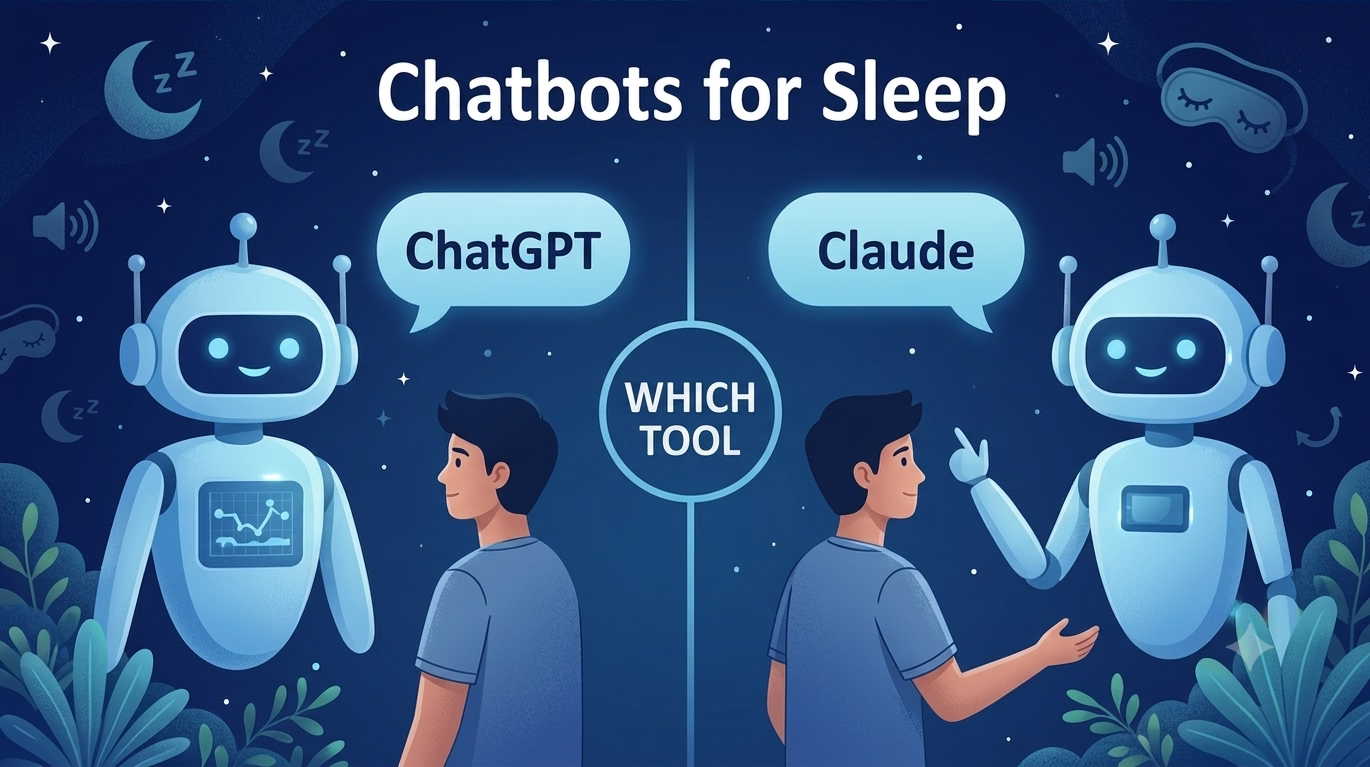
General chatbots are excellent for explanations, brainstorming, and answering questions about sleep. If you've wondered whether chatbots like ChatGPT or Claude can help you sleep, this is where they fit best: education, planning, reflection, and accountability—not diagnosis.
Digital CBT-I apps provide much more structured behavioral coaching. If chronic insomnia is your primary concern, they're generally a stronger choice than relying entirely on conversational AI because they follow evidence-based treatment frameworks.
Wearable-connected AI systems occupy the middle ground. They can summarize trends from your sleep tracker and identify long-term patterns, but remember that estimates from wearable devices aren't perfect. Treat those numbers as approximations rather than objective measurements.
Finally, remember that no dashboard improves your sleep on its own. Your routine does. AI should make that routine easier to maintain—not distract you from it.
Mistakes that make AI coaching backfire
Most problems with AI sleep coaching don't happen because AI is useless.
They happen because people ask it to do jobs it was never designed to perform.
The biggest mistake is over-trusting confident answers.
AI can sound remarkably confident even when the evidence is mixed or the advice doesn't apply to your situation. If a recommendation affects your health, medications, or whether you should seek medical care, verify it before acting.
Another common trap is obsessing over nightly sleep scores.
This sometimes contributes to what's known as orthosomnia—becoming so focused on achieving perfect sleep metrics that the pursuit itself creates stress. If you're checking your sleep app dozens of times each day, the technology may be undermining the behavior it's supposed to support.
It's also easy to chase noise in wearable sleep data. A single bad night's score doesn't necessarily mean anything meaningful happened. Look for patterns across weeks rather than reacting to every fluctuation.
Finally, avoid changing too many things at once.
If you introduce five new habits on Monday, you'll have no idea which one actually helped.
Change one thing.
Give it time.
Then decide whether it's worth keeping.
Keeping a human in the loop
Good AI coaching includes knowing when not to trust the coach.
Consumer AI tools don't know your complete medical history, medications, mental health, or life circumstances. Their advice is often broadly reasonable—but broadly reasonable isn't the same as personally appropriate.
Before acting on health-related recommendations:
- Verify important information using reputable medical sources.
- Don't use AI to diagnose yourself.
- Be cautious about uploading detailed personal health information.
- Remember that AI can summarize evidence but cannot examine you.
It can help organize your thinking.
You still make the decisions.
Where AI stops—and a clinician starts
An AI coach should never become a reason to delay medical care.
Speak with a healthcare professional if you experience:
- Persistent insomnia lasting weeks despite improving your sleep habits.
- Loud snoring, choking, or gasping during sleep.
- Excessive daytime sleepiness that affects daily life.
- Concerns about depression, anxiety, or other mental health conditions affecting your sleep.
- Questions about medications or underlying medical conditions.
AI can help you build healthier routines, but it can't tell you why those routines aren't working. That's where medical evaluation begins.
The bottom line
Using AI to improve sleep doesn't require complicated prompts or expensive technology.
It requires giving AI the right jobs.
Let it explain.
Let it organize.
Let it encourage.
But keep diagnosis, judgment, and medical decisions in human hands.
The coach can point the way.
You're still the one who does the reps—and that's where better sleep actually begins.
Frequently Asked Questions
How do I use AI as a sleep coach?
Use AI for the jobs it's good at and keep yourself in charge of the rest. An AI sleep coach can explain sleep science, help draft a realistic wind-down routine, answer questions about healthy sleep habits, and summarize patterns from a sleep diary. Then do the important part yourself: follow a consistent wake time, get morning light, and stick with your routine. Verify health-related advice before acting on it, and leave diagnosis and treatment decisions to a healthcare professional.
Can an AI sleep coach actually improve my sleep?
It can help—provided it's coaching behaviors that already have evidence behind them. Research suggests chatbot coaching and AI-supported CBT-I can improve sleep quality and help people stick with healthy sleep habits, although the newest generative AI studies are still small and preliminary. The biggest benefit comes from making proven routines easier to maintain, not from AI somehow "optimizing" your sleep on its own. Think of it as a coach that helps you stay consistent rather than a tool that fixes sleep automatically.
What shouldn't I use an AI sleep coach for?
Don't use AI to diagnose a sleep disorder or decide whether you need medical care. Consumer AI tools don't know your complete health history and can sometimes sound more confident than they should. Be cautious about relying too heavily on wearable sleep data, since inaccurate inputs can lead to misleading suggestions. If you have persistent insomnia, symptoms of sleep apnea, medication questions, or significant mental health concerns affecting sleep, consult a healthcare professional.
What's a simple way to start using AI for my sleep?
Keep it simple. Pick a consistent wake time, then ask AI to help you build a realistic bedtime routine around it. Keep a brief sleep diary for a week and ask AI to summarize patterns rather than explain every restless night. Make only one change at a time so you can tell what's helping. The goal isn't to create the smartest sleep plan—it's to build one you'll actually follow.