Can AI Chatbots Like ChatGPT or Claude Help You Sleep?
AI chatbots like ChatGPT and Claude can help with sleep as a knowledgeable librarian, not a doctor. They're good at explaining sleep science, debunking myths, and drafting a bedtime routine — but unreliable for diagnosis, can sound confident while wrong, and often give generic advice. Use them to learn, not to replace professional care.
Medical disclaimer: This article is for general educational purposes only and is not medical advice. AI chatbots cannot diagnose sleep disorders or replace care from a qualified healthcare professional. If you've had persistent insomnia, loud snoring, gasping during sleep, excessive daytime sleepiness, or other ongoing sleep concerns, seek medical evaluation rather than relying on a chatbot.
AI chatbots like ChatGPT and Claude can help with sleep—as a knowledgeable librarian, not a doctor. They're good at explaining sleep science, debunking myths, and drafting a bedtime routine. They're unreliable for diagnosis, can sound confident while being wrong, and often give generic advice that isn't tailored to your health history. Use them to learn, not to replace professional care.
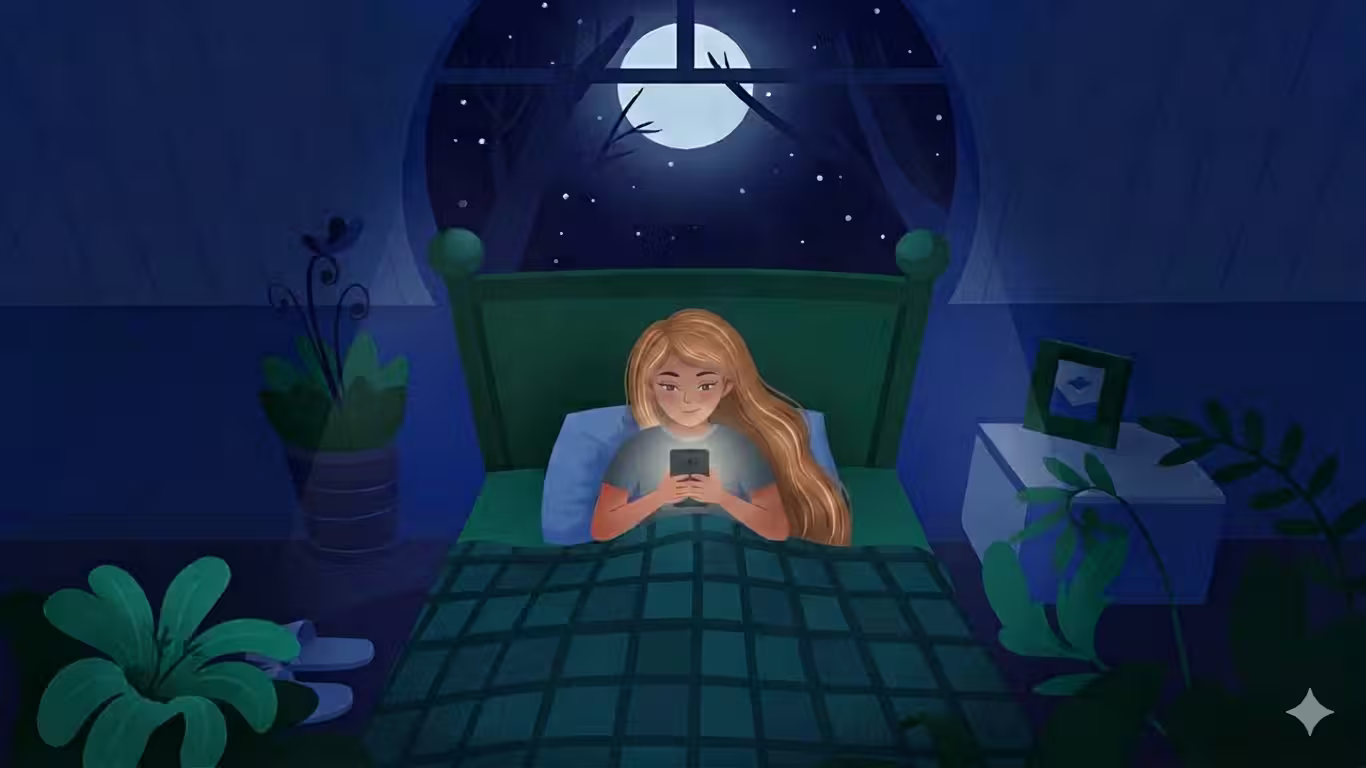
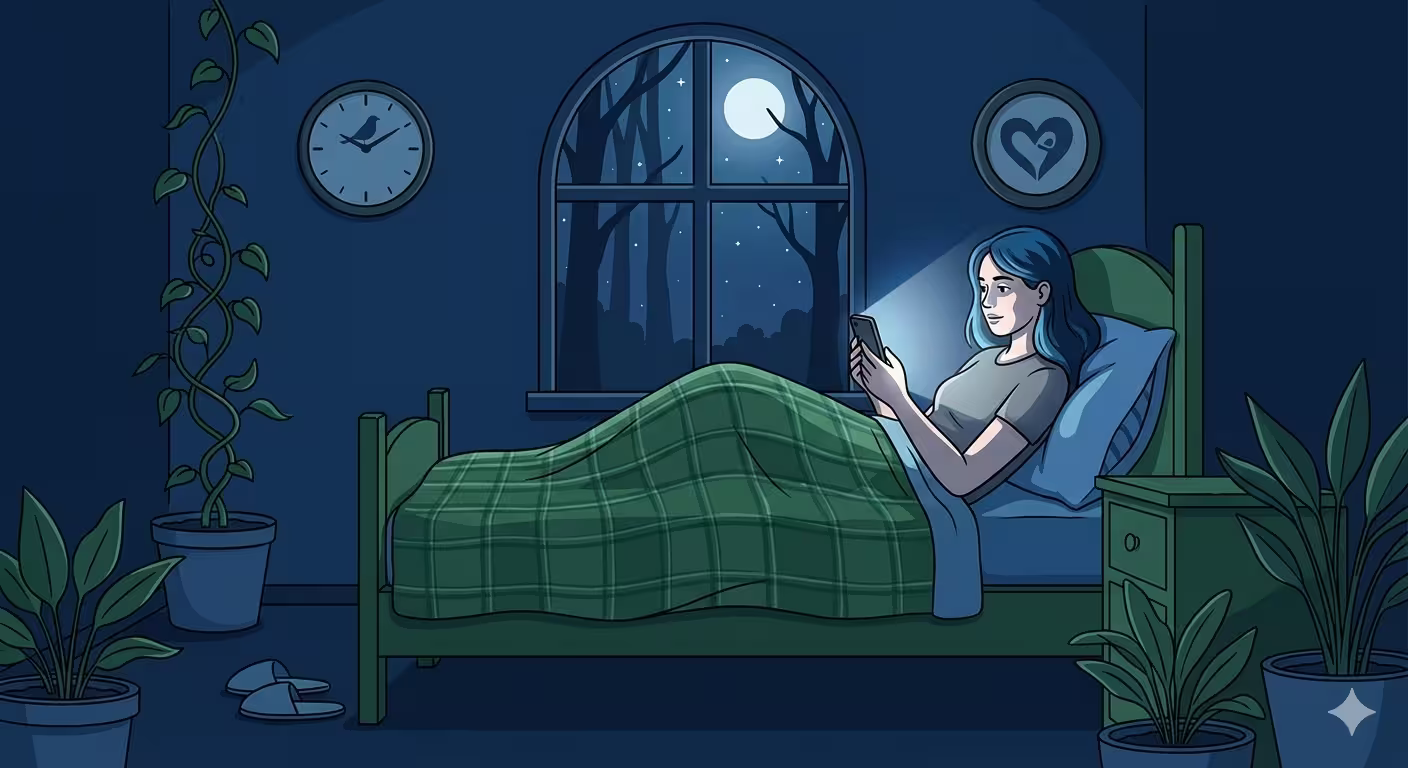
It's a question millions of people are already asking—sometimes literally by opening a chatbot and typing, "Why can't I sleep?"
Others ask for a bedtime routine. Some wonder whether afternoon coffee is ruining their sleep. Others want to know whether they have insomnia, or whether loud snoring means sleep apnea.
In many ways, it makes sense. Chatbots are available 24/7, don't judge, and can explain complex topics in plain language within seconds. When you're tired at two in the morning, that's an appealing combination.
There's nothing wrong with asking AI about sleep. Problems arise when people expect it to do a job it was never designed to do.
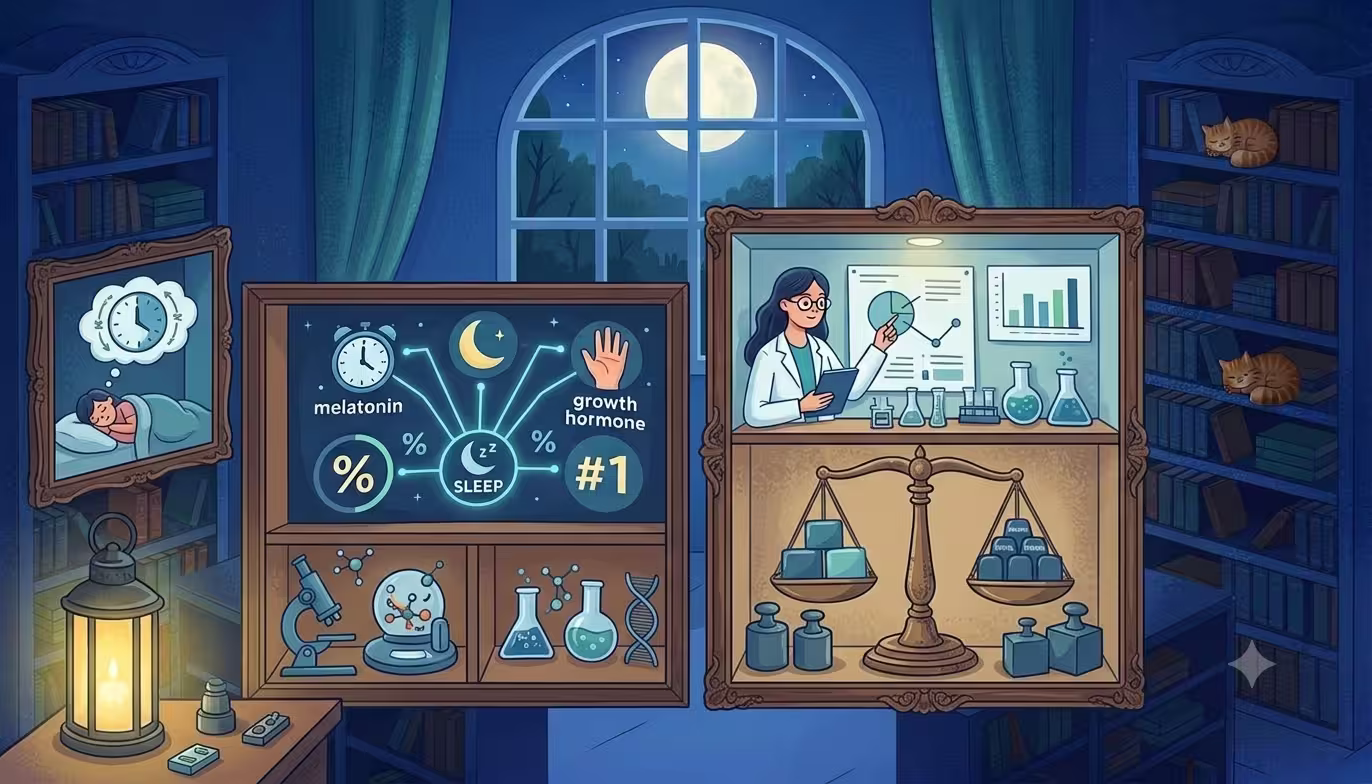
A more useful way to think about ChatGPT, Claude, and similar tools is as an exceptionally well-read librarian. Ask a librarian to explain how sleep cycles work, summarize cognitive behavioral therapy for insomnia (CBT-I), or point you toward reliable information, and you'll probably leave better informed. Ask that same librarian whether your symptoms mean you have sleep apnea, and you're asking the wrong person.
Used well, it can make evidence-based sleep advice more accessible. Used carelessly, it can encourage false reassurance, unnecessary anxiety, or misplaced confidence in answers that sound authoritative but aren't actually personalized—or even correct.
The difference lies in knowing where the line is.
Why people ask chatbots about sleep
Chatbots have become a first stop for everyday questions, including health questions. Sleep is no exception.
Unlike searching dozens of websites, you can describe your situation in conversational language and receive an immediate response. You can ask follow-up questions, request simpler explanations, or have the chatbot build a practical bedtime routine around general sleep-hygiene principles.
Many people simply want to understand why sleep matters, what REM sleep is, whether naps are helpful, or how CBT-I works. For those educational questions, conversational AI can be a useful starting point.
The bigger question isn't whether you should use AI for sleep information. It's how to use it realistically—and where its limits begin.
The important distinction isn't whether AI is "good" or "bad."
It's that it's good at one category of work and poorly suited to another.
Think back to the librarian metaphor.
A knowledgeable librarian can help you understand sleep science, recommend trustworthy information, explain unfamiliar terminology, and organize what you've learned.
They can't perform a medical examination, interpret your complete health history, or tell you whether your symptoms point to a specific disorder.
Neither can a chatbot.
Recognizing that distinction makes AI much more useful—and much safer.
What chatbots are GOOD at for sleep
Explaining sleep science
Sleep research can be surprisingly technical.
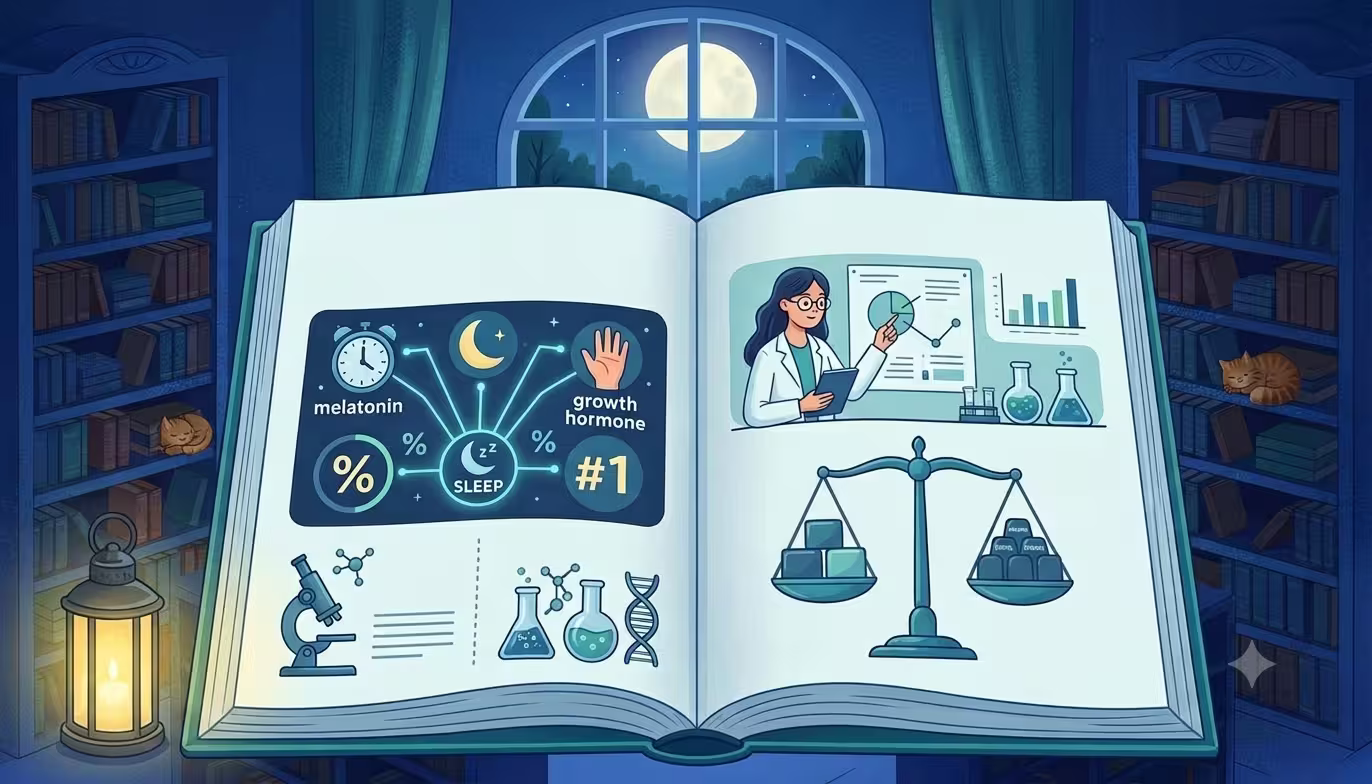
Chatbots excel at translating scientific language into explanations that are easier to understand. Whether you're trying to learn about circadian rhythms, sleep pressure, REM sleep, or why morning sunlight matters, they can usually explain the concepts clearly without requiring you to read multiple research papers.
Debunking common sleep myths
One of the more encouraging findings from recent research is that conversational AI performs reasonably well when asked to address common sleep myths.
Questions like:
- "Can I completely catch up on sleep during the weekend?"
- "Is everyone supposed to sleep exactly eight hours?"
- "Does alcohol help you sleep better?"
are often answered accurately because they rely on established sleep science rather than personal medical judgment.
That's a useful role.
Instead of spreading misinformation, a well-designed chatbot can help correct it—provided the information is based on reliable evidence.
Drafting a bedtime routine
Many people know they need a better bedtime routine but don't know where to begin.
A chatbot can help create a realistic first draft.
For example, you might ask it to build a 30-minute evening wind-down that includes dimming lights, reading, breathing exercises, or relaxing sounds.
The routine itself isn't magic.
The benefit comes from consistently following evidence-based habits rather than constantly wondering what to do next.
Similarly, a chatbot can explain the basics of CBT-I—the behavioral approach considered the first-line treatment for chronic insomnia—and help you understand concepts such as stimulus control or sleep restriction before you explore them further.
If you're looking for additional ways to build a relaxing evening routine, learning more about sleep meditation, deep sleep habits, or sleep stories can also help turn good advice into consistent practice.
Accessible, judgment-free learning
Some people feel more comfortable asking a chatbot basic sleep questions because it's always available, never impatient, and happy to explain concepts repeatedly.
That makes them a useful educational companion.
The important word is educational.
Once the conversation moves beyond learning into diagnosis or treatment decisions, you're asking the chatbot to do something outside its strengths.
What they're BAD at—and where the risks begin
They can't diagnose a sleep disorder
This is the biggest limitation, and it's the easiest one to forget.
You can describe your symptoms in remarkable detail, but a chatbot still can't examine you, observe your breathing during sleep, review your medical record, interpret a sleep study, or notice details that emerge during a clinical conversation.
That means it cannot diagnose insomnia, sleep apnea, restless legs syndrome, narcolepsy, or any other sleep disorder.
It can explain what those conditions are and summarize common symptoms. That's helpful. But if it tells you that you "probably have" a particular disorder—or that you definitely don't—that answer shouldn't be treated as a diagnosis.
Its advice is often generic—not personal
Good sleep advice is surprisingly personal.
The same recommendation may be sensible for one person and inappropriate for another, depending on age, medications, mental health, shift work, pregnancy, chronic illness, or other factors.
Even if you provide a great deal of background, they aren't performing the kind of comprehensive assessment a healthcare professional would. Recent evaluations of ChatGPT's sleep guidance have highlighted this limitation: the advice is often reasonable at a general level but not truly individualized.
That's why broadly useful recommendations—such as maintaining a regular sleep schedule, limiting caffeine late in the day, or creating a consistent bedtime routine—are usually the safest kind of AI sleep advice.
Once the recommendations become highly personalized or medical, caution becomes much more important.
AI can sound confident while being wrong
Perhaps the most unusual feature of modern chatbots is that they don't always communicate uncertainty very well.
An answer can sound polished, detailed, and completely convincing while still containing factual mistakes, outdated information, or conclusions that don't logically follow from the evidence.
Confidence isn't evidence.
Whenever a chatbot makes an important health claim, ask where the information comes from. Better yet, ask it to cite high-quality sources and compare those sources yourself whenever the decision could affect your health.
Treat certainty as something to verify—not something to trust automatically.
Think carefully before sharing sensitive health information
Another practical consideration is privacy.
AI companies continue to improve how they handle user data, but policies differ between platforms and evolve over time.
Before sharing detailed medical histories, medication lists, mental-health concerns, or other sensitive personal information, understand how the service says your conversations may be stored, reviewed, or used.
If you're uncomfortable sharing that information with an online service, there's a good chance it belongs in a conversation with your healthcare provider instead.
The safety question: Should you follow AI sleep advice?
The safest way to use a chatbot is as a starting point—not the final authority.
General behavioral advice is often well supported. Keeping a consistent sleep schedule, getting morning light exposure, limiting late caffeine, creating a relaxing bedtime routine, and understanding the basics of CBT-I are recommendations backed by decades of sleep research, not by AI itself.
A chatbot doesn't know whether an apparently minor symptom is actually a red flag. It doesn't know which medications you take unless you tell it, and even then it can't reliably judge every interaction or clinical nuance.
Think of AI as an adjunct to good sleep care rather than a replacement for it.
A useful habit is to ask the chatbot questions like:
- "What evidence supports this recommendation?"
- "Are there situations where this advice wouldn't apply?"
- "When would these symptoms mean I should see a doctor?"
- "Can you explain the uncertainty behind this answer?"
Those prompts encourage more balanced responses and make it less likely that you'll mistake general information for personalized medical guidance.
Most importantly, don't use AI to convince yourself that you don't need medical care. If your symptoms suggest something more serious, the chatbot should be the beginning of the conversation—not the end.
How to prompt a chatbot well for sleep
The quality of the answer often depends on the quality of the question.
Instead of asking:
"Help me sleep."
Try asking something more specific:
"Explain CBT-I in simple language and tell me which parts people can safely begin on their own."
Or:
"Draft a 30-minute bedtime routine based on good sleep hygiene, and explain why each step helps."
You can also ask the chatbot to improve its own answer:
"Explain when someone with these symptoms should see a healthcare professional instead of relying on AI."
These prompts encourage transparency rather than false certainty.
Equally important is knowing what not to ask.
Avoid questions like:
- "Do I have sleep apnea?"
- "Can you diagnose my insomnia?"
- "Should I stop taking my medication because it's affecting my sleep?"
Those questions require clinical judgment, not language generation.
And remember that reading about good sleep habits isn't the same as practicing them. A chatbot can help you design a wind-down routine, but you still need to follow it consistently. That's where dedicated behavioral sleep tools—guided relaxation, sleep sounds, meditation, and structured routines—can bridge the gap between knowing what to do and actually doing it.
If you're also comparing digital sleep tools, understanding what sleep-tracking apps can and can't reliably measure can help you decide where AI chatbots fit alongside dedicated sleep technology.
When to stop and see a clinician
A chatbot can explain symptoms, but it can't tell you what's causing them.
If you've had trouble sleeping for weeks, regularly wake up exhausted despite spending enough time in bed, snore loudly, gasp or choke during sleep, or notice sleep problems alongside anxiety, depression, or other mental-health concerns, it's time to speak with a healthcare professional.
Think of a chatbot as a way to become a better-informed patient—not as a substitute for an evaluation. The sooner an underlying sleep disorder is identified, the sooner you can start the treatment that's actually right for you.
The bottom line
ChatGPT, Claude, and similar AI chatbots can absolutely help you sleep better—but only in the right role.
Use them to understand sleep science, debunk myths, learn the basics of CBT-I, or build a sensible bedtime routine. Don't ask them to diagnose a sleep disorder or replace professional care.
And once you know what healthy sleep habits look like, BetterSleep can help you put them into practice with guided routines, relaxation exercises, sleep sounds, and other tools that make consistency easier.
Frequently asked questions
Can ChatGPT or Claude actually help me sleep?
Yes, within limits. Chatbots are good at explaining sleep science, correcting common myths, and helping you build a practical bedtime routine. They're useful for learning the basics of healthy sleep, but they can't diagnose sleep disorders, personalize advice to your full medical history, or guarantee every answer is correct. Think of them as a knowledgeable guide rather than a healthcare professional.
Can a chatbot diagnose my sleep problem?
No. A chatbot can't examine you, review a sleep study, or understand your complete medical history, so it can't diagnose conditions like insomnia or sleep apnea. If you have persistent sleep problems, loud snoring, gasping during sleep, or significant daytime fatigue, seek an evaluation from a qualified healthcare professional rather than relying on AI.
Is it safe to follow sleep advice from AI?
General advice about healthy sleep habits is often sensible because it reflects well-established sleep research. The risk is that chatbot responses are usually general rather than personalized and can occasionally be inaccurate despite sounding confident. Verify important health information with reputable sources and don't use AI to decide whether you need medical care.
What are good prompts to ask a chatbot about sleep?
Ask questions that help you learn rather than diagnose yourself. For example: "Explain CBT-I in simple language," "Create a 30-minute bedtime routine based on good sleep hygiene," or "Tell me when these symptoms would mean I should see a doctor." Asking for reputable sources and the limitations of the advice usually leads to better answers.