Anxiety at Night: Why It Happens and How to Calm It
Medically reviewed by Jared Meacham, PhD, RD, CSCS and Patricia Weiser, PharmD
There’s nothing worse than being exhausted after a long day, only to lay down and have your anxiety go into overdrive. Here’s why anxiety at night happens and some ways to put your mind (and body) at ease.
I often joke that my brain is an overachiever because it’s constantly on—usually to worry over something that already happened (hello random embarrassing memories from years ago) or to prepare for possible worst case scenarios. My calming bedtime routine usually allows me to unwind, but sometimes those racing thoughts just won’t go away—and on a really bad night, they even get louder. If your brain is also part of the always-on club, you might find yourself asking, “Why does my anxiety get worse at night?”
There are a few potential reasons for this, ranging from the mind not having any other tasks to distract it at night, to circadian rhythm issues that raise cortisol. Certain habits, like scrolling on your phone right before bed or an evening espresso, may cause an anxiety spike, too.
Ahead, we’ll dive into all the potential causes and sleep-friendly habits that may lessen anxiety at night in the long-term. This guide also contains quick calming techniques that can work right now, which may be especially helpful for anyone reading this late at night due to anxiety-induced insomnia.
Why Do I Get Anxiety at Night?
Before we get ahead of ourselves, let’s take it back to psychology 101: what is anxiety? It’s often described as the feeling of excessive worry, distress, or fear. Often, anxiety makes it difficult to get through your to-do list. And when you do carve out time to unwind and disconnect from the daily stressors, anxious thoughts may not let you. It can also manifest as physical symptoms, such as tense shoulders or knots in your stomach.
Anxiety can occur occasionally or be a disorder that causes symptoms most days. No matter which camp your anxiety falls into, those worries often get louder at night. In fact, about 50% of those with anxiety also suffer from insomnia, persistent difficulty falling or staying asleep.
“At night, when our brains finally slow down, the quiet can make worries that were dismissed throughout a busy day louder,” says Holly Batchelder PhD PLLC, a clinical psychologist who specializes in anxiety, “When our mind is still, it may start to replay stress or unfinished thoughts.”
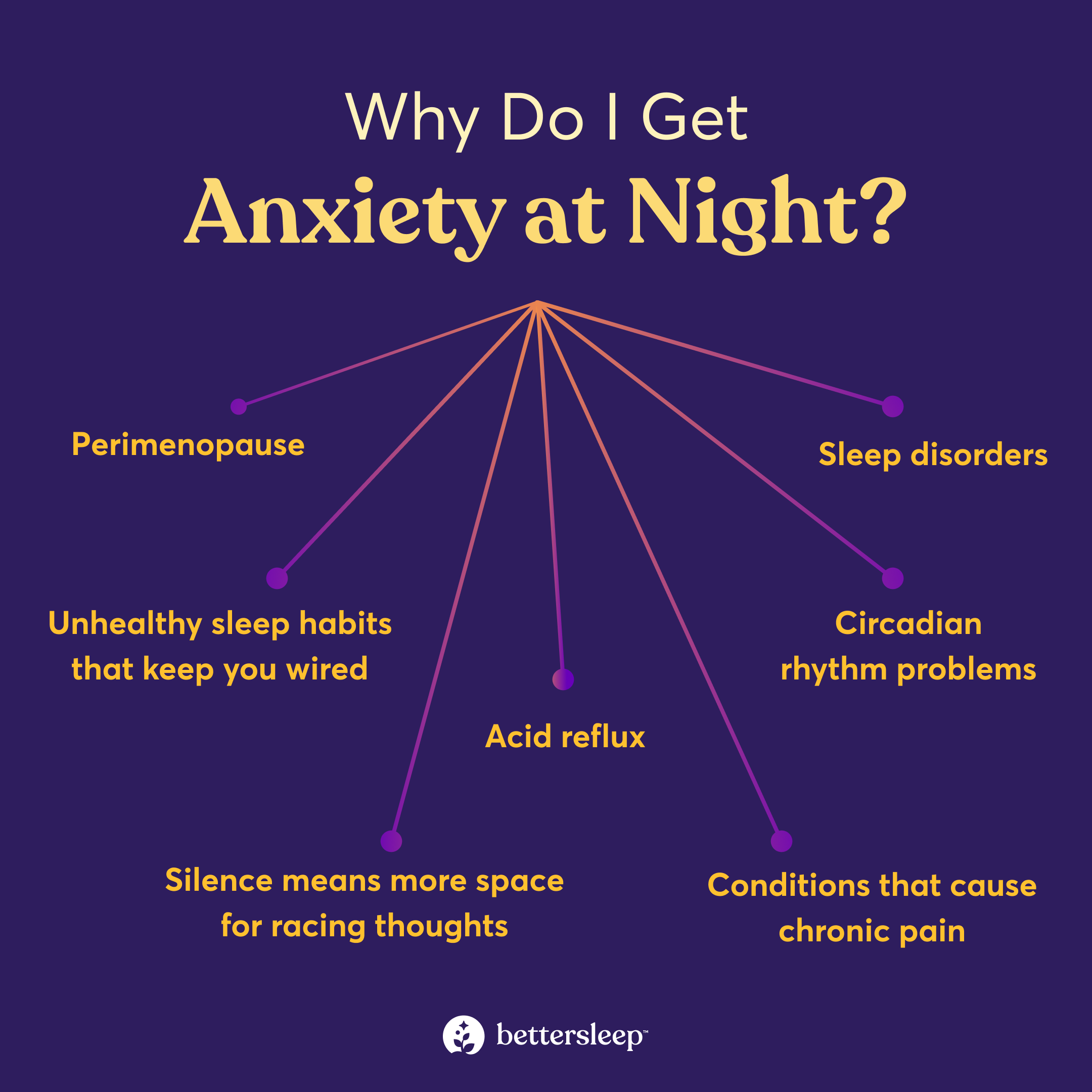
The silence isn’t the only factor working on behalf of nighttime anxiety. Anything that makes it hard to fall or stay asleep creates space for those racing thoughts. Sleep anxiety’s favorite coworkers include:
- Circadian rhythm problems: Cortisol, known as the stress hormone, naturally increases and decreases throughout the day as part of our circadian rhythm (the sleep/wake cycle). This hormone should dip at the beginning of sleep and rise 7-9 hours later to wake us up. However, when cortisol is disrupted, especially when it’s too high, that cycle is also off. “Biologically, cortisol levels also shift at night, which can make us feel more on edge if our stress system is already sensitive,” explains Dr. Batchelder. Common causes of high cortisol include extreme mental or physical stress, a medical condition that disrupts normal cortisol production, such as a tumor or Cushing’s syndrome, and the use of some medications, including steroids.
- Unhealthy sleep habits: Alcohol, heavy meals, caffeine, and even scrolling socials right before bed can make it harder to fall (and stay) asleep. Difficulty sleeping plus a quiet environment equals a ripe opportunity for worries to have their moment.
- Perimenopause: The years leading up to the final menstrual cycle are called perimenopause. During this time, estrogen levels dip, which may cause hot flashes and night sweats that make it difficult to fall or stay asleep.
- Acid reflux and gastroesophageal reflux disease (GERD): Acid reflux refers to the heartburn sensation and other symptoms caused by stomach contents flowing backwards up the digestive tract. GERD refers to chronic acid reflux. If someone eats too close to sleep, reflux can act up at night, making it difficult to fall asleep and leading to more sleep disruptions.
- Sleep disorders: Sleep apnea, restless leg syndrome, and other sleep disorders make it difficult to fall and stay asleep.
- Conditioned wakefulness: If we often engage in non-sleep related behaviors in the bedroom, it can condition us to be in an awake state when we’re in bed. That means it’s probably best to move those morning work-in-bed sessions to the kitchen table or couch.
- Chronic pain: Somewhere between 67-88% of people with chronic pain report insomnia or that they experience sleep disruptions. People with chronic conditions are at a higher risk for developing anxiety or depression, creating a perfect storm for nighttime anxiety.
Spot the Pattern: Sleep Anxiety vs. Nocturnal Panic
So far, we’ve mostly touched on sleep anxiety, aka the dread, racing thoughts, and restlessness that make it difficult to fall asleep. But most of us have probably also experienced a nightmare so realistic, we jolted awake, heart pounding and short of breath. At least for me, the relief after waking from a nightmare is immediate, and it’s easy to drift back into sleep.
That same experience without a nightmare to trigger it or when there isn’t immediate relief after waking is referred to as nocturnal panic. It usually stems from a panic disorder, which is a condition where someone has sudden, extreme bursts of worry or fear that peak within a few minutes.
Both panic disorders and sleep anxiety are rooted in fear and worry, but they aren’t the exact same thing (and may require different treatments). If you are confused about which you have or curious if you have both, track the timing and triggers of your anxious feelings at night and consult a healthcare provider. The BetterSleep app includes a tool to track this easily, or you can DIY it and use the notes app on your phone.
Calm It Now: What Helps During Nighttime Anxiety
While it’s great to find out why you get anxiety at night, the answer to that question probably won’t help in the moment. The next time you find yourself wide awake, thoughts racing, here’s how to calm anxiety at night ASAP:
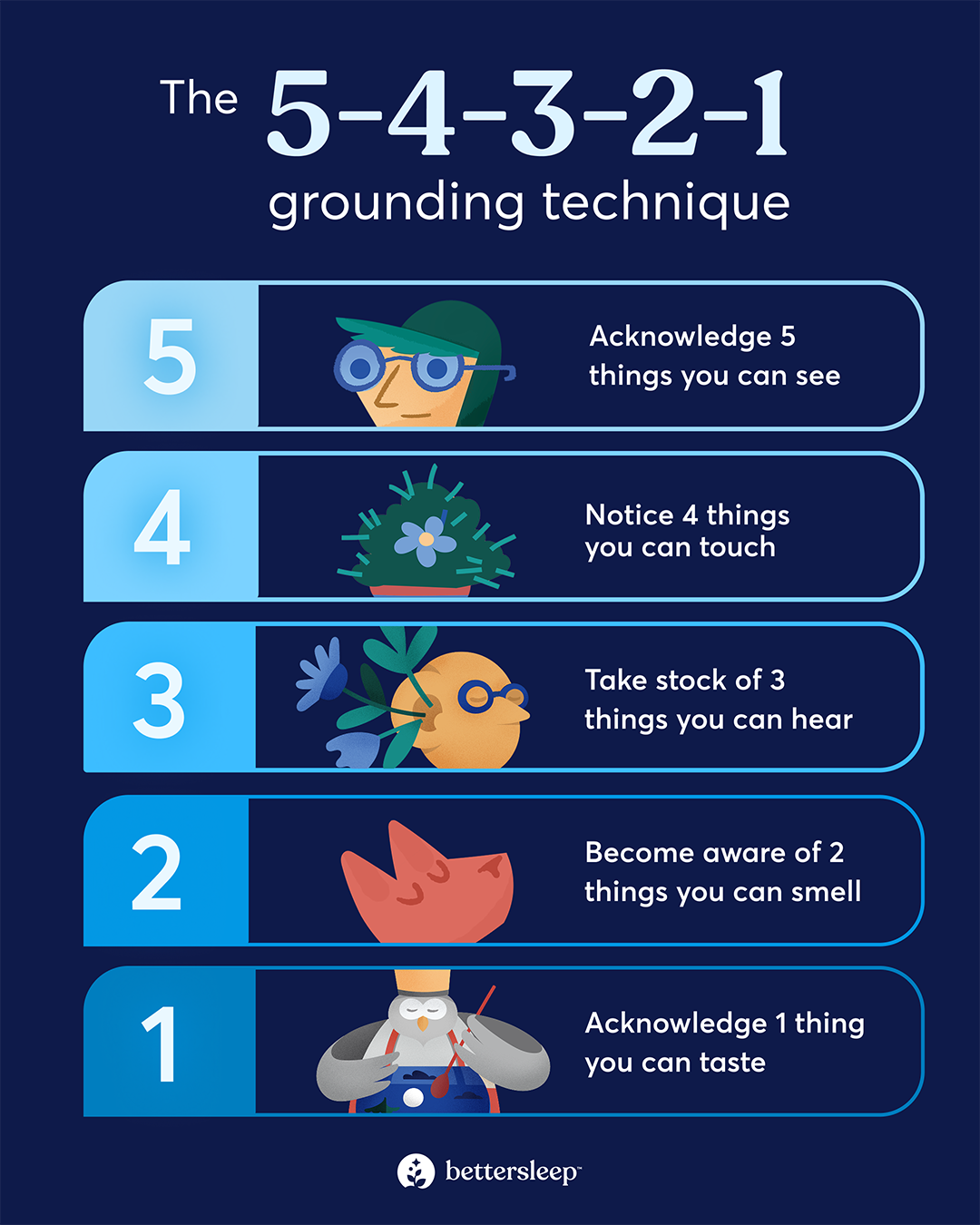
- Grounding: “The 5-4-3-2-1 grounding tool is a great way to focus on what you see, hear, and feel in the moment,” says Dr. Batchelder. With this technique, you notice five things you can see, four things you can feel, three things you can hear, two things you can smell, and one thing you can taste. This tool aims to ground you into the present moment and to get you out of your head.
- Cognitive shuffling: 15 years ago, Dr. Luc Beaudoin developed this technique to shift focus from anxiety to more calming or peaceful thoughts. To try cognitive shuffling, pick a random word like flower or light. Break it down by each letter and think of another word that starts with each letter. Keep going until the randomness takes the focus off the anxious thoughts.
- Progressive muscle relaxations: “Body scans and progressive muscle relaxation are also great tools to help calm anxiety in the moment,” says Dr. Batchelder. With these strategies, you focus on one body part at a time, relaxing it fully before moving onto the next. John Hopkins’ video guide offers insight into what this looks like.
- Breathwork: A structured breathing exercise can lower anxiety’s mental and physiological symptoms (faster heart rate, shallow breaths, etc.) of anxiety. The 4-6 breaths (where you breathe in for four seconds, out for six) or boxed breathing (where you breathe in four seconds, hold for four, breathe out for four, and pause for four seconds before inhaling again) are two popular structured breathing formats. The BetterSleep app has even more guided breathwork sessions designed specifically to help you sleep.
- Get out of bed after 15–20 min of spinning: If 15-20 minutes pass and still no luck, getting out of bed and doing a low-stimulation task in dim light may help. Personally, I turn to my current read or play calming music if I can’t sleep, but any tranquil activity may help.
How to Calm Anxiety at Night in the Long-Term
If trying to improve physical health, you may commit to specific habits, like working out three times a week or meal prepping healthy meals each Sunday. Likewise, consistent practices also help improve sleep health.
Daytime habits that lower night anxiety
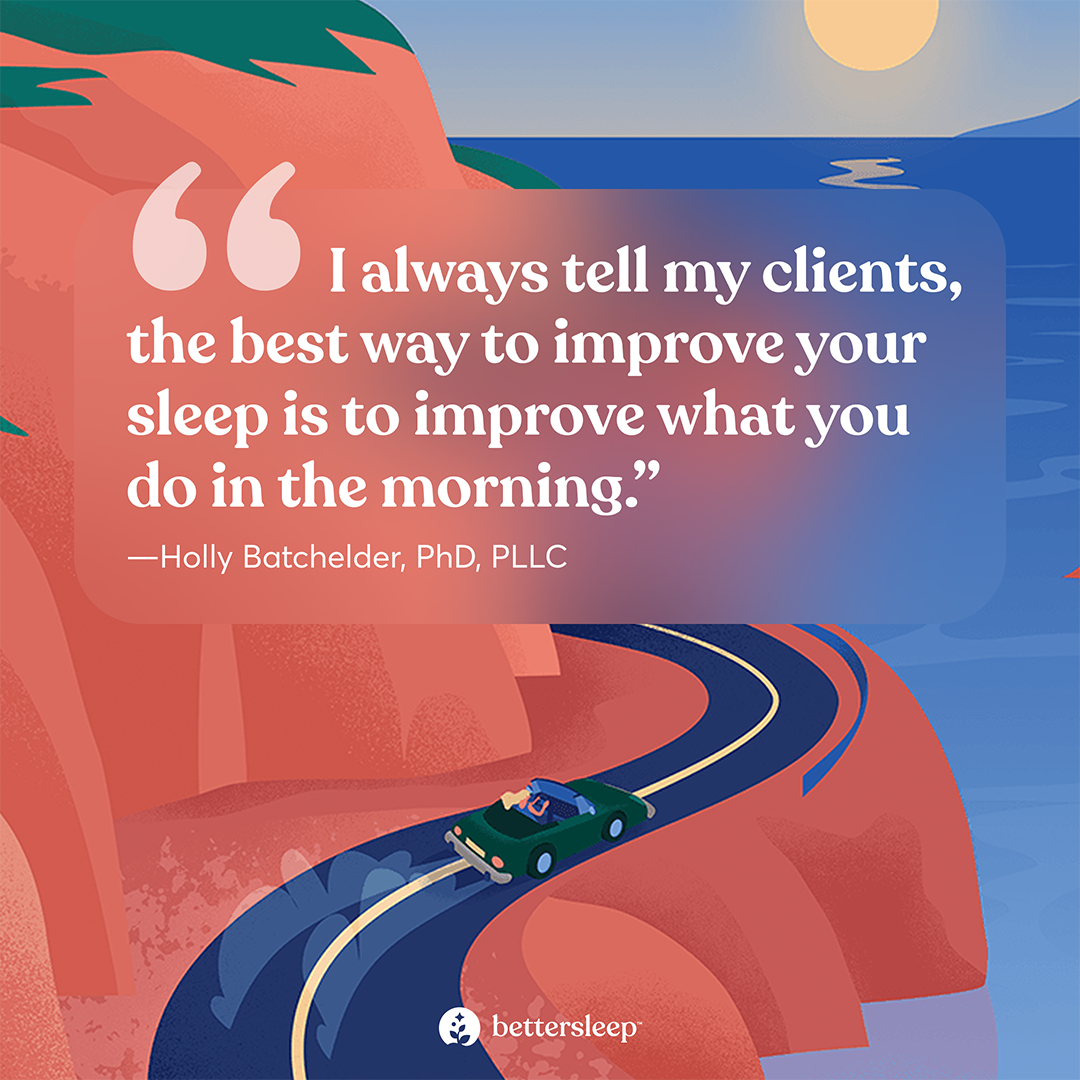
To reduce sleep anxiety, you may have to do something counterintuitive: look at your day time routine. “I always tell my clients, the best way to improve your sleep is to improve what you do in the morning,” says Dr. Batchelder. The morning is a great time to regulate your circadian rhythm, the body’s internal sleep-awake clock, and to set the tone for a low-stress day and night.
Specific daytime habits Dr. Batchelder recommends are:
- Morning sunlight and movement: “Get morning sunlight and light exercise upon waking,” says Dr. Batchelder, “This helps regulate your circadian rhythm.”
- Set a wake-up time: Waking up at the same time each day can help your body adjust to a routine sleep schedule—and yes, this includes the weekends too.
- Find time to worry: Dr. Batchelder mentions that setting a “worry time” can decrease anxiety at other times, including right before bed. Set a designated time, such as noon or 2pm each day, to journal, silently reflect, pray, or discuss your worries with a loved one. This time can be brief (less than 30 minutes) and shouldn’t be too close to bedtime.
- Exercise: Daily movement can help the body’s circadian rhythm and reduce stress and anxiety. Just make sure you don’t exercise too close to bedtime since workouts make you more alert in the hours immediately after.
Design a wind-down that works
Now to the tip that is somewhat obvious but can make a world of difference: develop a calming evening routine. Below are some examples of wind-down activities to try 90, 60, and 30 minutes before you’d like to sleep.
90 minutes before bed
- Dim lights
- No intense exercise (a light stretch is ok and may even help you calm down)
- No deep work
- Warm shower or bath
60 minutes before bed
- Turn screens off or to night mode
- Prep tomorrow’s to-do list
- Journal— a worry dump may help get all those anxious thoughts out of your head
30 minutes before bed
- Do a breathing exercise
- Put on pink/white noise if you use it
- Make sure your bedroom is cool, dark, and quiet
- Do something relaxing, like reading a book
Food and drink
So much of life boils down to timing, including when to eat and drink. If you’re having a coffee at 4pm to carry you through the end of the day, for example, it may make it difficult to calm your brain when it’s time to sleep.
Specific food and drink to enjoy in moderation or earlier in the day are:
- Caffeine: Ideally cut off five hours before bed at the latest.
- Alcohol: Drinks with alcohol can spark heart rate and blood sugar, making it difficult to fall or stay asleep.
- Heavy foods: Ultra-processed, sugary, or high-fat options like hamburgers or ice cream may make it difficult to fall asleep if eaten too close to bedtime.
A Calming Environment
Last but not least, cultivate a bedroom that calms you. This may include keeping the bedroom cool, using breathable bedding, and turning on continuous pink/white noise to mask any startling or disruptive sounds. Many people also find it useful to have a dim or warm light setting on bedroom lights that they can turn on right before bed.
Diagnosis and Treatment Options
If sleep anxiety persists, consider seeing a therapist who specializes in anxiety or sleep disorders or a sleep medicine specialist. They can help get to the bottom of what’s causing your symptoms and create a treatment plan.
That plan may include:
- Cognitive behavioral therapy for insomnia (CBT-I): This approach unpacks the reasons and feelings behind specific sleep-related actions and behaviors. Dr. Batchelder often uses CBT-I with patients since it specifically targets anxious thoughts or behaviors around sleep.
- Acceptance and commitment therapy (ACT): This therapeutic approach uses mindfulness and acceptance to change someone’s perception of thoughts or emotions. Dr. Batchelder explains, “ACT helps people stop fighting their thoughts and refocus on rest.”
- Mindfulness-based approaches: Mindfulness is the practice of grounding oneself in the present moment instead of drifting to the worries and what-ifs. A therapist can help you develop mindfulness practices.
When to Seek Care
“If anxiety keeps you awake several nights a week, causes panic, or you start dreading bedtime, it’s worth checking in with a therapist or sleep specialist,” says Dr. Batchelder. This is especially true if you’ve tried some of the tips above and haven’t experienced any improvement in the following weeks.
Depending on your physical symptoms, it may make sense to also ask a primary care provider or sleep specialist to screen you for sleep apnea, restless leg syndrome, acid reflux, or chronic conditions that cause pain. Perimenopause may also contribute to anxiety at night for women in their 40s or late 30s.
Working with a healthcare provider
Once a healthcare provider has figured out why you’re anxious at night and diagnosed any underlying medical conditions, they’ll help you develop a treatment plan that may include:
- Starting a sleep diary: It may be beneficial to track triggers, symptoms, and sleep quality in a physical diary or digitally.
- Build skills to address anxiety: Often, this is done through therapy sessions and “homework” that helps you practice what you learn.
- Environment and habits: A healthcare provider may offer support in developing a calming sleep environment and long-term habits that calm the brain before bed.
- Medications: If necessary, a healthcare provider can prescribe medications for anxiety or any other underlying conditions.
The Bottom Line
If anxiety is keeping you awake, there are calming techniques that help in the moment, such as breathing exercises or progressive muscle relaxation. Long-term strategies to create a more calming day and nighttime routine may stop nighttime anxiety from becoming a regular visitor. Sleep specialists and therapists can also provide additional support if at-home strategies aren’t working on their own.
Key Takeaways
- When anxious at night, turn to techniques that calm racing thoughts. This could include progressive muscle relaxation, grounding techniques, or breathing exercises, like the ones on the BetterSleep app.
- To stop nighttime anxiety from returning, invest in a calming nighttime routine and daytime habits that help relieve overall stress and anxiety.
- A therapist or sleep specialist can provide additional support if these techniques don’t calm anxiety on their own.
Frequently Asked Questions (FAQs)
Why does my anxiety increase at night?
Anxiety can increase at night for various reasons, including the fact that when we try to sleep, our brains don’t have other tasks to distract them from anxious thoughts. Some physical health conditions and disruptions to our natural circadian rhythm may also make us more jittery when trying to fall asleep. Additionally, certain habits, like scrolling on your phone right before bed or having caffeine in the evening, can make anxiety spike at night.
What is the 3-3-3 rule of anxiety?
The 3-3-3 rule is a grounding technique to help get you out of your anxious thoughts and ground into the world around you. With this technique, you notice three things you can see, three you can hear, and three things you can touch or feel.
What are the signs of sleep anxiety?
The most common sign of sleep anxiety is not being able to fall asleep at night. Usually this is accompanied by racing thoughts or intrusive, difficult to get rid of fears or worries. Signs may also include physical symptoms, such as a fast heartbeat, shallow, quick breaths, and feeling wired.
Is sleep anxiety curable?
Sleep anxiety can be addressed through calming breathing techniques and mindfulness practices. Addressing the underlying cause through therapy or the use of anti-anxiety medications and developing a calming nighttime routine may help sleep anxiety go away.