Stress Management for Sleep: A Guide to Calming Your Mind
Stress and sleep are biologically linked through the body's HPA axis, or stress command center. When you experience chronic stress, your body continuously releases the hormone cortisol, keeping your nervous system in a state of 'fight-or-flight' hyperarousal. This elevated cortisol level at night makes it difficult for the brain to switch off, preventing you from falling into the deep, restorative sleep needed for mental and physical recovery. Effective stress management techniques work by calming this system, reducing cortisol, and signaling to your brain that it is safe to rest.
Introduction
Does this sound familiar? You’re lying in bed, eyes wide open, your mind replaying tomorrow’s to-dos and yesterday’s regrets. As you lie there, stress increasingly creeps into your brain, whispering doubts and stealing the rest your body craves. No, it’s not just “in your head”. Science clearly shows that stress and sleep are biologically intertwined.
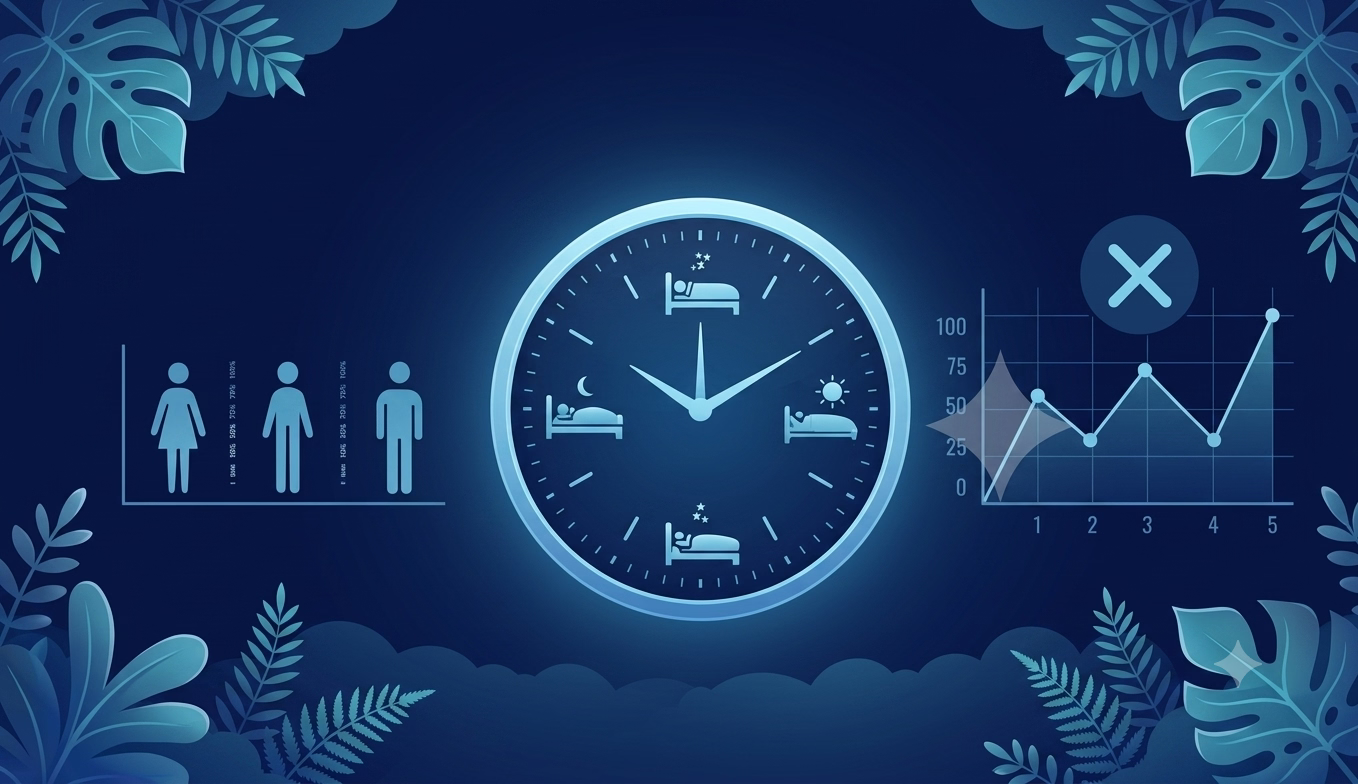
Rest assured that this experience is hardly random — nor is it your fault. Research shows that stress and sleep are tightly interconnected. In fact, one cross-sectional study found that over 75% of participants reported high stress levels alongside poor sleep quality — a powerful reminder that stress doesn’t just affect your mood; it directly affects your ability to sleep.
As neuroscientist Dr. Matthew Walker, PhD, explains:
“Stress and sleep are intricately linked. You can’t address one without addressing the other. Think of them as two sides of the same coin of well-being. Chronic stress leads to a state of hyperarousal, making it impossible for the brain to switch off and enter deep, restorative sleep.”
Which is exactly why stress management matters. Not only for your emotional well-being, of course, but for your long-term health and ability to sleep at night.
In this guide, you’ll learn:
- 🧘♀️ Healthy stress management techniques you can use both day and night
- 🌬️ Relaxation techniques for stress management that shift your nervous system into calm
- 🧠 How stress disrupts your sleep architecture
- 💪 Lifestyle adjustments that support resilience and smoother sleep cycles
- 🧘 Proven stress management techniques for sleep you can start tonight
- 👩⚕️ When deeper support (like CBT-I) is essential
- 📱 How tools like BetterSleep can support your wind-down routine
By the end of this article, you’ll have a realistic, science-backed plan to calm your mind, relax your body, and the exercises and understanding you’ll need to finally start sleeping well again.
So, let’s get started.
🧠 Section 2: The Vicious Cycle of Stress and Sleep
If you’ve ever felt tired yet completely unable to fall asleep, you already know how stress and sleeplessness can create a loop that’s often pretty hard to break. That’s because stress activates your body’s emergency systems, and poor sleep, in turn, increases your sensitivity to stress the following day. Give it enough time and this cycle becomes self-reinforcing. And that’s the last thing you need when you’re suffering prolonged periods of stress.
To break that cycle, you need to understand what’s happening inside your body.
The HPA Axis: Your Body’s Stress Command Center
At the core of the stress response is the hypothalamic–pituitary–adrenal (HPA) axis, a hormonal command system that determines whether your body should stay alert or begin relaxing into sleep.
Here’s how the process unfolds:
- You encounter a stressor (a deadline, conflict, memory, etc.).
- The hypothalamus releases CRH.
- The pituitary gland produces ACTH.
- ACTH signals the adrenal glands to release cortisol.
- Cortisol keeps you sharp, vigilant… and very much awake. 😬
Now this is certainly useful during emergencies, but when your stress becomes chronic, cortisol remains elevated long into the evening, disrupting your natural wind-down process.
As Dr. Aric Prather, PhD, explains:
“Chronic stress puts the HPA axis on high alert, constantly releasing cortisol. This is like trying to sleep next to a blaring fire alarm all night. Your brain simply can’t get the signal that it’s safe to rest deeply.”
One 2016 review on the 24-hour rhythm of the stress system solidly demonstrated how disrupted cortisol patterns, like those seen with chronic stress and irregular sleep–wake cycles, interferes with normal sleep–wake transitions and the nighttime hormone rhythms supporting restorative sleep.
That’s why calming the stress response is one of the most effective stress management techniques for sleep out there.
The Fight-or-Flight Switch That Won’t Turn Off
Your sympathetic nervous system (SNS) — the body’s “fight-or-flight” system — activates any time your brain perceives threat. It increases heart rate, sharpens attention, and pumps your body full of energy.
The problem?Modern stressors, like emails, fights on social media, and overthinking the small stuff, trigger the same biological system as physical danger.
Chronic SNS activation leads to:
- elevated heart rate
- racing thoughts
- muscle tension
- difficulty winding down
- delayed sleep onset
If your SNS is still active at bedtime, your body simply can’t make the shift into parasympathetic “rest-and-digest” mode. The more nights this happens, the more your brain starts to associate nighttime with alertness instead of sleep.
Studies show that ongoing stress not only delays the onset of sleep (longer sleep latency) but also fragments sleep once you finally do drift off, creating sleep debt — a cumulative shortfall that amplifies anxiety, fatigue, and emotional reactivity.
Here’s where healthy stress-management habits really start to pay off — slowly at first, but reliably, just as long as you reliably stick with them.
How Stress Disrupts Your Sleep Architecture
Stress doesn’t just keep you up at night, it changes the actual quality of your sleep.
Even if you lie in bed for eight-plus hours, your body may never enter the uber-important, deep, restorative phases it needs to recover from the day.
The Stress–Sleep Spiral
Here is where the real trouble begins: poor sleep becomes a stressor all on its own.When you don’t sleep well:
- the amygdala (your emotional alarm center) becomes more reactive
- your prefrontal cortex (your rational “calm thinking” center) weakens
- your cortisol spikes more easily
- anxiety and irritability levels worsen
Of course, this creates the perfect storm for yet another night of poor sleep… and so the cycle repeats. 😖
Breaking this spiral means calming your system enough to ease out of hyperarousal. In the next section, you’ll learn a few practical ways to make that happen.
😌 Section 3: Foundational Stress Management Techniques
People often test out a breathing exercise or a relaxation app and decide it’s ineffective if it doesn’t calm them instantly. But steady stress management isn’t built on instant results. It develops slowly, as your nervous system learns to move out of the stress response and settle into a rest-and-digest state more reliably.
Each technique in the next section includes added context and step-by-step guidance to make trying them feel more manageable.
🌬️ Breathing Techniques That Calm the Body and Prepare the Mind for Sleep
Slow, intentional breathing is one of the most effective stress management techniques for sleep because it acts directly on your physiology rather than relying on willpower or mental control. When your breath slows, your heart rate follows, blood pressure drops, and the brain receives a powerful cue that it’s safe to relax.
🫁 Deep Breathing: Reprogramming the Stress Response
Breathing is one of the rare automatic processes you can deliberately change, and it's surprisingly effective. Slow, intentional breathing signals your heart rate to drop and your stress hormones to ease off, helping your system settle.
A few techniques make this easier to practice:
Diaphragmatic (Belly) Breathing
- Sit or lie comfortably, one hand on your chest and one on your belly.
- Inhale through your nose for 4 seconds, letting your belly expand.
- Then, exhale slowly through pursed lips for 6 seconds.
- Repeat this pattern for several minutes, focusing only on the rhythm of your breath. It’s one of the best, simplest ways to calm down quickly.
The 4-7-8 Technique
- Inhale through your nose for 4 seconds.
- Hold for 7 seconds.
- Exhale through your mouth for 8 seconds.
These two conscious breathing methods stimulate the vagus nerve, signaling to the brain that it’s safe to relax. One 2018 study by Andrea Zacarro et al confirmed that slow-paced breathing decreases sympathetic activity, lowers blood pressure, and increases alpha brain-wave activity linked to calm. This has been demonstrated in many different scientific studies on the subject.
“Deep, slow breathing is the most powerful tool we have to manually down-regulate the nervous system. It’s a direct message to the brain that the threat has passed and it’s safe to relax.” — Dr. Elissa Epel, PhD, University of California, San Francisco
🌀 Try it in BetterSleep
The “10-Minute Body Scan for Sleep” and “Evening Calm” sessions blend gentle narration with slow, conscious breathing to help you settle more easily into rest.
🫁 Additional Techniques to Deepen Your Practice
You already have diaphragmatic breathing and the 4-7-8 method down, but many people benefit from expanding their breathwork toolkit:
💓 Resonance Breathing (Coherent Breathing)
This method sets your breathing at approximately six breaths per minute, the rate shown in research to maximize heart rate variability (HRV), a key indicator of stress resilience.
How to try it:
- Inhale through your nose for 5–6 seconds
- Exhale for 5–6 seconds
- Repeat for 3–10 minutes
It’s a gentle, deeply stabilizing rhythm that helps signal the nervous system to downshift before sleep.
📦 Box Breathing
Try giving this breath technique a shot. It’s widely used in clinical settings and military training, and well-known to be excellent for interrupting spiraling stress loops.
How to try it:
- Inhale for 4 seconds
- Hold for 4 seconds
- Exhale for 4 seconds
- Hold for 4 seconds
- Repeat for several cycles
Box Breathing like this creates a structured breathing pattern that quickly reintroduces control whenever your anxiety starts to feel overwhelming.
🧘 Progressive Muscle Relaxation (PMR): Training the Body to Release Tension
PMR is a remarkably steady way to dial down physical stress. What often gets overlooked is how long the body hangs on to tension after the moment has passed; tight shoulders, a clenched jaw, shallow breaths that keep the system keyed up.
Changes happen fast. Within minutes, heart rate and muscle tension drop. One 2021 randomized study found that participants who practiced PMR before bed reported better sleep quality and reduced perceived stress after two weeks.
🧘 Use BetterSleep’s “Full-Body Release” or “Melt the Day Away” tracks in the Wind-Down section. These are all guided PMR sessions with ambient soundscapes that teach your body to relax on cue.
🌄 Visualization and Guided Imagery: Rewriting the Body’s Stress Story
Visualization isn’t just about imagining something pleasant. Brain-imaging research shows that when you picture a calming scene, many of the same neural pathways light up as if you were actually in that place. That overlap is what makes guided imagery such an effective tool for easing stress before bed.
🎨 How to Build a Vivid, Effective Visualization
- A quiet coastline
- A dimly lit forest path
- A childhood bedroom
- A cozy cabin after snowfall
Then layer in sensory details:
- What do you smell?
- What colors do you see?
- What sounds are nearby?
- What textures can you feel?
When done effectively, guided imagery gives the brain an alternative focus to stress loops, gently redirecting mental energy toward calm.
🎧 The Power of Sound: A Sensory Shortcut to Relaxation
Sound can be a remarkably quick route to relaxation. It skips the thinking mind and lands right in the brain’s emotional circuitry.
🔉 Which Sounds Work Best?
- White noise masks irregular background sounds
- Pink noise enhances deep sleep and can lengthen slow-wave patterns
- Brown noise creates a grounding sense of auditory stability
- Soft nature sounds (rain, wind, crickets) create gentle rhythmic patterns
- Instrumental ambient music promotes a steady parasympathetic response
Encourage experimentation—different people respond to different sound textures.
🌿 Aromatherapy: Supporting Relaxation Through Scent
While aromatherapy is subtle compared to breathing or PMR, it also reinforces sleep cues through association and routine.
🕯️ How to Use Aromatherapy Effectively
- Diffuse lavender or chamomile 30 minutes before bedtime
- Add 1–2 drops of essential oil to a warm bath
- Use a linen spray on pillows
- Pair scents with other relaxation practices to create a conditioned response
⏳ How Long Do These Techniques Take to Work?
One reason people abandon stress-management tools is the hope that they’ll feel dramatically different right away. In reality, these practices work on two timelines. Some effects show up almost immediately—like a slightly slower heart rate or a drop in muscle tension. Other changes unfold more gradually:
- Within a week: an easier shift into your wind-down period
- Two to four weeks: quicker sleep onset and fewer nighttime awakenings
- Longer-term: a nervous system that handles stress more steadily throughout the day
Knowing this timeline helps you stay patient with the process and stick with it long enough to feel the benefits.
🔗 Bringing It All Together
When you use these techniques side by side, they reinforce each other. Someone who practices breathing exercises, PMR, sound therapy, and visualization on a regular basis will usually notice a calmer stress response, an easier transition into sleep, and a more settled nighttime routine as time progresses.
🧘 Section 4: Mind-Body Techniques for Deep Relaxation
Mind–body practices help because they ease both the physical tension you hold and the mental looping that keeps you awake. As your body lets go a little and your thoughts settle, your nervous system should shift into a calmer state. Practices like these make it easier for your system to unwind and set you up for steadier, more restorative sleep. They’re actually some of the most powerful relaxation techniques for stress management you’ll find out there!
Mindfulness and meditation aren’t about clearing your mind. They teach you to respond differently to your thoughts, which is especially useful at night when your mind starts to race.
What Is Mindfulness?
Mindfulness involves bringing your attention back to the present moment, gently and without judgment. You’re not trying to force anything to stop or change — you’re simply learning to relate differently to whatever comes up inside.
With practice, mindfulness can soften rumination — that mental spinning that keeps you awake — and ease activity in the amygdala, the brain’s built-in alarm system.
A 2015 randomized clinical trial found that older adults who practiced mindfulness meditation for six weeks slept better, felt more alert during the day, and reported improved mood compared with those in the control group.
Mindfulness expert Dr. Judson Brewer describes it this way:
“Mindfulness teaches you to observe your stressful thoughts without getting entangled in them. You learn to see them as passing clouds in the sky of your mind, rather than a storm you’re caught in. This de-identification is crucial for pre-sleep relaxation.”
This kind of reframing is a big reason why mindfulness for sleep works so well as a stress management technique for sleep, especially for people whose minds tend to speed up, worry, or over-analyze the moment they get into bed.
Mindful Body Scan: A Step-by-Step Guide
The body scan is one of the simplest and most grounded ways to pull your mind out of its racing loops. It helps you reconnect with your physical self, release tension, and move into the parasympathetic (“rest-and-digest”) state.
Try it like this:
- Lie down or sit comfortably.
- Start at the top of your head and slowly move your attention downward.
- Notice sensations — warmth, coolness, tightness, softness — without trying to fix anything.
- When your mind wanders (which it will), gently guide it back to the area you’re noticing.
- Move through your face, jaw, neck, shoulders, chest, arms, abdomen, hips, legs, and feet.
This sequence helps diffuse mental energy and gather it into the body, a powerful precursor to sleep.
🌀 Try it in BetterSleep If you prefer guidance, the app includes structured body scans such as “10-Minute Body Scan for Sleep,” which mirrors the sequence above and helps your nervous system shift into rest-and-digest mode.
Mindful Breathing Meditation
Unlike structured breathing techniques, mindful breathing focuses on observation rather than control. You simply notice each inhalation and exhalation, letting the breath anchor you in the present.
- If the mind wanders, don’t be self-critical—it happens to everyone, especially beginners. Simply notice the distraction, then gently return your attention to your breath. No worries.
- If you notice yourself replaying memories or planning tomorrow, try silently labeling it — “thinking,” “planning,” whatever fits. Naming the thought keeps you from getting pulled into it and makes it easier to come back to your breath.
- Over time, this cultivates calm concentration that carries into daily life.
Functional-MRI studies have repeatedly shown that mindful breathing reduces default-mode-network activity — the mental “chatter” associated with rumination — allowing the body to naturally relax into sleep.
🧘♀️ Try BetterSleep’s “Evening Breath Awareness” or “Calm Before Sleep” meditations to practice guided mindful breathing before going to bed.
Loving-Kindness Meditation (LKM)
Loving-kindness meditation helps soften emotional tension by cultivating compassion toward yourself and others. It may sound abstract, but research consistently shows that generating feelings of warmth reduces physiological arousal and quiets inner-critical thinking.
A simple LKM practice:
- Close your eyes.
- Think of someone you care about.
- Repeat internally: May you be happy. May you be safe. May you be peaceful.
- Then direct the same phrases toward yourself.
This kind of emotional shift eases stress hormones and lifts your mood a little, which naturally sets you up for steadier sleep.
The Science Behind Mind-Body Practices
Research shows that mind-body practices:
- reduce activity in the amygdala
- increase activation in the prefrontal cortex (calm thinking)
- lower cortisol
- improve emotional regulation
- reduce nighttime rumination
- support smoother transitions into sleep
This is neuroplasticity in action — your brain learning a new default mode of rest. When practiced regularly, even 10 minutes of daily mindfulness can decrease perceived stress by up to 30 percent and significantly improve sleep efficiency.
A randomized clinical trial published in 2015 found that several weeks of mindfulness meditation led to better sleep quality and fewer daytime symptoms of fatigue and emotional distress.
By integrating these practices into your routine — even for just a few minutes a day — you create a protective buffer against stress that lasts well into the evening.
Why These Techniques Improve Sleep
Mind-body techniques don’t just help you feel calmer; they retrain your nervous system over time. Instead of reacting to every thought, sensation, or worry, you begin responding with more awareness and less urgency.
This shift improves your ability to:
- fall asleep more easily
- stay asleep longer
- experience fewer nighttime awakenings
- return to sleep more quickly when you do wake
- feel more rested in the morning
They become powerful, reliable stress management techniques for sleep, helping you transition from an overstimulated mind to a body ready to rest.
🌿 Section 5: Lifestyle Adjustments for a Calmer Life
Healthy stress management techniques for sleep don’t work in isolation — they’re shaped by what happens throughout your day. Your choices around movement, food, light, work patterns, and general lifestyle all influence how ready (or unready) your body is for rest. Think of this section as the “infrastructure” of good sleep hygiene: the background conditions that make your wind-down routine more effective.
Here’s a closer look at the lifestyle habits that matter most for stress resilience and better sleep.
🏃♂️ Exercise: Your Natural Stress Regulator
Movement is one of the most effective healthy stress management techniques because it gives your nervous system an outlet for pent-up arousal. When you move, your body metabolizes excess cortisol and adrenaline, helping restore balance to your stress-response system.
Timing matters more than most people think.
Morning and Afternoon ExerciseWorking out earlier in the day helps anchor your circadian rhythm by exposing you to natural light and boosting serotonin. Later on, serotonin converts into melatonin — your sleep hormone — which is one reason people who exercise consistently often fall asleep more easily.
Evening Exercise: What to KnowIntense workouts 1 or 2 hours before bed can be counterproductive for some people because they raise core body temperature and stimulate cortisol. That said, gentle evening movement (slow yoga, stretching, walking) can be incredibly helpful for winding down.
Choosing the Right Type of ExerciseLots of people associate stress relief with long runs or hardcore gym sessions, but low-intensity movement can be even more beneficial when you’re dealing with chronic stress.
Here are a few nervous-system-friendly options:
- brisk walking
- yoga (especially restorative or yin)
- light cycling
- swimming
- tai chi or qigong
These activities help activate the parasympathetic nervous system, making it easier for your body to shift into a calmer state long before bedtime.
How Much Exercise Do You Need?
Aiming for 20–30 minutes of movement most days is enough to make a meaningful difference. More is great, but consistency is the key. Think of exercise as a daily vote in favor of lower stress and better sleep, not something you have to perfect.
🥗 Nutrition and Stress: How Food Shapes Your Sleep
Food plays a bigger role in sleep than most people realize. Diets high in sugar, caffeine, and processed fats amplify inflammation and cortisol. But a diet with plenty of whole foods, especially those rich in magnesium, tryptophan, and omega-3s, helps your body make serotonin and melatonin.
Stress and nutrition affect each other in both directions. When you’re stressed, your body craves sugar, caffeine, and convenience foods — and those choices often worsen sleep. Conversely, balanced nutrition helps regulate cortisol, stabilize blood sugar, and support a healthy nervous system.
A 2020 scientific review found that balanced diets emphasizing vegetables, whole grains, and lean proteins were linked to higher sleep efficiency and fewer nighttime awakenings.
The Nutrients That Support Calm
There are several evidence-backed nutrients that help quiet stress and promote sleep:
- Magnesium: involved in hundreds of processes including muscle relaxation and nervous-system regulation. Many people are mildly deficient.
- Tryptophan: a precursor to serotonin, found in foods like turkey, eggs, pumpkin seeds, and oats.
- Omega-3 fatty acids: help reduce inflammation and support emotional regulation.
- Complex carbohydrates: support steady blood sugar and make it easier to fall asleep.
Foods That Interfere With Sleep
- Caffeine (especially after 2 PM)
- Alcohol (which fragments sleep architecture even if it helps you fall asleep)
- High-sugar meals
- Spicy foods late at night (which raise core body temperature)
You don’t need to be perfect — just aware of how your diet can either support your stress management techniques for sleep or make them harder to stick with
☀️ Light Exposure, Screens & the Stress–Sleep Connection
Light is one of the strongest cues your body uses to set its internal clock, and your nervous system responds to it all day long. Bright light in the morning boosts alertness, stabilizes mood, and increases your readiness for sleep later.
Conversely, blue light in the evening sends a strong signal that it’s still daytime, delaying melatonin release and increasing pre-sleep arousal.
Daytime Light Exposure
Even 10–15 minutes of natural light early in the morning helps anchor your circadian rhythm. If you work indoors, stepping outside during lunch or sitting near a window can make a noticeable difference.
Evening Digital Hygiene
- dim your screens
- switch devices to Night Shift mode
- use blue-light filters
- avoid stimulating content (news, arguments, rapid scrolling)
If avoiding screens completely isn’t realistic, just aim to reduce any stress-triggering input as bedtime gets closer.
📓 Journaling: Clearing the Mental Clutter
When your mind feels crowded, stress gets harder to manage. A few minutes of writing before bed can ease anxiety, quiet looping thoughts, and make it easier to fall asleep.
A quick “brain dump” helps you unload worries, tasks, and unfinished thoughts so they stop circling in your mind. You can also try a brief worry write-out — jot down what’s bothering you and note one realistic next step. Ending with a short gratitude note (just three things from your day) helps shift your brain away from nighttime rumination and into a calmer emotional state.
Even a couple of minutes of this each night can lighten your wind-down and help you settle more easily.
Research also backs this up: journaling before bed has been shown to lower anxiety, speed up sleep onset, and even boost next-day optimism. Just a few minutes of writing — whether it’s a short brain dump or a quick gratitude note — can help shift your mind from rumination into something steadier and more settled.
🧭 Time Management, Boundaries & Burnout Prevention
Chronic stress makes sleep more fragile, but many people underestimate how much their daytime bandwidth shapes their nighttime rest. When your schedule is overloaded, your brain stays in “anticipatory stress mode,” which keeps cortisol elevated and makes it harder to wind down.
A few small “micro-boundaries” can make evenings feel safer to your nervous system. That might mean not checking email after a certain time, scheduling short breaks into long work sessions, saying no to nonessential commitments, or ending your day with a simple shutdown ritual. These small guardrails reinforce a sense of control and help your body ease out of work mode.
The Role of White Space Downtime during the day isn’t a luxury — it’s a physiological need. When your brain doesn’t get pauses, stress accumulates and carries into the night. Even five quiet minutes between tasks can ease pressure on the HPA axis and support more stable sleep later on.
🛏️ Creating a Buffer Zone Before Bed
Your body can’t jump from full-speed productivity into deep rest the moment your head hits the pillow. It needs a transition, a gentle off-ramp where stimulation drops, your environment softens, and your nervous system can gradually shift toward calm. A 60–90 minute “buffer zone” like this is one of the most effective stress management techniques for sleep because it bridges the intensity of your day with the quieter rhythms of the night.
During this time, all the choices you’ve made earlier — movement, nutrition, light exposure, boundaries, screen habits — start working together to create a predictable, soothing rhythm. Again, what matters most is consistency. You’re helping your brain register that the day is ending and it’s safe to slow down.
Think of your buffer zone as essential nightly self-care, not an optional luxury.
🧭 Section 6: Advanced Strategies & When to Seek Help
Sometimes stress and sleep issues run deeper than lifestyle shifts and nightly relaxation practices. If you’ve tried multiple stress management techniques for sleep and still find yourself struggling, it doesn’t mean you’re doing anything wrong. It simply means your nervous system may need additional support — especially if chronic stress, anxiety, or insomnia have been building for a long time.
Fortunately, modern sleep science offers several well-supported approaches that can help reset your sleep patterns and lessen the impact of stress on your nights. These tools go beyond “just try to relax” and offer more structured, clinical pathways toward better rest.
What Is Cognitive Behavioral Therapy for Insomnia (CBT-I)?
CBT-I works by retraining the brain and body to respond to nighttime cues differently. One part of the process is stimulus control — rebuilding the association between bed and sleep rather than stress, screens, or problem-solving. Another component, sleep restriction, temporarily narrows the amount of time you spend in bed so your natural sleep drive strengthens and fragmentation decreases. CBT-I also uses cognitive restructuring, which helps you challenge thoughts like “I’ll never sleep” and replace them with something more realistic and less activating.
A large 2021 randomized controlled trial found that CBT-I led to lasting improvements in sleep efficiency, even in primary-care settings.
“CBT-I is like physical therapy for your sleep. It’s a structured program that retrains your brain and body to associate your bed with rest, not frustration.” — Dr. Daniel Buysse, MD, University of Pittsburgh
Many therapists now offer digital CBT-I programs that blend virtual sessions with self-guided exercises — a convenient option for people balancing work, family, or shifting schedules.
🧘 In BetterSleep: you’ll find CBT-inspired tracks such as “Reframing Nighttime Thoughts” and “Breaking the Insomnia Loop,” which introduce the same core principles in a gentle, accessible way.
Acceptance and Commitment Therapy (ACT)
If stress or anxious thinking plays a major role in your sleep struggles, ACT can be a powerful form of support. Rather than trying to silence or suppress uncomfortable thoughts, ACT teaches you how to notice them, make space for them, and respond in ways that don’t pull you into mental loops. Research shows ACT can improve sleep quality in people who experience high emotional reactivity or chronic stress.
At its core, ACT strengthens a set of skills — acceptance, cognitive defusion (creating distance from unhelpful thoughts), mindfulness, emotional flexibility, and taking actions that align with your values. Together, these shifts reduce physiological stress and support healthier patterns of stress and sleep. ACT can be especially helpful for people dealing with chronic worry, rumination, perfectionism, or nighttime pressure to “sleep well.”
When to See a Professional About Stress and Sleep
If your sleep issues last more than a month, keep coming back, or start affecting your days — fatigue, irritability, trouble focusing, or a sense of dread around bedtime — it may be time to reach out for more structured support. Relentless nighttime anxiety, overwhelming stress, frequent awakenings, or symptoms of trauma or depression are also strong signs that extra help could be useful.
You can start with a primary-care physician, a therapist trained in CBT, ACT, or trauma-focused therapies, a sleep-medicine specialist, or a psychiatrist if medication guidance is needed. A clinician can help you understand what’s driving your stress and sleep issues and create an individualized plan to address it.
Therapeutic support can help you calm intrusive thoughts, reduce nighttime hyperarousal, rebuild consistent sleep patterns, and work through deeper stressors that make sleep feel fragile.
What If You’re Not Ready for Therapy Yet?
If seeing a professional feels intimidating or out of reach right now, you’re not stuck. Support isn’t all-or-nothing — it exists on a spectrum. On one end are small steps you can take on your own, like learning basic CBT-I principles, trying a few stress management techniques for sleep, sticking to consistent wake times, or using guided practices in tools like BetterSleep to gently retrain your wind-down routine. On the other end are structured treatments with a clinician. Both are valid, and most people move back and forth between them as their needs change.
One helpful approach is to treat yourself as if you were in a program, even if you’re working independently. You might try a four-week experiment: track your sleep, practice the same relaxation techniques for stress management each night, and intentionally reduce screens and other late-evening stressors. If you eventually decide to see a professional, this information becomes valuable background that can speed up your progress.
Using Tools Like BetterSleep While You Seek Support
Professional care is important for deeper or long-term issues, but app-based tools can still support your overall stress and sleep management. BetterSleep offers several features that mirror core CBT-I and healthy managing stress techniques:
- guided meditations to calm pre-sleep anxiety
- sleep stories for gentle auditory focus
- breathing exercises for nighttime awakenings
- soundscapes to reduce environmental disruptions
- journaling tools to manage stress throughout the day
We’re not saying these tools are a replacement for medical care, but they do strengthen your coping strategies and help you stay consistent with your nightly routines during more challenging periods.
Advanced Support Can Strengthen All Your Stress Management Efforts
Seeking help definitely isn’t a sign of weakness. It’s more a sign of wisdom. When stress becomes chronic or sleep is unpredictable, having structured support enables your brain and body to reset more effectively.
Advanced therapies help you:
- reduce nighttime hyperarousal
- calm intrusive thoughts
- improve emotional resilience
- rebuild consistent sleep patterns
- address deeper psychological stressors
These are powerful additions to your stress management techniques for sleep, especially when you’re feeling stuck and/or overwhelmed.
🌜 Section 7: Building Your Personalized Anti-Stress Bedtime Routine
When it comes to better sleep, consistency beats complexity every time. You don’t need to keep a perfect schedule, but rather a ritual that your brain recognizes as a nightly signal to slow the heck down. A personalized bedtime routine transforms the knowledge you acquire into action, aligning your body, mind, and environment to prepare for rest.
🕰️ The Power of Ritual
The human brain craves rhythm and predictability. It’s the same thing for everybody. When we perform the same soothing actions every night, our nervous system learns: Okay, it’s safe to relax now. These micro-habits cue hormonal and neurological shifts — melatonin release, lowered heart rate, and reduced cortisol — that make falling to sleep easier and deeper.
Research shows that consistent pre-sleep routines improve sleep efficiency and emotional regulation, even for people suffering chronic stress or insomnia.
As clinical psychologist Dr. Allison Harvey, PhD, reminds us:
“Consistency is more important than perfection. Even a 20-minute routine done every single night is more effective than a 90-minute routine done sporadically. Start small and build from there.”
Why Rituals Work
Your brain loves patterns. When you repeat a series of relaxing activities every night, these cues begin signaling the body that it’s time to downshift. This lowers cortisol, slows your breathing, and helps the mind detach from daytime stress.
Bedtime routines:
- reduce cognitive arousal
- support circadian rhythm stability
- make it easier to fall asleep
- lessen middle-of-the-night awakenings
- reinforce your stress management techniques for sleep
Even if your days feel chaotic, a consistent nighttime ritual provides a sense of structure and control.
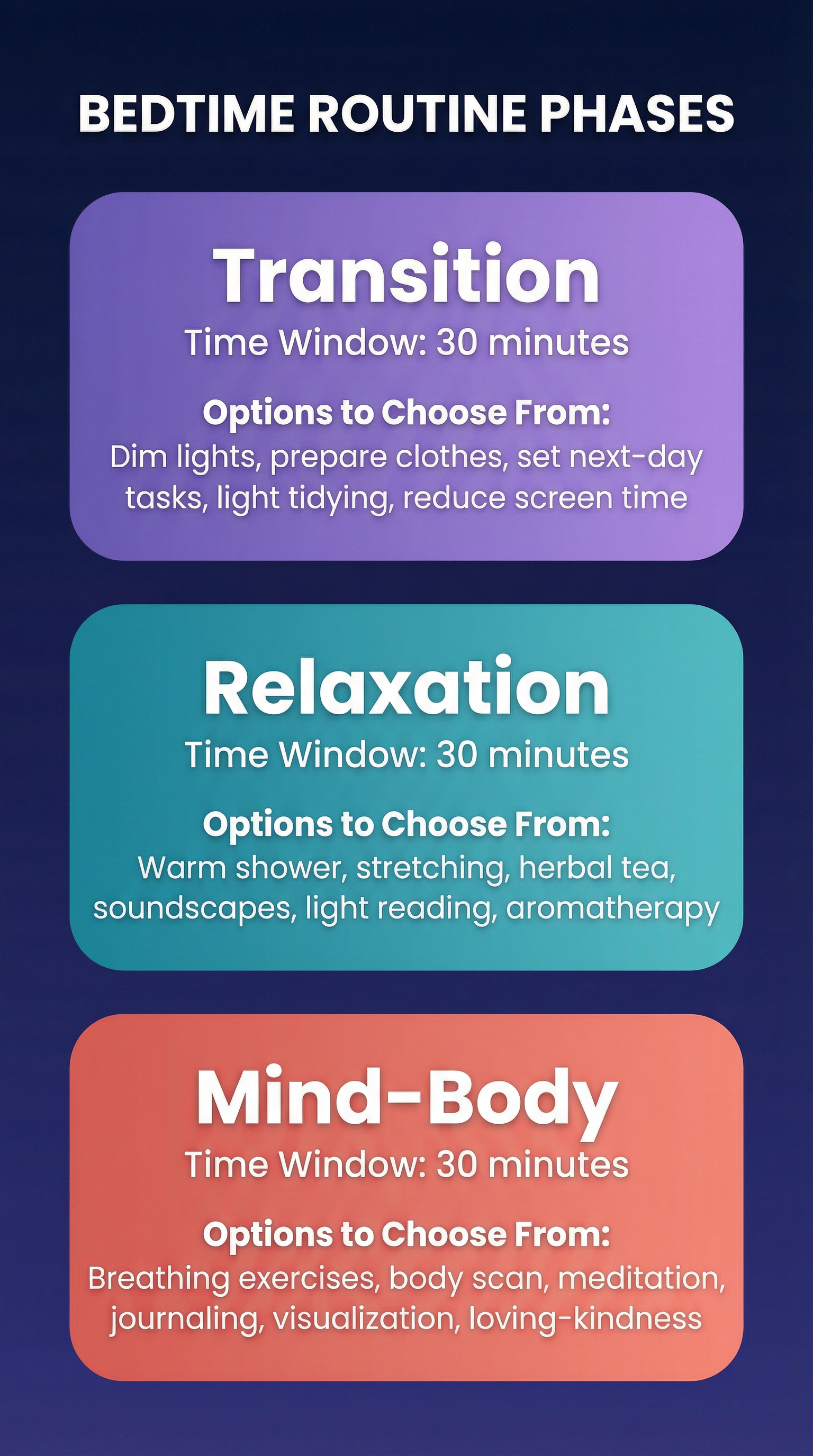
The 90-Minute Wind-Down Framework
A good wind-down routine lasts about 60–90 minutes and gently walks your nervous system toward rest. Here’s a simple, flexible structure you can shape to fit your life.
First 30 Minutes: Transition Phase (Shift Out of “Day Mode”)
Goal: reduce stimulation and wrap up loose ends.
Activities may include:
- dimming the lights
- doing light tidying to create a calmer space
- laying out clothes or jotting a quick plan for tomorrow
- doing gentle, non-work tasks with soft music in the background
- reducing screen exposure
This phase signals to your brain that the demands of the day are winding down.
Next 30 Minutes: Relaxation Phase (Downshift the Body)
Goal: calm the nervous system.
Choose 1–2 activities:
- gentle stretching
- a warm bath or shower
- listening to soft music or nature sounds
- sipping herbal tea
- reading something soothing
These help nudge your physiology into a slower, quieter rhythm.
Final 30 Minutes: Mind-Body Phase (Settle the Mind)
Goal: release mental tension.
Try:
- a short meditation
- diaphragmatic breathing
- a guided body scan
- journaling
- visualization or loving-kindness practice
This final block is where your stress management techniques for sleep really show their power.
BetterSleep makes this easy by letting you combine meditations, soundscapes, and wind-down tools into a single custom routine.
Build-Your-Own Routine Template
Use this table as a plug-and-play template for your personalized ritual:
Why a Routine Strengthens Stress Management Techniques for Sleep
A bedtime ritual does more than relax you — it trains your nervous system to expect rest. Over time, your wind-down becomes a conditioned cue that reliably lowers stress and prepares both mind and body for sleep.
A consistent bedtime routine:
- lowers cortisol
- reduces emotional reactivity
- improves sleep latency (time to fall asleep)
- reduces middle-of-the-night awakenings
- stabilizes circadian rhythms
And importantly, it makes all your other stress management techniques for sleep even more effective.
🎤 Frequently Asked Questions (FAQ)
Even with a solid sleep routine, most people still have questions about how stress and sleep interact. Below are clear, science-based answers that address the most common concerns — especially for those trying to apply healthy stress management techniques, build better habits, and improve sleep quality.
❓ Can stress cause physical symptoms at night, like a racing heart?
Yes — and it’s extremely common. When your stress response stays active at night, your body continues releasing cortisol and adrenaline. This can produce pounding heartbeats, chest tightness, warm flashes, jitteriness, and that awful “can’t settle” feeling.
These sensations are caused by the fight-or-flight system remaining switched on during hours when your nervous system should be shifting into “rest-and-digest.”
A racing heart at night is one of the top reasons people seek stress management techniques for sleep — because if the body doesn’t calm down, the mind can’t follow.
Expert Insight “Stress and sleep are intricately linked. You can’t address one without addressing the other. Think of them as two sides of the same coin of well-being. Chronic stress leads to a state of hyperarousal, making it impossible for the brain to switch off and enter deep, restorative sleep.” — Dr. Matthew Walker, PhD
Try this:Use slow breathing — in for 4 seconds, out for 6 — to restore parasympathetic dominance.
BetterSleep Tip:Open “Evening Heart Calm” or “Release Anxiety” to help your body settle when your heart feels too wired to sleep.
❓ How long does it take for stress management techniques to improve sleep?
Change often begins surprisingly fast. Most people notice improvement within two to three weeks of consistent practice. Studies of CBT-I, mindfulness-based interventions, and slow-breathing techniques show measurable reductions in anxiety/arousal and shorter sleep-onset times within that window.
The key word is consistent. Your nervous system learns through repetition, not intensity. Ten minutes of mindful breathing or muscle relaxation every night does far more for your sleep than one long session once a week.
“Think of relaxation training like strength training for your parasympathetic system. Every session builds resilience, even if you don’t see results immediately.” — Dr. Elissa Epel, PhD, UCSF
BetterSleep Tip: Use the Daily Wind Down reminder to help you stay consistent.
❓ Is it bad to use my phone to listen to meditations in bed?
Not necessarily. The issue isn’t the device — it’s how you use it.
Phones become a problem when they:
- light up with notifications
- shine blue light directly into your eyes
- tempt you into scrolling
- keep your mind active instead of settling
But a phone used intentionally can be one of the most effective stress and sleep management tools at night.
How to make it sleep-friendly:
- Turn on Airplane Mode or Do Not Disturb
- Dim the screen
- Use audio-only content
- Keep your phone face-down
BetterSleep Tip: Use dark-mode sleep stories, breathing sessions, and meditations like “Gentle Rain Meditation” — designed for eyes-closed listening.
❓ What should I do if I wake up in the middle of the night with anxiety?
Nighttime anxiety is often driven by a cortisol rebound that can hit between 2 and 4 a.m. The goal isn’t to force sleep, it’s to reduce stimulation so your body can settle down again.
Here’s what helps:
- stay in bed if you feel safe and comfortable
- breathe slowly — in for 4 seconds, out for 6
- place a hand on your chest and belly to ground attention
- repeat a calming phrase like “I’m safe right now”
- if still awake after ~20 minutes, move to a dimly lit space and do something quiet (light reading, soft music)
BetterSleep Tip:
If anxiety wakes you up, open the SOS section and try “Middle of the Night Calm” or “Return to Sleep Fast.” Both are designed to help you settle quickly without turning on bright screens.
❓Are sleep aids or supplements a good idea for stress-related insomnia?
The short answer? It depends. They can help temporarily, but they’re not a long-term fix.
Over-the-counter sleep aids (like melatonin or diphenhydramine) should make you drowsy, but they don’t improve your natural sleep architecture and can lead to grogginess and/or a developed tolerance to them with time. If you still want to go down that route, remember that prescription sedatives should only be used under strict medical supervision.
Melatonin may help if your circadian rhythm is off — such as from jet lag — but it’s considerably less effective for chronic stress-related insomnia, which stems from physiological hyperarousal, not melatonin deficiency.
Before taking any supplement, consult a doctor, especially if you’re using other medications as well. Any way you care to slice it, combining behavioral approaches (CBT-I, mindfulness, relaxation training) with professional guidance will yield far more lasting results.
❓ Can a weighted blanket help with stress and sleep?
Yes, it can. For many people, a weighted blanket offers gentle deep-pressure stimulation, which can reduce anxiety and promote calm by boosting serotonin and oxytocin levels.
Research suggests these blankets mimic the comforting feeling of being held, in turn lowering physiological arousal and shortening sleep-onset time. These blankets are especially helpful for people who experience racing thoughts or nighttime restlessness.
For optimal comfort, seek out a blanket that’s roughly 10% of your body weight.
BetterSleep Tip:Pair your blanket with soothing soundscapes like White Noise, Gentle Storm, or Ocean Drift to enhance the calming effect.
🌅 Conclusion — Rest Is the Reward
Stress and sleeplessness sometimes feel like inevitable elements of modern life, but science tells a different story. In fact, both are entirely reversible. You really don’t have to live with this. Every slow breath, each mindful pause, and every evening routine you build works as a small act towards healing — proof that calm can be learned, practiced, and reclaimed.
With the right combination of healthy stress management techniques, consistent routines, and nervous-system calming strategies, your body can learn to settle again.
Throughout this guide, you’ve explored evidence-based tools—from breathing and PMR to mindfulness, nutrition, exercise, and CBT-I—that work together to restore balance in both brain and body. Each technique interrupts the stress–sleep cycle in its own way, helping you gradually shift back toward deeper, more restorative rest.
As Dr. Matthew Walker puts it: “Your sleep is not broken — it’s waiting to be rebalanced. When you nurture calm by day, rest follows naturally at night.”
The key now is starting small, staying consistent, and building momentum. Even a few minutes of breathing, mindfulness, or gentle stretching at night can begin reshaping your sleep patterns in meaningful ways.
And you don’t have to do any of it alone. The BetterSleep app offers guided meditations, soothing soundscapes, personalized wind-down routines, and sleep tracking tools that help you integrate all these techniques into your daily life with ease.
So as you head to bed tonight, don’t force rest — invite it. Dim the lights, slow your breath, and let BetterSleep guide you toward the deep, healing sleep your body has been craving.
Because sleep isn’t just a luxury. It’s your most powerful form of recovery — the foundation for every calmer day and brighter morning ahead.
📚 References
- Lopresti, A. L. (2020). The effects of psychological and environmental stress on sleep and fatigue. Nature and Science of Sleep. https://pmc.ncbi.nlm.nih.gov/articles/PMC7320447/
- Herbert, J. (2017). Cortisol and depression: Three questions for psychiatry. Endocrine Reviews. https://academic.oup.com/edrv/article/38/1/3/2959892
- Buckley, T. M., & Schatzberg, A. F. (2005). On the interactions of the hypothalamic–pituitary–adrenal (HPA) axis and sleep: Normal HPA axis activity and circadian rhythm, exemplary sleep disorders. Journal of Clinical Endocrinology & Metabolism. https://pmc.ncbi.nlm.nih.gov/articles/PMC4688585/
- Kalmbach, D. A., et al. (2019). The role of sleep in emotional brain function. Sleep Medicine Reviews. https://pmc.ncbi.nlm.nih.gov/articles/PMC6137615/
- Goyal, M., et al. (2014). Meditation programs for psychological stress and well-being: A systematic review and meta-analysis. JAMA Internal Medicine. https://pubmed.ncbi.nlm.nih.gov/30245619/
- Borrelli, B., et al. (2010). Efficacy of progressive muscle relaxation training for adults with insomnia: A randomized controlled clinical trial. Journal of Pain and Symptom Management. https://www.jpsmjournal.com/article/S0885-3924%2809%2900793-3/fulltext
- Black, D. S., et al. (2015). Mindfulness meditation and improvement in sleep quality and daytime impairment among older adults. JAMA Internal Medicine. https://jamanetwork.com/journals/jamainternalmedicine/fullarticle/2110998
- Baglioni, C., et al. (2016). Sleep and mental disorders: A meta-analysis. European Psychiatry. https://pmc.ncbi.nlm.nih.gov/articles/PMC4529365/
- Guo, Y., et al. (2023). The relationship between breathing patterns and anxiety: A psychophysiological analysis. Journal of Behavioral Science. https://link.springer.com/article/10.1186/s41606-023-00090-4
- Wahbeh, H., et al. (2020). Nutrients that influence stress responses and sleep quality. Nutrients. https://www.mdpi.com/2072-6643/12/4/936
- Hall, M. H., et al. (2019). Stress, inflammation, and sleep: A population-based analysis. Brain, Behavior, and Immunity. https://pmc.ncbi.nlm.nih.gov/articles/PMC6796223/
- Ong, J. C., et al. (2020). Cognitive behavioral therapy for insomnia and improvements in emotional regulation. Journal of Clinical Sleep Medicine. https://jcsm.aasm.org/doi/10.5664/jcsm.8986
- Adam, T. C., & Epel, E. S. (2007). Stress, eating behavior, and the stress response. Frontiers in Endocrinology.https://www.frontiersin.org/journals/endocrinology/articles/10.3389/fendo.2019.00391/full
- Kircanski, K., et al. (2023). Anxiety sensitivity and physiological arousal: Implications for stress and sleep disorders. Cognitive Therapy and Research. https://link.springer.com/article/10.1007/s10608-023-10458-6
- Brown, R. P., & Gerbarg, P. L. (2001). Sudarshan Kriya yogic breathing in the treatment of stress, anxiety, and depression. Journal of Alternative and Complementary Medicine. https://pubmed.ncbi.nlm.nih.gov/12076414/
- Guan, S., et al. (2023). Associations between nighttime rumination, autonomic arousal, and sleep quality. Sleep Advances. https://pmc.ncbi.nlm.nih.gov/articles/PMC11056563/
- van der Zwan, J. E., et al. (2021). Mindfulness and breathing techniques’ effect on sleep and stress: A controlled trial. Psychology & Health. https://pmc.ncbi.nlm.nih.gov/articles/PMC8272667/