
Best Sleep Aid for Adults with Anxiety
Medically reviewed by Jared Meacham, PhD, RD, CSCS and Aric Prather, MD
If anxiety is keeping you up, you deserve tools and resources that facilitate better sleep. Yet,finding the best sleep aid for adults with anxiety can be a daunting task (that is, without this guide). Continue reading to discover how to go to sleep faster naturally, even if your brain lives in a constant state of anxiety.
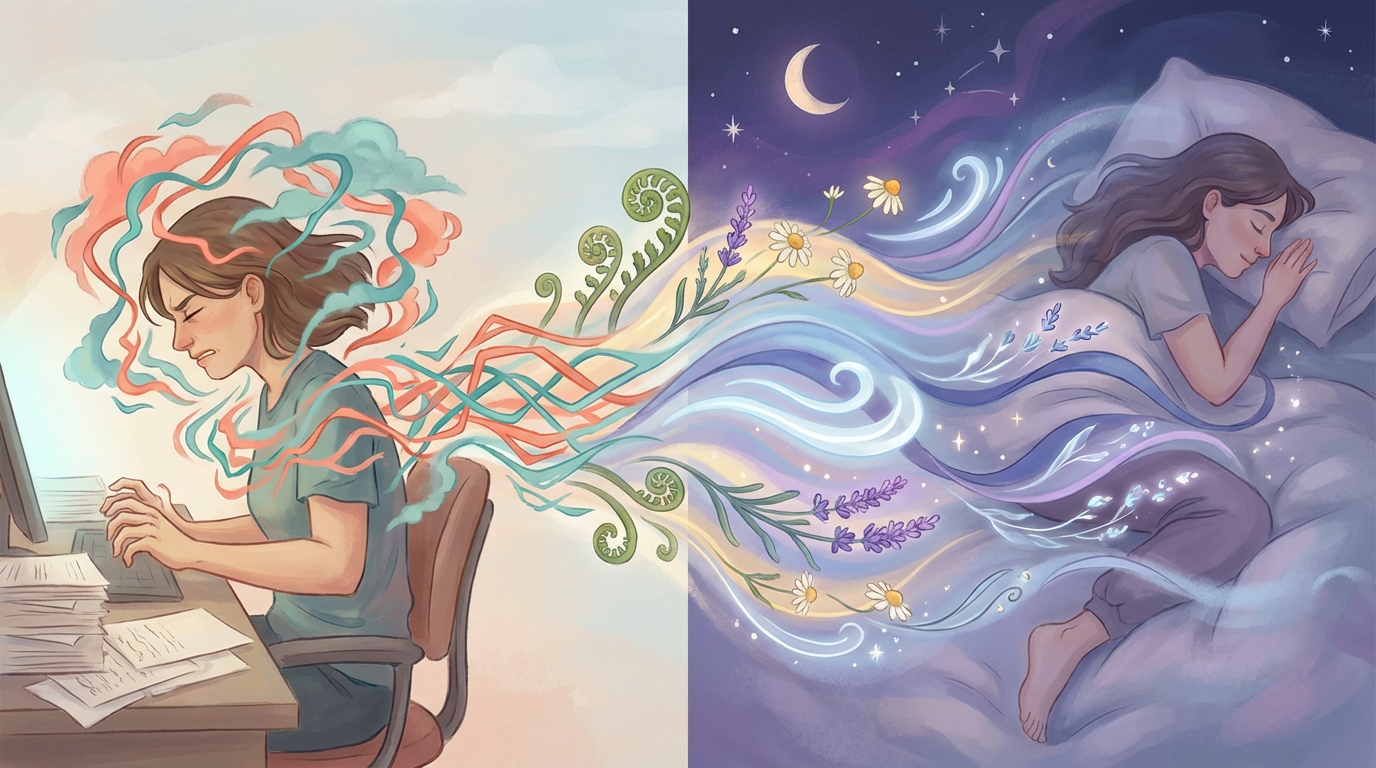
The clock ticks past 2am. Your body is screaming for rest, but your brain just won’t quit. Instead, it replays every embarrassing thing you’ve said in the past ten years or plans for unlikely worst case scenarios. Plus, the lack of sleep will only make the anxiety worse tomorrow. You definitely need something to break the cycle, but the search for the best sleep aid for adults with anxiety has only added more anxiety and overwhelm to your plate so far.
Part of the reason why this search is so stressful is because there are many pharmaceutical and natural sleep aids out there, and it can be hard to tell what works and what doesn’t. Ahead, we’ll reveal which ones are actually effective for anxiety, helping you fall asleep well before that 2am spiral.
Best Sleep Aid for Adults with Anxiety
When researching how to sleep better, keep in mind that the answer is different for everybody. Perhaps one of your friends recommends reading before bed, but that ends with you staying up until 3am to finish the book (I’ll admit I’ve done that a few times). Or maybe you read online that counting sheep works, but your anxious thoughts interrupt before you get to five sheep. Bottomline, finding a strategy that works best for you is personal.
In order to discover the best option for you, start by noting the types of sleep disruptions you experience and what might cause them. Questions to ask yourself include:
- Do you have trouble falling asleep, staying asleep, or are you waking up too early (or all of the above)?
- How often do you have trouble with sleep?
- When did these troubles start?
- Are there any triggers that make you more anxious before sleeping? (For me, scrolling TikTok right before bed is a big one.)
Once you’ve answered these questions, you may have a better idea of how anxiety impacts you specifically, as well as some triggers to avoid and what type of sleep aid might work best for you.
Why Anxiety Disrupts Sleep
Before we get into the quick fixes and long-term strategies for better sleep, let’s look at why anxiety, a condition marked by excessive worrying, distress, or fear, disrupts sleep in the first place.
Admittedly, the answer is a bit complicated. It involves two hormones: norepinephrine, one of the body’s main fight-or-flight hormones, and cortisol, commonly referred to as the “stress hormone.”
When these chemicals increase, the body and brain go into a fight-or-flight state. In the caveman days, this state helped our ancestors run from lions. In the modern age, it means we put that same level of panic into vague work emails and what-if scenarios. And at nighttime, everything is quiet, giving those panicked thoughts and feelings time to shine.
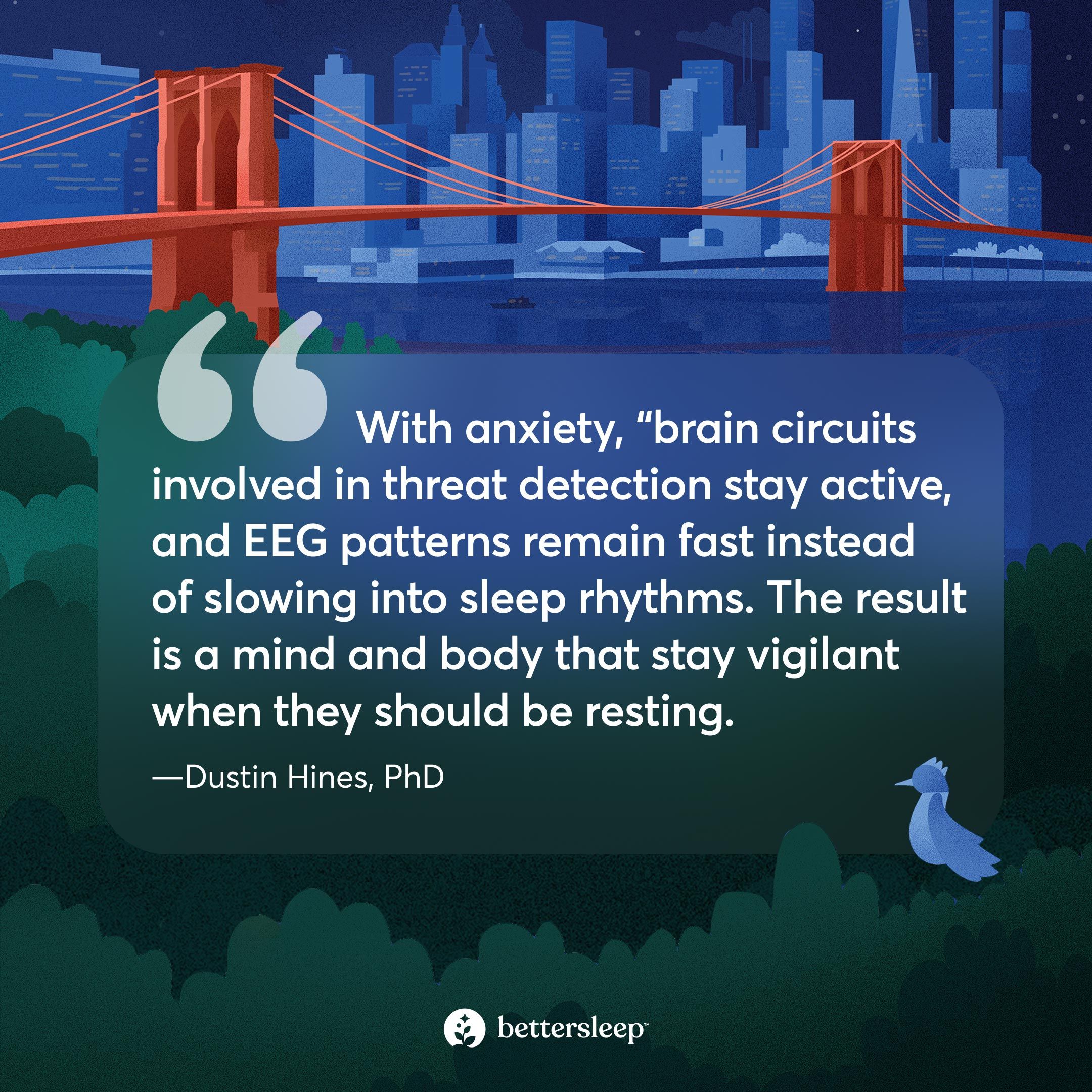
With anxiety, “brain circuits involved in threat detection stay active,” says Dustin Hines, PhD, a professor of psychology at the University of Nevada Las Vegas, “and EEG patterns remain fast instead of slowing into sleep rhythms. The result is a mind and body that stay vigilant when they should be resting.”
Anxiety’s extra-alert effect is probably why 50% of people with anxiety suffer from insomnia, a condition marked by difficulty falling or staying asleep.
Tonight’s Calming Toolkit: How to Go to Sleep Fast
When you have anxiety, sleeping better is a bit like building Rome—neither can be done in a day. But there are steps you can take tonight to lay down the first few metaphorical bricks for improved sleep.
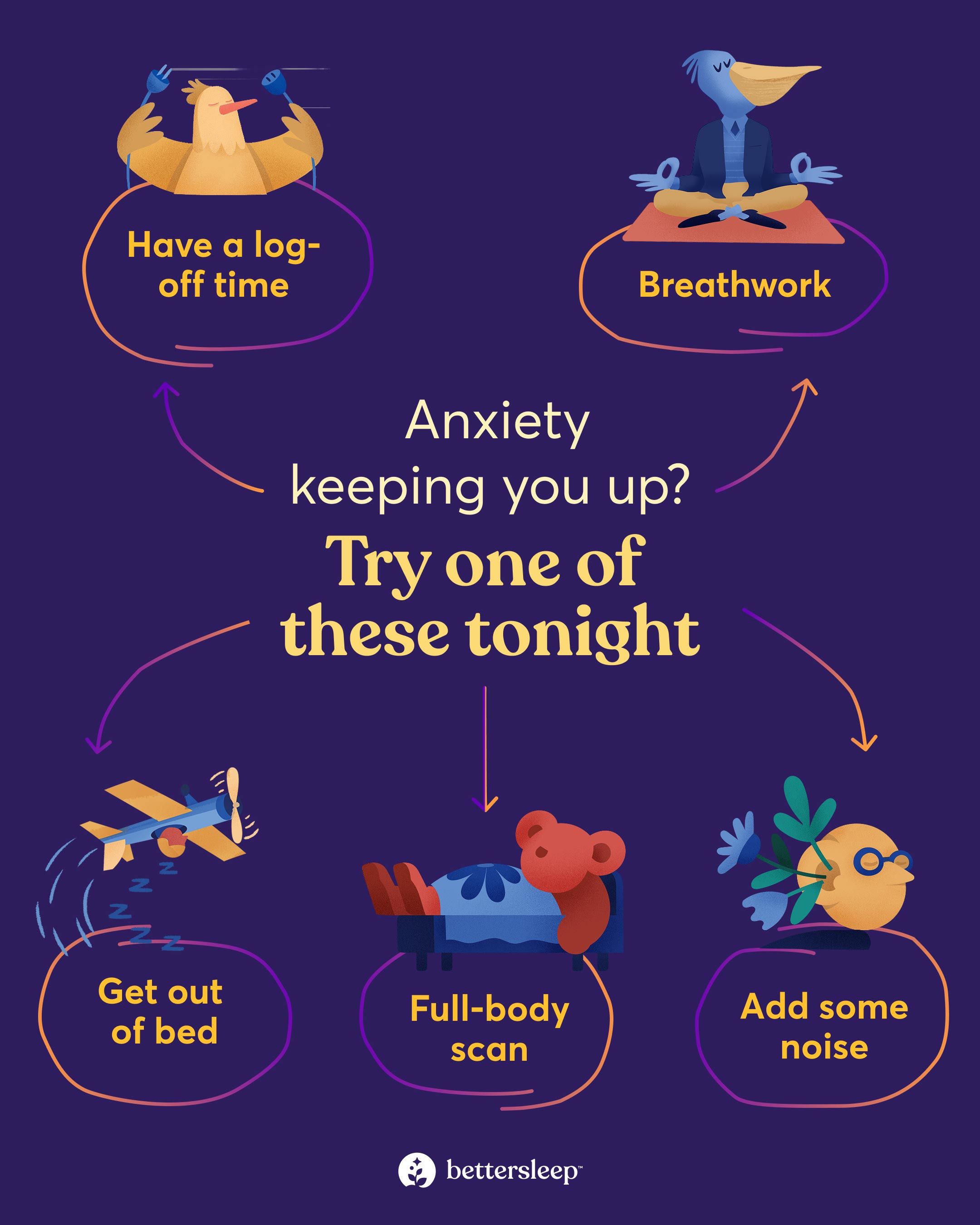
As you wind down this evening, try one of the following:
- Have a log-off time: This might be embarrassing to admit, but I’ve definitely checked Slack from my bed. And don’t even get me started on how many times I’ve scrolled socials right before shutting off the lights. Turns out using screens around bedtime is linked to worse sleep. I’m not asking you to go off the grid entirely, but it may help to set a hard cut-off time for socials, emails, and work chats, such as 30 minutes before bedtime.
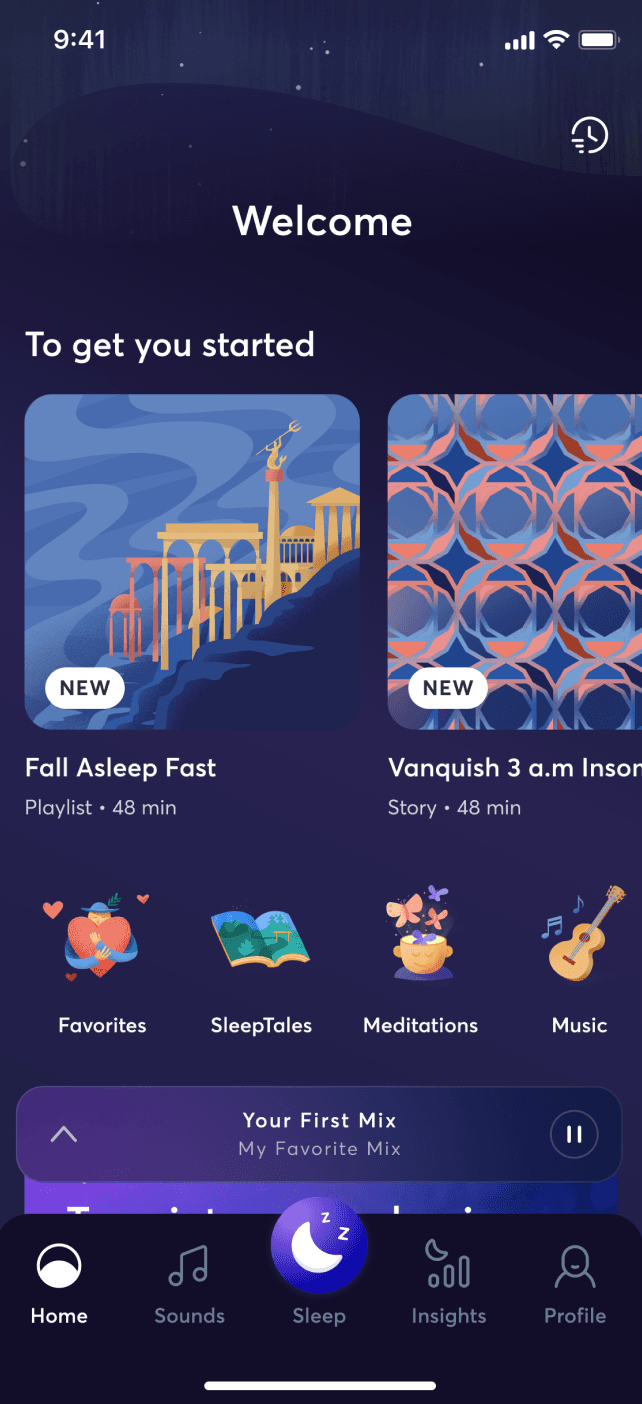
- Breathwork: Our breath can be a powerful tool to calm racing thoughts. Structured breathing exercises reduce the mental and physiological symptoms of anxiety. This means after some breathwork, your anxious thoughts may be quieter, your heartbeat slower, and your body less tense and wired. The BetterSleep app even has guided breathing sessions specifically for sleep.
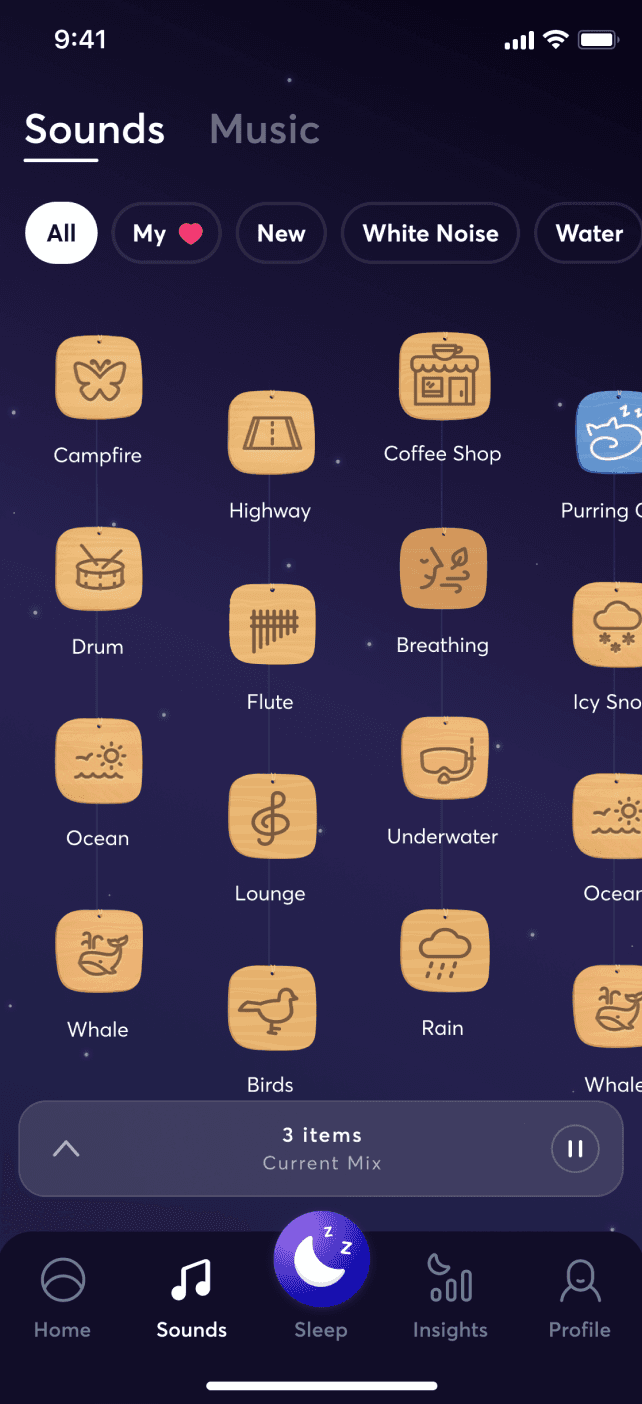
- Add some noise: I know this tip sounds contradictory at first, but hear me out. Calming white or pink noise can help create a more calming sleep environment, and some studies suggest it even decreases symptoms of anxiety.
- Full-body scan: Doing a full-body scan where you progressively relax all your muscles from head to toe may help relieve physical tension. It also gives your mind something else to focus on (instead of going down an anxious spiral). This John Hopkins’ video guide offers an example of what this might look like, and the BetterSleep app has a more comprehensive audio track to lead you through a full-body scan.
- Get out of bed: If 10-20 minutes flies by and your brain is still spinning, get out of bed. A change in environment and a calming activity, such as playing calming music, can sometimes make you feel sleepy.
The ideas above all work, but you don’t have to do them all. Instead, design an easy ten minute wind-down script that you can follow night after night (ideally with minimal effort). An example of this script might be:
- 10 minutes before falling asleep: Do something that indicates that it’s time to sleep, such as dimming the lights or using a hand lotion with a calming scent.
- 9 minutes before: Try a guided breathing session or full-body scan, such as the ones on the BetterSleep app.
- 3 minutes before: Reinforce the calming, sleepy vibes by turning on some white or pink noise. For calming audio tracks without pesky ads, try the BetterSleep app.
- Asleep: Hopefully, you’re asleep three minutes later. If not, get out of bed and turn to a trusty activity to calm the brain. And if it doesn’t work the first time, that’s ok. New habits are hard to build. Try again and, over time, things will get easier.
How to Sleep Better Long-Term
The tips above work great in the short-term, but to consistently get enough sleep, we need to get to the root of the problem: the anxiety. Here are some long-term solutions to fall asleep faster with anxiety.
Natural sleep aid options
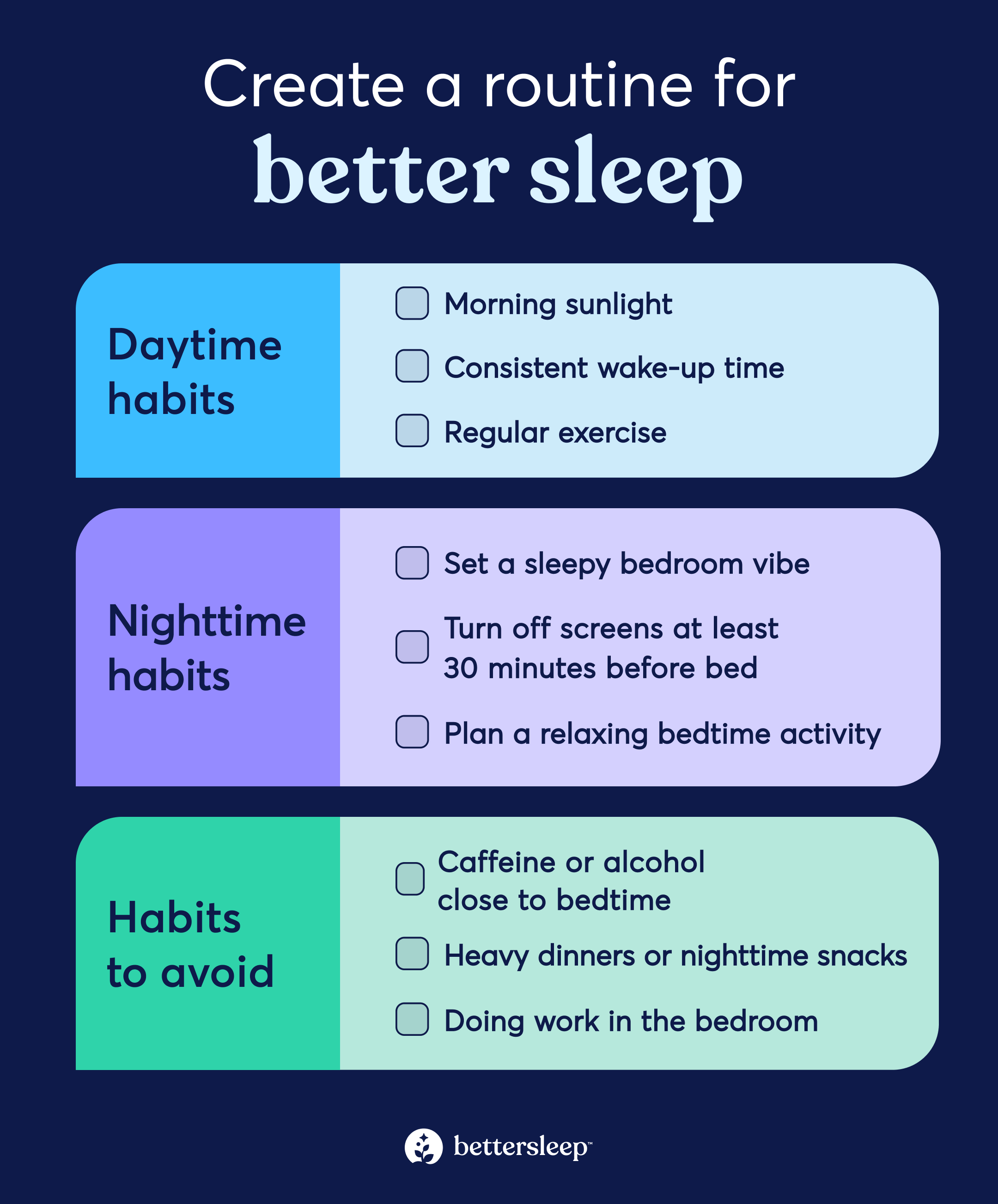
When asked what his favorite natural sleep aid is, Dr. Hines responded, “habits that gradually retrain brain circuits to transition out of alert mode at night.” Some of these are activities are done in the morning or earlier in the day, such as:
- Morning sunlight: Getting in rays of sun shortly after you wake up helps your body feel more awake during the day and sleepier at night
- Consistent wake up time: Waking up at the same time helps your body adjust to a regular sleep cycle—and yes, this includes the weekends too.
- Regular physical activity: Daily movement is a two-for-one deal. It helps regulate the Circadian rhythm (the body’s sleep-wake cycle) and can decrease anxiety. Just make sure to go on that long walk or hit the gym earlier in the day, since exercise makes you more alert for a few hours after.
Other habits can be part of a calming, predictable nighttime routine:
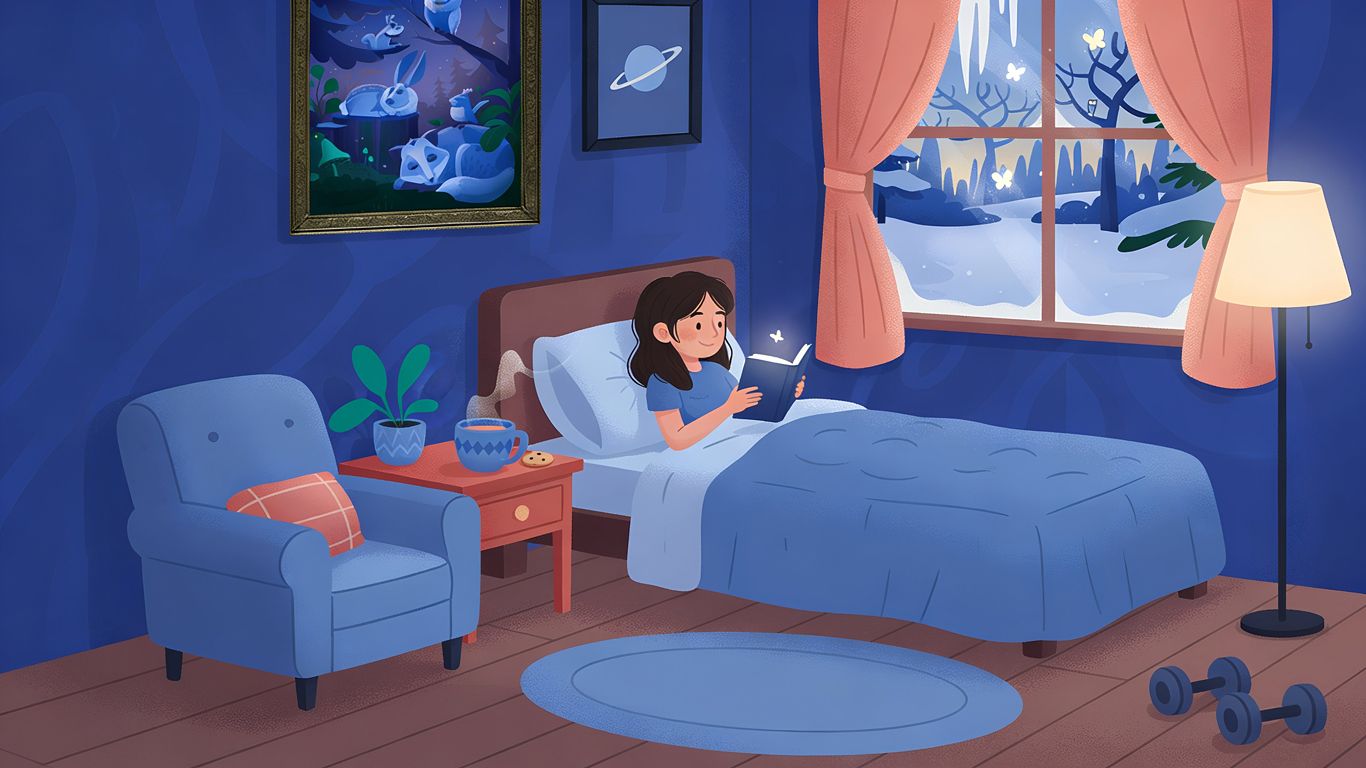
- Set the right bedtime vibe: Make sure your bedroom is cool, dark, and quiet.
- Turn off screens: 30 minutes before bed (or earlier), log off or turn your phone on night mode.
- Relax: Have a relaxing nighttime activity planned, such as journaling or listening to a bedtime story on the BetterSleep app.
Last but not least, there are a few things you may want to avoid, especially in the evenings:
- Caffeine and alcohol: Ideally, cut off caffeine at least four hours before bed, and limit alcohol, as it can cause blood sugar and heart rate spikes that make it difficult to sleep.
- Heavy foods: Ultra-processed foods, sugary midnight snacks, or even a heavy evening meal can make it difficult to sleep (and may increase anxiety).
- Doing work (or much else) in the bedroom: If we engage in non-sleep related behaviors in the bedroom, those activities can condition us to stay awake in that space. That probably means it’s time to move any work-from-home days to another room.
Feeling overwhelmed by these suggestions? The good news is you don’t have to do them all at once. Choose up to three (such as one from each category) to focus on first.
Over-the-counter sleep aids: What to know before you try one
Admittedly, it’s easy to turn to over-the-counter sleep aids. They don’t require a prescription and promise better sleep without having to overhaul your entire routine. While OTC and prescription sleep aids may be helpful in the short-term, they only address the symptoms, not the underlying anxiety.
Plus, many find their side effects (think next-day groggies, brain fog, and daytime sleepiness) tricky to handle, especially if using one of these medications for months or years. If you do think a sleep medication could be useful for your short-term or long-term sleep health, consult a healthcare provider first.
When sleeping pills are dangerous
For some with severe sleeping difficulties, such as diagnosed insomnia, prescription-strength sleeping pills provide some much-needed rest. Being well-rested has a ripple effect on anxiety; it decreases stress and gives you the headspace to think through other ways to lower your stress levels.
But sleeping pills aren’t without their risks. These medications can cause side effects that are similar, or more severe, than over-the-counter sleep medications. Some, for example, increase the risk of kidney disease, while others may cause difficulty breathing or swallowing. Many can also be dangerous if taken with certain medications.
That’s why it’s best to take sleep pills under the guidance of a qualified healthcare provider. They can help you determine which sleep pills are dangerous for your current medication line-up, how long you should take these pills, and how to use sleeping pills alongside lifestyle changes.
When to Seek Care
“If sleep problems last more than a few weeks or interfere with mood, concentration, or safety, it is time to seek care,” advises Dr. Hines. He often recommends heading to a primary care provider first, though they will probably refer you to a mental healthcare provider if anxiety is the main cause of sleep troubles.
Another benefit of going to a primary care provider is that they can catch anything else that’s at play. 67-88% of people with chronic pain report high levels of anxiety, and if you fall into that camp, treating any conditions causing pain may help with sleep too.
Speaking of other conditions, a provider can also assess if there’s any signs of another sleep disorder. Snoring and waking up out of breath, for example, may indicate sleep apnea, while tingling in your legs may mean restless leg syndrome is at play. After a provider’s initial assessment, they can then help treat any other sleep conditions or refer to a sleep medicine specialist or mental health provider.
Working with a healthcare provider
Raise your hand if you’ve ever scheduled a healthcare appointment about a super pressing issue, only to be too anxious to coherently explain what is happening once at the doctor’s office. My hand is definitely up.
To limit any medical appointment nerves, prepare ahead of time. This prep doesn’t have to be as intense as studying for an exam or completing a big work project. Instead, it can look like jotting down a few notes on:
- How you’ve been sleeping (the BetterSleep app lets you track this data easily)
- Your bedtime routine
- When you drink any caffeine or alcohol
- The exact symptoms you’re experiencing
- What your sleep goals are
It’s also a good idea to have a running list of any medications you take, including the dosage, and to bring them up with any new healthcare providers. My mom gave me this advice decades ago, and it comes in handy more than you’d expect. Yet another reminder that parents truly do know best.
Treatment Options
For sleep anxiety, first-line treatment is often psychotherapy (aka talk therapy). In these sessions, you’ll explore your symptoms with a licensed therapist and co-create a plan to manage anxiety and sleep difficulties.
There are many, many approaches to therapy, but cognitive behavioral therapy for insomnia (CBT-I) is often used for difficulty sleeping. With this approach, you and your therapist unpack the emotions and thoughts behind sleep-related behaviors. Unlike other therapeutic approaches, CBT-I directly addresses your relationship with sleep.
It also includes replacing harmful behaviors with ones that encourage sleep. This could include cognitive tools, such as cognitive shuffling (a mental exercise to refocus the mind on neutral, calm ideas) and other exercises in the BetterSleep app. It may also look like adjusting habits that disrupt sleep. If you indulge in a 3pm coffee, for example, a therapist might recommend moving it up to earlier in the day or replacing it with a more natural energy boost, such as a short walk or eating fruit.
If therapy isn’t enough on its own, a therapist or primary care provider may refer you to a psychiatrist who can prescribe anxiety medications. Some anti-anxiety medications have a response rate as high as 80%, and they can be taken alongside talk therapy and other treatments.
When Insomnia Might Have Another Cause
Sleep anxiety doesn’t always pop up on its own. Often, it’s a co-occurring condition, and some of its favorite friends include:
- Circadian rhythm problems: The body’s sleep/wake cycle can be disrupted when hormones, such as cortisol, are disrupted. While anxiety can disrupt cortisol, it’s not the only potential cause. Cushing’s syndrome, a tumor, or the use of certain medications, such as steroids, may cause high cortisol levels.
- Perimenopause and menopause: The years leading up to the final menstrual cycle (aka perimenopause) are marked by hormonal changes. Some, such as hot flashes and night sweats, make it harder to sleep. These effects can last after menopause (twelve consecutive months without a period), too.
- Acid reflux: The heartburn sensation that occurs when the stomach contents flow back up the digestive tract is referred to as acid reflux, or gastroesophageal reflux disease (GERD) if chronic. When someone with acid reflux or GERD indulges in a heavy dinner or eats too close to bedtime, it can make it difficult to sleep.
- Sleep disorders: Medical conditions that disrupt sleep, like restless leg syndrome and sleep apnea, can cause trouble staying or falling asleep.
- Chronic pain: People with chronic pain often report trouble falling or staying asleep. A wide range of conditions can lead to chronic pain, including arthritis, multiple sclerosis, and fibromyalgia.
The Bottom Line
Anxiety can keep you up at night, but it doesn’t have to. With a little experimentation and some help from a healthcare provider and the BetterSleep app, you can discover the best sleep aid for your needs, lifestyle, and sleep goals.
Key Takeaways
- Anxiety can increase the levels of hormones related to stress and alertness. This can make it feel like your brain is constantly wired and never ready for sleep.
- A calming nighttime routine features intentional ways to calm racing thoughts. This may include breathwork, a full-body scan, playing white or pink noise, or anything else that stops the brain from going into overdrive at night.
- For a long-term fix, consider habits that reduce overall anxiety and help you feel more sleepy at night, such as getting sunlight in the morning, exercising regularly, and developing a consistent morning and nighttime routine.
- You don’t have to improve sleep or decrease anxiety on your own. Healthcare providers can offer guidance, and the BetterSleep app has plenty of guided exercises to help you fall asleep faster.
Frequently Asked Questions (FAQs)
What is the best medication for sleeping with anxiety?
The best medication for sleeping with anxiety varies from person to person. Sometimes, it’s an anti-anxiety medication. Other times, it’s the short-term use of an over-the-counter or prescription sleep medication. A psychiatrist or sleep medicine specialist can help determine the best option for you. And sometimes the answer isn't medication at all, but rather working with a psychologist to help get a better handle on your sleep and anxiety.
How to treat anxiety-induced insomnia?
There are many ways to treat anxiety-induced insomnia, including lifestyle changes that reduce anxiety and help regulate the Circadian rhythm, therapy focused on sleep-related issues, such as cognitive behavioral therapy for insomnia, and medications for either anxiety or sleep. A healthcare provider, such as a sleep medicine specialist or therapist, can help you decide on the right treatment plan for you.
Why does anxiety cause no sleep?
Anxiety may disrupt sleep and even lead to insomnia because it can make you feel wired or alert at bedtime. This occurs because anxiety triggers hormones related to stress and alertness, such as cortisol and norepinephrine.
How do you calm anxiety to sleep?
To calm anxiety at nighttime, focus on guided exercises that relax the body and distract the mind. This may include guided breathing exercises, white or pink noise, and a full-body scan. Additionally, you’ll also want to change any habits that may increase anxiety and make it hard to sleep, such as that 3pm pick-me-up coffee or not getting morning sunlight. The BetterSleep app has guided exercises to fall asleep fast and can help you track sleep-related changes.
What drinks help you sleep fast?
Herbal teas, such as chamomile, can help you sleep, especially if stress or anxiety is keeping you up. Before brewing a bedtime tea, make sure it doesn’t have any caffeine, which may keep you up.