Sleep Tracking Guide: How to Track & Optimize Sleep
Sleep tracking uses apps, wearables, and bedside devices to measure your sleep stages, duration, awakenings, and biometrics — giving you objective data that self-assessment can't. By identifying patterns over time, it helps you pinpoint what's disrupting your sleep and whether changes to your routine are actually working.
We spend approximately ⅓ of our lives sleeping, and yet most of us don’t understand what actually takes place during those nighttime hours. Upon waking, we may feel unrested, even if we managed to get to bed at a reasonable time. There are ways to uncover the mysteries of what’s going off the tracks, and one of the best methods is sleep tracking.
Sleep tracking is a method of using technology to measure sleep quality. Through the use of apps, watches or other wearable devices, sleep data is collected and summarized for the user to understand concrete, unbiased information about their sleep. It’s also possible to track sleep using a diary or other analog methods, but you don’t always get an accurate picture.
According to a 2022 Gallup survey regarding sleep, approximately 33% of Americans reported their sleep as “fair” or “poor,” signaling that there’s some work to be done in the sleep space if we are to improve this vital marker of health.
33% of Americans reported their sleep as “fair” or “poor,” signaling that there’s some work to be done in the sleep space if we are to improve this vital marker of health.2022 Gallup survey
Poor sleep quality doesn’t just affect people the day after a restless night; accumulated sleep debt can lead to both acute and long-term issues. Productivity, concentration, mood and longevity are just a few areas that can be impacted by sleep problems.
Most folks, even if they feel like they didn’t sleep well, aren’t able to pinpoint the cause with accuracy. This is where sleep tracking comes in. Having access to concrete data about your sleep changes the game, allowing you to access fundamental information about your sleep stages, duration, interruptions and so much more. Tracking your sleep reveals patterns over time, and shines a light on problems you may not have noticed otherwise. Indeed, using an evidence-based method to track sleep data can completely revolutionize your relationship with sleep and help you get the best sleep of your life after just a few nights. Apps like BetterSleep make sleep tracking simple and accessible to everyone.
So, where to begin? Follow along for a complete run through of how sleep tracking works. You’ll learn the details about what metrics are tracked, how you can interpret the results, which devices and methods are best for you and, most importantly, how to actually implement a sleep tracker into your everyday life. The process may seem complicated at first, but you’ll soon see how straightforward and beneficial sleep tracking can be!
How Sleep Tracking Works: Technology & Methods Explained
Let’s start with the basics: What is sleep tracking? Simply put, sleep tracking is the process of monitoring sleep. Throughout the years, new technological advances have made sleep tracking more accessible to people through the use of wearable devices, watches, smartphone apps and more. Sleep trackers monitor when you fall asleep, wake up, and what happens in between. Using different methods depending on the tech, sleep trackers provide objective data on sleep duration, quality, stages, and interruptions. Before these devices were created, sleep labs provided the only quantitative methods available for measuring sleep markers.
Why Sleep Tracking Matters
Knowing your sleep habits is the only way to ensure you’re actually getting good quality sleep. Have you ever woken up groggy, even after spending a full 8 hours in bed? This illustrates the subjective nature of self-assessment in terms of sleep quality–we can’t always tell if we’ve had restful sleep or not. “Self-reports of total sleep times, both habitually and on the morning after a polysomnogram (PSG), or a sleep test, tend to be higher than objectively measured sleep times,” reports Science Daily, referencing a significant publication from the Journal of Clinical Sleep Medicine.
Sleep data is an essential element for consistently good quality sleep. By identifying trends and patterns over time, your sleep tracker can help illuminate areas for improvement. Even if we know that there’s a problem with our sleep, it’s difficult to pinpoint what exactly is causing the disruption. Sleep trackers reveal hidden sleep issues that can otherwise go unnoticed, such as micro-awakenings and changes in sleep state. In addition, it can be quite motivating for folks to see hard evidence of their sleep habits, making sleep improvement feel more like a fun challenge than a daunting task. The data patterns can confirm whether or not the changes you’ve implemented have been working, validating your efforts and making the process much more enjoyable.
Sleep tracking can even help shed light on sleep issues that could become major health concerns. By alerting users to their sleep problems, these trackers can pick up on information that may be too subtle for an individual to feel, such as mild sleep apnea or REM disturbances. Once users are aware of these issues, it’s easier to change or treat the behavior before it turns into a full-fledged sleep disorder.
How Sleep Tracking Works
Many types of sleep trackers exist, but the most common technologies utilize body or environmental sensors to assess sleep signals. Those that actually come in contact with the body during sleep hours can measure different anatomical details, such as heart rate, movement, and breathing. Others monitor environmental factors, such as sound, to measure snoring, sleep talking, and other nighttime noises. Regardless of the method, sleep data is then assessed by the software (usually AI powered algorithms, in this day and age) and puts out a “sleep report” for the user to access. While all sleep trackers provide different data points in the report, most include metrics like total time spent asleep, number of awakenings and sleep phase breakdown. The BetterSleep app, for example, provides a sleep score, total time spent in each phase of sleep, and recordings of any sounds recorded by your device overnight. Others may provide biometric data, like changes in heart rate or breathing.
Evolution of Sleep Trackers
Over time, sleep tracker technology has evolved from enormous lab-only equipment to devices the size a quarter. Before the early 2000s, sleep data could only be collected in a sleep lab with trained professionals to operate the complicated equipment. Doctors or technicians perform a polysomnogram (PSG) using sensors attached to various body parts, all connected by wires to a computer. While this tech has progressed significantly since its invention in the 1950s, it is still cumbersome and can only be performed in a hospital or sleep clinic. Since polysomnography is still the most medically credible sleep analysis, doctors still use this technology in hospitals worldwide to diagnose serious sleep issues. However, new advancements in the 21st century revolutionized the personal sleep-tracking game.
Around the 2010s, bedside sleep trackers were created, allowing users more access to sleep data from the comfort of their homes. Since 2015, wearable sleep trackers have taken the market by storm, allowing folks to track sleep data like never before. Watches, rings, headbands and smartphone apps are now considered the easiest and most user-friendly options for tracking sleep.
Types of Sleep Trackers: Apps, Wearables & Devices Compared
When you’re ready to get started on your sleep tracking journey, you may feel a little lost, given the sheer number of options available to you. From apps to wearable tech to bedside devices, we’ll unpack the different benefits of each method, helping you make the decision that’s best for your personal needs. Ultimately, the decision comes down to individual preference, but let’s make sure you have all the information before diving in.
Smartphone Apps
Would you believe that 91% of Americans now own and use a smartphone on a daily basis? According to a study from Pew Research Center, this statistic has jumped significantly in the last decades, compared to only 35% of Americans as smartphone owners in 2011. With the world of technology at our fingertips, it follows logic that we would take advantage of these advancements to help improve our sleep. Smartphone apps have become an excellent resource for those looking to support healthier sleep habits.
Utilizing a smartphone’s microphone or accelerometer (the internal mechanism that senses motion), environmental factors like sound and movement are measured to assess sleeping patterns. When placed on your mattress or bedside table, smartphone apps are able to determine important sleep markers and give you a sleep report in the morning.
Pros and Cons of Smartphone Apps
Smartphone apps are often considered the most convenient, cost-effective sleep trackers on the market. Since so many people already use their phones consistently, implementing a smartphone-based sleep tracker doesn’t require much additional effort or thought. Apps are easy to download, usually quite user friendly, and do not require an initial investment in order to start using the sleep trackers. Aside from a small monthly subscription cost, most smartphone sleep trackers don’t include other fees.
The BetterSleep app, for example, is easy to use, with simple instructions and clear infographics. After downloading the app, users are invited to create a profile and discover their sleep chronotype (their natural preference to sleep, eat, move and work at certain times of the day). BetterSleep’s sleep tracker is designed with a convenient interface that guides users toward making better choices for their sleep hygiene. Like most smartphone apps, there are heaps of other features included, aside from the sleep tracker. Guided meditations, sleep sounds, and a library of expert advice are all easily accessible for users with the click of a button. BetterSleep uses the device’s microphone to pick up sounds in the environment, so it can be left on a bedside table next to the user in order to gather sleep tracker data.
But where do sleep tracker apps fall short? A few categories include battery life, proximity and precision of data. Since smartphone apps alone don’t make physical contact with the body, the data recorded does not include biometrics. Therefore, the exact amount of time in each phase of sleep is assessed by the microphone, not by measuring heart rate or breath rate, leading to slight inaccuracies in sleep scores. Additionally, devices may need to remain plugged in overnight to prevent the battery from dying in the middle of the night. Some folks don’t like sleeping with their charging phone too close to them, so other options might be preferable, in this case.
Experts caution against leaving charging phones directly on soft bedding since it can be a fire hazard. In this case, motion-based smartphone apps should not remain plugged in overnight, as they need to be placed on the mattress.
Overall, smartphone apps are convenient and low-budget options for those looking to start their sleep tracking journey. Since the upfront investment is so low, users can try the apps without committing to a particular product. The most important aspect of a sleep tracker is that you actually use it consistently, and smartphone apps are a breeze to set up.
Wearable Devices
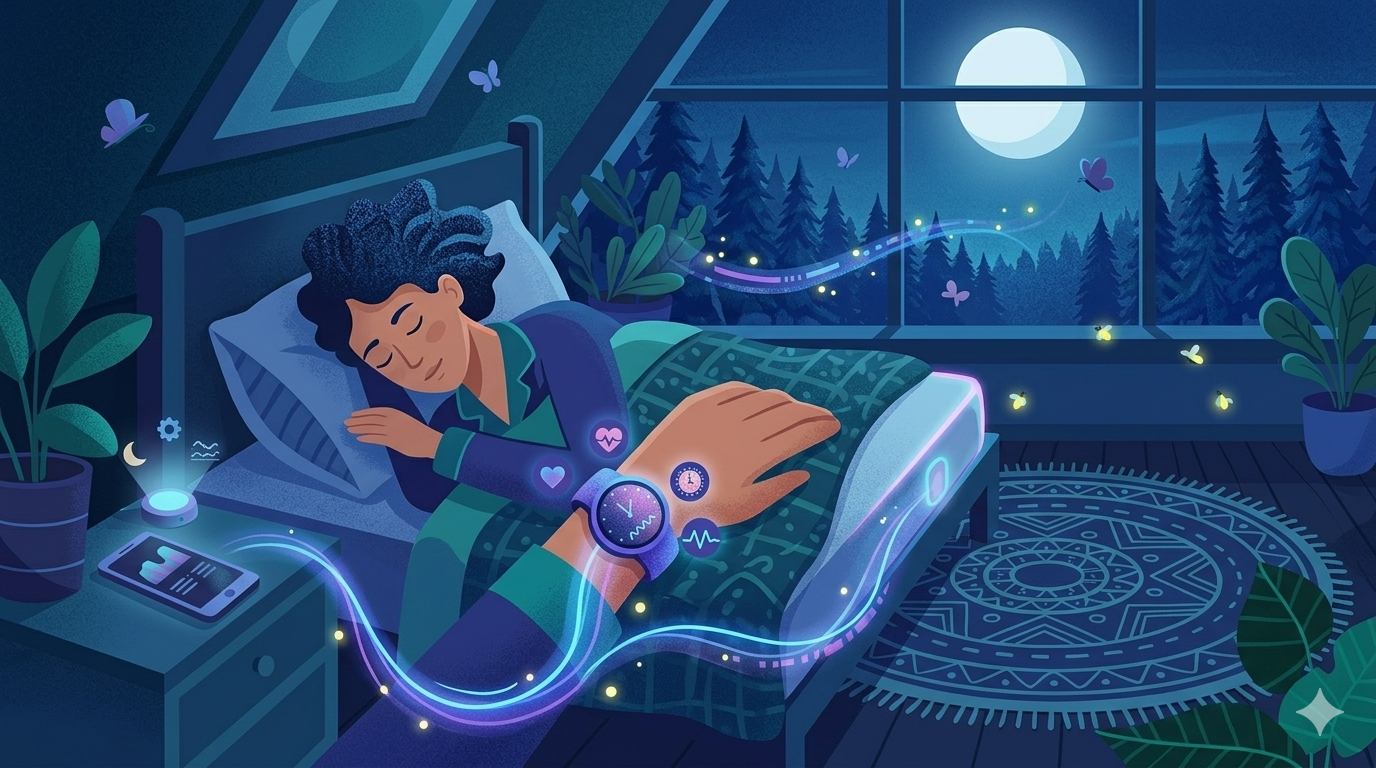
Starting in the mid 2010s, wearable sleep trackers emerged on the market, turning the health tracking industry on its head. Watches, rings and even headbands have been developed in the last decade, all with unique abilities to track different biometric health markers. These wearable devices aren’t used in isolation; they pair with apps on your smartphone or tablet to give you a more comprehensive understanding of your biometric data. Sensors in the wearables can monitor heart rate, breath rate, body temperature, movement and sometimes blood oxygen levels.
Due to their direct contact with the body, they’re often more accurate than smartphone apps in terms of predicting a person’s exact phase of sleep. Wearable devices can also give additional biometric data, which many people find beneficial as an overall health indicator. Understanding changes in heart or breath rate overnight can help highlight other sleep issues that a person may not otherwise recognize. Rings and wristbands are usually pretty small and unobtrusive, making them comfortable options to wear overnight.
On the negative side, some wearable devices can be considered bulky and uncomfortable for nighttime use. Many users get accustomed to it within a few days, but some folks don’t like the feeling of wearing something all night. Especially with watches, thinner options are usually considered to be more comfortable for prolonged wearing. Another concern for some people is that they don’t want to have constant body contact with an EMF-emitting device. Though wearables on the market claim to emit low amounts of EMFs, this can be a dealbreaker for some potential users.
One major factor in choosing a wearable sleep tracker is the price. The cost of the device, plus the cost of maintaining a subscription to its corresponding app, may determine a user’s preference for one sleep tracker over another. With most options ranging between $200-800, the upfront cost of a wearable device can be a constraint for some. Depending on a person’s willingness to invest money into their sleep tracking endeavor, wearables may or may not be worth the price. Their accuracy, especially when paired with dedicated apps, is much better than apps alone, but the cost can be prohibitive to some users.
Bedside/Under Mattress Sensors
The lesser known mattress sensors use different types of technology to assess sleep data. Using a combination of radar, sonar and ballistocardiography (measuring micro-movements to assess heart rate), these devices assess sleep state and give users an indication of their sleep data without the need for wearables or other electronics. With some types of tech, pads are placed underneath the mattress to sense a person’s movement throughout the night. They’re plugged into a wall socket and don’t require any type of contact with the body. Other types of devices, like smart bedside sleep trackers, use radar and sonar to measure environmental sounds, light and even breathing.
These types of “invisible” smart tech are great for people who don’t feel comfortable with wearables, but there are a few drawbacks to these devices. Notably, these innovations operate best with single-occupancy beds. Sleeping next to a partner or with pets can cause their data to interfere with your sleep score, creating confusion when you look at your results. Contactless sleep tracking technology can be ideal for solo sleepers, but may not be the best option for anyone who shares a bedroom.
Comparison Summary
So which tech is best? The short answer: it depends on your personal needs. Sleep experts agree that sleep trackers can offer insight into patterns or habits that individuals might not be able to recognize, but it requires the consumer to actually use the tech. While we are often attracted to new and flashy technology, it has to actually integrate in our lives in order to be useful. Dr. Matthew Walker, sleep expert and self-identified “Sleep tech nerd,” is optimistically critical of sleep trackers because of the human error factor. “In medicine, we say what gets measured gets managed,” says Walker, noting that sleep trackers can be effective ways to monitor sleep data, but only if they’re actually used properly. He suggests that people find out which type of device is most suitable for their individual needs (and which they would be most likely to use on a regular basis) and go from there.
Smartphone apps are the best bang for your buck, and are ideal if you’re starting out with your sleep tracking journey. They require minimal financial commitment and can provide insight into sleep habits and patterns that may go otherwise unnoticed.
Wearable devices are optimal for those looking for biometric data, and for those who prioritize the accuracy of their data, even if the financial investment is greater. Watches, rings and headbands can offer more precisely calculated information than the contactless technology.
Mattress/Bedside Sensors are best for solo sleepers who want a no-contact method of tracking their sleep. If you don’t like wearing anything overnight and have a permanent bedroom setup, this could be a great option.
*Tech Hack* Did you know that some smartphone apps can integrate with wearable tech to create a sleep tracking duo that gives you the best of both worlds? If you’re really interested in getting the most accurate sleep data, combined with an industry-leading sleep app, BetterSleep pairs with devices like Apple Watch, Samsung Galaxy Watch, FitBit and more, combining your biometrics with smartphone app technology. Your personalized sleep report contains even more precise information, allowing a more complete picture of your nocturnal activity.
What Sleep Trackers Measure: Metrics That Matter
Now that you’re up to speed on all the different options that exist for tracking sleep, let’s plunge into the details of what they actually measure. While all trackers are built a little differently, they overlap on many core sleep metrics. Here, we’ll unpack the 10 most significant metrics in sleep data tracking and learn where they rank in importance for your sleep health. Understanding what’s being measured can help you interpret that data you’re seeing on your sleep tracker, so knowing what and why these metrics matter is essential.
Core Sleep Metrics
Sleep Duration, or the total time spent sleeping, should range between 7-9 hours in healthy adults. This is not the same as total time spent in bed, which can be higher for those who take a bit of time falling asleep or wake up regularly at night. This is the most basic of all the sleep metrics, and also the most important. Sleep duration is, simply put, the number of hours and minutes you spend in any phase of sleep.
Sleep trackers are quite precise with this data; most reputable trackers and apps are up to 95% accurate at correctly measuring sleep duration.
Sleep Stage monitoring is where things get a little more scientific. First, let’s understand the 4 major phases of sleep, categorized into REM sleep and Non-REM (N) sleep.
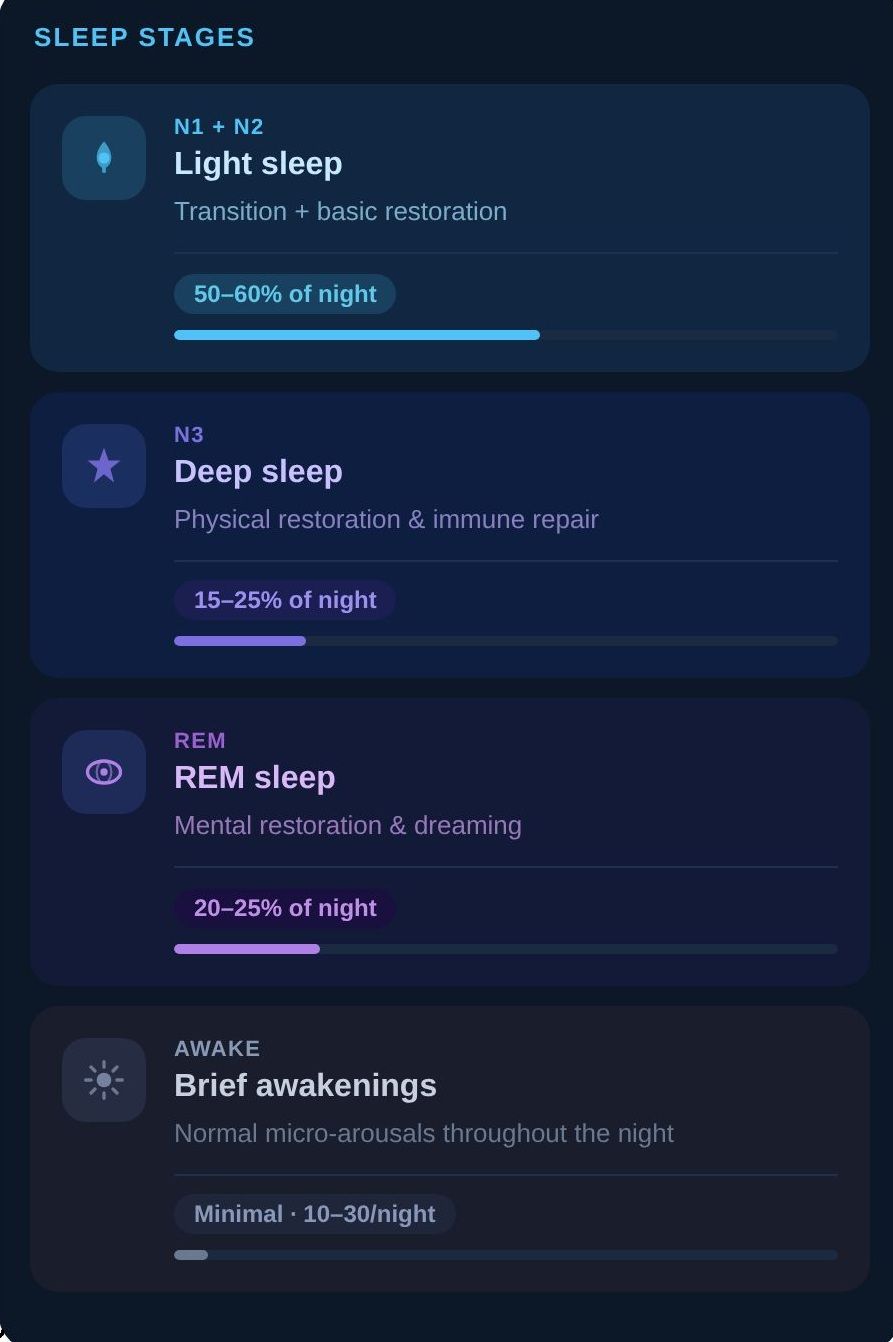
By assessing data such as heart rate variability (HRV), movement patterns and breathing rate, sleep trackers compile a breakdown of how much time an individual spent in each phase of sleep. Biometric-focused sleep trackers can more efficiently determine individual sleep phases, since they measure more body-specific metrics. It varies greatly by device, but sleep trackers generally land within the 70-90% accuracy when compared to medical-grade sleep testing.
Sleep state data is important because it determines the balance between the fragile sleep states. Deep sleep is essential for physical recovery, while REM sleep allows us time for mental recovery and memory consolidation. Understanding the balance between REM and NREM sleep gives us insight into what may be causing our waking-life issues, whether it be forgetfulness, daytime sleepiness or reduced ability to recover from injury or illness. Balance is key, and having the data on your sleep phases at your fingertips can be a game changer for your overall sleep health.
Sleep Efficiency is the ratio of time spent in bed versus time spent asleep. Sleep trackers often present our sleep efficiency as a score out of 100 or as a percentage. Over 85 is considered good sleep efficiency, while 80 or lower constitutes poor sleep efficiency. This metric is useful because we get to know about our sleep quality, not just quantity. It also helps folks struggling with sleep disorders like insomnia see how much time they’re spending awake each night. It’s important to note that sleep trackers are not a substitute for medical intervention, although they can shed some light on problem areas and provide some evidence for doctors to work with.
Biometrics
Heart Rate & Heart Rate Variability (HRV)
While you’re sleeping, the rhythm of your heartbeat should be lower than when you’re awake. The difference between active and resting heart beat is typically around 20-30%, says cardiologist Michael Faulx, MD. “During non-REM sleep is when your heart rate and blood pressure tend to cycle down, particularly during deep sleep,” he explains, noting that this is the period of sleep when the heart gets to take a little break, so to speak. In REM stages, we are more actively dreaming, heart rate tends to go up a bit higher.
Heart Rate Variability (HRV) refers to the slight variation between heartbeats. A higher ratio is associated with better recovery, and generally indicates agility and resilience in the body. Professional athletes often track this biomarker to make sure they are recovering optimally. For normal folks, low HRV can signify current or future health concerns. Stress, overall fitness and cardiac health can potentially lead to low HRV, along with other problems.
Most wearable sleep trackers measure heart rate with up to 95% accuracy, but the medical world remains skeptical about their ability to match the efficacy of hospital-grade equipment to measure HRV. When compared with an electrocardiogram (ECG), sleep trackers range anywhere from 20% - 95% accuracy when measuring HRV. The bottom line is that while sleep trackers can give you an overall picture of these health markers, they don’t replace medical tests and should not be used as a replacement for seeing your doctor if you think something feels off with your sleep.
Blood Oxygen (SpO2) level refers to the oxygen saturation in your blood during sleep. In hospitals, blood oxygen levels can be measured via blood test or by a pulse oximeter, a small device that clips onto a finger or toe. Normal SpO2 levels are typically between 95-100%, but some people may have lower levels due to some chronic health conditions. (For reference, blood oxygen levels of 92% are considered medically important and it’s time to call your doctor. Anything less than 88% requires an immediate trip to the emergency room!) Lower-than-normal levels of blood oxygen can point to health issues such as heart conditions, lung problems or sleep apnea.
Wearable sleep trackers like rings and watches come equipped with blood oxygen sensors, similar to the blood oximeters used in hospitals. They are moderately accurate, but critics caution that they don’t provide a precise enough read on SpO2 to compare with medical grade equipment. As with other biometrics, sleep trackers can give you an indication of where you fall within a certain range, but are not to be used as diagnostic tools. They may, fortunately, flag certain issues that you may not have been aware of before, and can provide an excellent starting-off-point for your doctor.
Breathing Rate indicates the number of breaths per minute during sleep. Normal rates for adults range between 12-20 breaths per minute. For children, breath rates are significantly higher, due to their smaller body size. Breath rate is a key indicator of certain sleep disorders, like sleep apnea, in which a person stops breathing for short periods of time. Most people with sleep apnea report feeling groggy or tired, even after spending 8 or more hours in bed. Because their breathing patterns change, their brains experience micro-awakenings, leading them to jolt out of fragile sleep states in order for the brain to register whether or not it’s still receiving oxygen. In some cases, if left unchecked, sleep apnea can lead to more serious health issues like diabetes, cardiovascular problems and high blood pressure.
Most sleep trackers on the market, including “wearables, nearables and airables,” as one 2023 study calls the different categories of trackers, are able to track breathing rate in some way. Wearable trackers measure the biometric data coming directly through body contact. “Nearable” devices like bedside/under mattress trackers use sonar and radar to detect breath rate, and “airable” trackers, like smartphone apps, use the device’s microphone to listen to disruptions in breathing. While it’s not as accurate as a medical device, understanding your sleep disruptions can be a key tool in detecting issues like sleep apnea.
Body Temperature is an often overlooked sleep biomarker, but it can be useful for illness detection, menstrual cycle tracking and recovery. Body temperature drops by about 1-2 degrees overnight and paves the way for a restful night of sleep. Temperature fluctuates slightly while you’re asleep, then rises again when it’s time to wake up. Irregular overnight temperatures may indicate more serious issues, like hormonal disruptions or even chronic health conditions.
Monitoring subtle changes in body temperature are especially useful for women who want to track their menstrual cycles. Some women practice the Fertility Awareness Method of tracking their cycles to accurately know when they are ovulating, fertile, or even pregnant. Wearable devices can help women understand patterns in the different stages of their cycles. When combined with other biometrics and calendar tracking, these metrics can help women monitor their menstrual cycles in a whole new way. However, it’s important to note that wearable sleep trackers are not designed to aid in fertility awareness or to prevent pregnancy in any way. They can provide biometric temperature information within a certain range, but specific tools must be used accurately in order to support or prevent pregnancy.
Sleep Quality Metrics
Sleep Score is a composite metric (0-100 scale) of how well you slept on a given night. All sleep trackers offer a sleep score of some sort, but because they all use proprietary algorithms, there’s no way to standardize the scores across all trackers. What do sleep scores tell us? They combine several factors like Sleep Duration, Sleep Efficiency, Sleep Stages and Sleep Disruptions to give a more user-friendly output. It’s a quick, easy way to assess your nightly sleep quality. At a glance, users can see an efficient sleep report and can track trends over time.
Experts caution users not to take too much stock in sleep scores, as this can cause a very specific type of sleep-related anxiety. Orthosomnia is a type of anxiety that comes from sleep tracker perfectionism. While these technologies exist to help users get better sleep, sometimes the opposite ends up happening if people are too harsh on themselves after the tracker shows a “bad” sleep score. Naturally, this can interfere with sleep. “A lot of times, people who are anxious about sleep [get] pushed away from sleep rather than towards it,” says W. Christopher Winter, MD, neurologist and sleep expert. This can happen when sleep metrics are tracked too closely or too much emphasis is placed on sleep scores, so experts advise that users take note of trends in their sleep data without becoming self-critical after isolated “poor sleep” incidents.
Sleep Disruptions refer to the number and duration of nighttime awakenings. They may also measure movement or snoring, depending on the device. Some trackers also measure environmental disruptions, like noise or light in your bedroom. Tracking your awakenings can help you understand whether you need to make some changes in your bedtime routine or sleep environment in order to get optimal sleep. This metric can also help folks identify why they might be feeling groggy during the day. We often don’t know how many times we’ve woken up during the night because many of these are considered “micro-awakenings,” small disruptions in sleep that affect the body but don’t necessarily get clocked by us. If you notice a lot of nighttime disruptions on your sleep report, it might be time to investigate what changes you can make to your sleep environment to get more consistent and stable sleep.
Readiness/Recovery Score is provided by some wearable trackers in order to indicate how “ready” you are to take on the stress of the day. It mostly relies on sleep core metrics combined with HRV in order to give an estimate of a person’s tolerance for physical tasks and stress load. A high score would indicate that a person has gotten a good, restful sleep and is able to tackle demanding tasks for the day. A low score means that it would be better to prioritize rest and try not to take on too much strain that day. These scores are often used by athletes and high performers to determine which days are best for heavy workload and when rest needs to be the priority.
What Matters Most
In general, the core sleep metrics are the most important when looking at overall sleep data. Sleep duration is number one, since our bodies require a certain amount of time asleep in order to rest and repair. Sleep efficiency is a close second, and consistency in your sleep schedule is next. These major indicators are the most valuable metrics that you can monitor using a sleep tracker, but all the remaining sleep data can be insightful when tracking patterns over time. Again, the best sleep tracker is the one you’ll actually use, so getting caught up in the individual data points is less important than consistent use.
Sleep Tracking Accuracy: What You Need to Know
Understanding the metrics that matter is important, but understanding their place in your everyday life is essential for an accurate journey with your sleep tracker. While nobody is asserting that sleep trackers can compete with hospital-grade equipment or medical sleep labs, we will investigate the nitty-gritty of what sleep trackers can actually measure accurately.
The Gold Standard: Polysomnography (PSG)
Polysomnographs measure brain waves, eye movement, muscle activity, heart rate, breathing, blood oxygen and more. When a person goes to a lab for a sleep study, they are hooked up to this high-tech machine to measure the major indicators of sleep health. They are 95-100% accurate for measuring sleep stages; this is still considered to be the only accurate way to measure sleep stages. The downside? Spending a night in a lab environment for a sleep study can be costly and inconvenient. While it’s considered the gold standard in technology, this type of sleep monitoring is not accessible for most normal folks.
Consumer Tracker Accuracy
For many metrics, consumer sleep trackers can give a precise picture. Most sleep trackers excel with sleep duration with 90-95%+ accuracy compared to PSG. Sleep trackers can sense sleep duration within about 10-15 minutes difference of PSG, which most consumers can consider “close enough” for their sleep tracking goals. Wearable devices are also quite efficient at sensing heart rate, with 95%+ accuracy compared to PSG. These same wearables offer moderate efficacy at sensing blood oxygen levels, which means that observing trends over time can be useful, but they aren’t accurate diagnostic tools.
So where do sleep trackers miss the mark? Most aren’t comparable to PSG in terms of monitoring sleep stages. Since PSG equipment is specifically calibrated to detect sleep stages and relies on multiple levels of medically relevant data, there’s just no way an at-home sleep tracker can compete. Most trackers we’ve mentioned can tell you about your sleep stages with 70-90% certainty, but it depends on the device.
Overall, sleep trackers are ideal for getting a long-term picture of your sleep habits, but are not to be used to diagnose medical problems. As Dr. Brian Chen advises, “Consumer sleep technologies offer a wonderful, relatively inexpensive way to become more engaged in your overall health, and they give you information you can bring directly to your doctor.” The data you collect from your sleep tracker can be a perfect starting point to improve sleep habits and dig deeper into your own personal patterns, but only a trained professional can diagnose real sleep problems. Dr. Chen also suggests that at-home sleep trackers can motivate users to be more involved in their sleep hygiene and make better decisions to help themselves achieve better quality sleep.
What Trackers Can't Do
- ❌ Diagnose sleep disorders: Not FDA-approved for diagnosis
- ❌ Replace medical sleep studies: PSG still needed for disorders
- ❌ Measure brain waves: Consumer devices don't have this capability
- ❌ Detect all awakenings: Most trackers miss very brief arousals (micro-awakenings)
- ❌ Work for everyone: Some people don't get accurate readings
What Trackers CAN Do
- ✅ Track trends over time
- ✅ Identify patterns and problems
- ✅ Motivate behavior change
- ✅ Flag potential issues for discussion with your doctor
- ✅ Measure intervention effectiveness
How to Use Sleep Tracking Effectively: Best Practices
The best practices for effective sleep tracking just so happen to overlap with the recommended approach to building better sleep hygiene. Following these steps consistently, combined with tracking your sleep with a reliable device, will have you on the path toward the best quality sleep you’ve ever had!
Consistency is Key
As with all bedtime habits, repetition and consistent use are the best indicators for success. Keeping things the same night after night will have you building healthy habits in no time, so it’s important to focus on the following:
- Maintain a consistent bedtime/wake up time
- Wear or use your sleep tracker every night, not just occasionally, at least when starting out
- Same sleep tracker placement every night
- Charge at consistent times
Build a Better Bedtime
To fully support your sleep health, there are some important aspects to remember when preparing yourself for bed. Avoid certain stimulants to create a restful environment, and add in some peaceful practices to create a healthy bedtime routine.
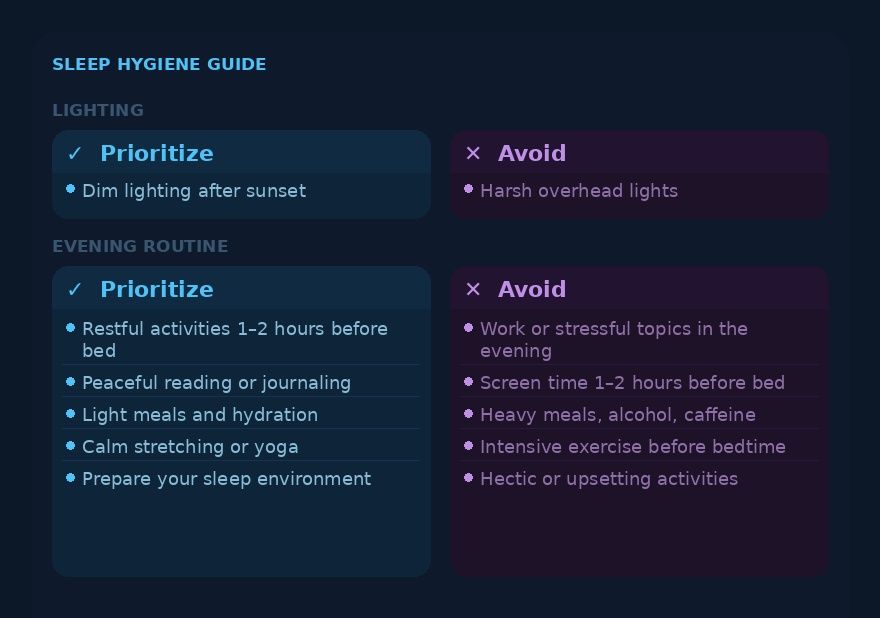
Reading, meditation and light stretching are just a few ideas of some calm activities to engage in before bed to get yourself ready for a great night of sleep. Reading is a great way to alleviate stress and improve your mental state, which can put you in perfect headspace before bed. By preparing your environment with mellow lighting, calm music and your sleep tracker of choice, you’re giving yourself the best chance for success.
Daily Habits for Accurate Tracking
Before bed, ensure that your sleep tracking device is charged. If you’re using a wearable device, it’s recommended to put it on around 30 minutes before falling asleep so the device has a chance to calibrate your baseline biometrics. Most folks prefer using sleep mode, airplane mode or do not disturb more, depending on their sleep tracker preference. Ensure that wearables are correctly placed and smartphones are in a logical place, ideally on the bedside table.
During sleep, keep your device on and try not to let the fact that you’re tracking your sleep affect your ability to sleep! Some people get caught up in the fact that they’re monitoring the way they sleep and subconsciously “strive for perfection” with their trackers. Remember that sleep tracking scores do not reflect anything about the user personally, and they are used to collect objective data. Try to forget that you have a sleep tracker operating for the most accurate picture of what your sleep really looks like. Be careful not to check the device during the night, as this can create anxiety around sleep scores.
After waking, you can stop your sleep tracker. Some people enjoy keeping a dream journal or a sleep journal to record even more data about their overnight experience. Here, you can log any notes, noteworthy dreams, feelings or unusual events that transpired overnight. Once you check your sleep data for the night, remember that one night in isolation is fairly insignificant in terms of your overall sleep tracking journey. What you want to look for is patterns that emerge in your data, showing you areas for improvement.
Maximizing Accuracy
There are some specific best practices related to each method of sleep tracking. Here are our top suggestions for keeping you on track with your sleep journey:
For Wearables:
- Clean sensors weekly (oil/dirt affects readings)
- Check for firmware updates
- Wear on non-dominant wrist (less movement)
- Ensure skin contact (not over clothing)
- Replace bands if worn out
For Apps:
- Keep phone plugged in (prevents battery death mid-night)
- Close other apps (reduces interference)
- Use airplane mode (reduces EMF, improves battery)
- Place on firm surface (not soft pillow)
For All Devices:
- Maintain consistent sleep schedule
- Track for at least 2 weeks (patterns emerge)
- Note external factors (alcohol, caffeine, stress, illness)
- Sync data regularly
Conclusion: Your Journey to Better Sleep Through Data
Sleep tracking, when used appropriately, can be a valuable tool to help you regularly get better sleep. By illuminating trends over time, sleep trackers can provide information on what’s missing from your sleep routine. For many, sleep trackers are a novel and enjoyable way to record data about their sleep habits, helping them improve their wellness over time. If you’re curious about sleep tracking, why not give it a shot? BetterSleep is here to help. Download BetterSleep and get started on your sleep tracking journey tonight!
Frequently Asked Questions About Sleep Tracking
Do sleep trackers really work?
Yes, but with some limitations. Sleep trackers can accurately provide objective data about certain sleep metrics, but are not as precise as medical grade sleep tests. They’re best at tracking patterns over time and helping users become aware of sleep habits that may otherwise go unnoticed. Sleep trackers can also help motivate people to take an interest in their sleep hygiene, therefore contributing to overall better sleep.
Are sleep trackers accurate?
Sleep trackers are moderately to highly accurate, but it depends on the device and the sleep metric that’s being measured. Modern consumer sleep trackers are designed to shed light on patterns and sleep habits, not to diagnose medical conditions, so they aren’t as accurate as medical polysomnography equipment. For clinical diagnosis, medical sleep labs are necessary.
Can sleep trackers detect sleep apnea?
While sleep trackers can flag potential sleep problems, such as sleep apnea, they are not diagnostic tools. Trackers can measure nighttime awakenings, snoring sounds and blood oxygen, but they are not as accurate as medical grade equipment and should not be used as a substitute for a doctor’s assessment. Tracker data may be used as evidence when speaking with a medical professional, but shouldn’t be relied on for a diagnosis.
Is sleep tracking bad for you?
Sleep tracking is not inherently good or bad; it provides objective data about your sleep. While many consider sleep tracking to be a helpful practice, it can become a source of anxiety for some, which causes more harm than good. Some people end up obsessing about sleep scores, feeling anxious because of “bad” sleep data or psyching themselves out before bed and getting a bad night’s sleep because of it. If you feel like you might be heading down this slippery slope, take a break from tracking. The goal of measuring sleep metrics is to give you information on how to improve your life, not to give you unrealistic standards to live up to.
What is the most accurate sleep tracker?
The best sleep tracker is the one you’ll actually use, according to sleep experts. Wearable devices score slightly higher than no-contact trackers in accuracy, especially with biometric data. But “most accurate” is not a one-size-fits-all description; the best tracker for you is the one that fits your comfort, price range, and preference for features. And of course, it’s the one you’ll reach for night after night!
How does sleep tracking work?
Sleep trackers use a variety of technologies, depending on the type of device. Sleep trackers can monitor movement using an accelerometer, heart rate using an optical sensor, breathing via sonar or radar, sound using the device’s microphone. Wearable devices make direct contact with the body in order to more accurately measure biometric data. Apps utilize phone or tablet sensors to detect movement, sound, and more. Then, algorithms analyze sleep data to give the user a complete picture and a sleep score. Users should compare patterns over time rather than pinpointing data from a specific night.
Can I track sleep without a wearable?
Yes, it’s possible to track sleep using a smartphone app or a bedside sleep tracker. There are also some under-mattress options available for those who prefer no-contact tracking. These sleep trackers can help you identify sleep patterns over time and give you some clues into how to help improve your sleep hygiene.
What is a good sleep score?
In general, anything above 80 is considered “good” as a sleep score. However, these numbers differ depending on the device, so your wearable sleep tracker may have different parameters from your sleep app. Really, how you feel matters more than any number, so you’ll want to try it out and see what feels best for you.
How long should I track my sleep?
It’s best to track your sleep habits for 2-4 weeks to be able to notice patterns. Since sleep varies night-to-night, you may not get accurate data after just a week. Additionally, single nights of sleep aren’t statistically relevant in isolation. Try tracking for a month to notice trends and see how you feel. After that, some people prefer to use their sleep trackers less frequently (for example, 1 week per month) to see how their habits change over time.
Can sleep tracking improve my sleep?
Sleep tracking can definitely have an impact on sleep health, but isn’t a cure-all for disrupted sleep. Since trackers excel at identifying trends over time, your sleep tracker can be a great tool in your sleep success arsenal! In isolation, sleep trackers won’t fix your sleep issues, but you can use them to identify areas for improvement and to record patterns in your sleep. Plus, they can be fun! Many people enjoy the challenge of trying to improve their sleep hygiene and checking with their tracker to see if there are any noticeable changes over time.