5 Benefits of Magnesium for Sleep
Medically reviewed by Patricia Weiser, PharmD and Jared Meacham, PhD, RD, CSCS
Is magnesium the answer to sleep woes? It won’t work for everyone, but the relaxing mineral might just be the thing you need to drift off to Dreamland (and stay there all night).
Good sleep doesn’t come easily for everyone. For some, it takes forever to drift off, and they spend a good chunk of their bedtime waiting for sleep. Others might wake up a bunch in the night, so their sleep is fragmented. It can be frustrating—and exhausting for sure.
Fortunately, there are quite a few options when it comes to practices and products that can improve sleep. Magnesium has become a go-to sleep supplement, but with so many different types and formulations, it can be tricky knowing which magnesium is best for sleep.
While science does support magnesium’s ability to improve sleep, it probably won’t be a magic bullet all by itself. Good sleep requires good sleep hygiene, including going to bed and waking up at the same time to keep your circadian rhythm consistent, limiting caffeine during the day, and winding down with a calming sleep meditation (there are tons to choose from on the BetterSleep app).
Considering giving magnesium a go? We’ll explore the benefits of magnesium for sleep, how it works in the body, and how to know if it’s a sleep aid you should try.
Does Magnesium Help You Sleep?
Yes, magnesium can help you sleep, but it’s not a sleep aid in the traditional sense. It’s a mineral with effects on the body that can help to promote better sleep. In other words, helping you sleep is not magnesium’s only job.
Magnesium is a mineral that we need for various aspects of health—about 600 biochemical reactions, to be exact, related to cognition, movement, metabolism, mental health, and much more. It’s also important for nerve and muscle function, which is part of how it works with sleep.
“Magnesium can be helpful for sleep and relaxation, and general muscle relaxation, as well,” says Chelsie Rohrscheib, Ph.D., a neuroscientist specializing in sleep medicine and sleep science and head of sleep research at Wesper.
“Relaxation” is the key word here—not sedation. Magnesium isn’t going to knock you out like other sleep aids can. But observational studies have found higher levels of the mineral are associated with longer sleep and fewer nighttime awakenings that disrupt sleep. It can also help you fall asleep faster, Rohrscheib says.
People whose magnesium levels are low may see more of a benefit when they take a magnesium supplement for sleep. But magnesium deficiency is common globally, according to a 2025 study published in Nutrients.
Magnesium can support better sleep, but it won’t fix every sleep problem—especially if it’s severe, like chronic insomnia or obstructive sleep apnea. Persistent sleep issues warrant a conversation with your physician to help determine the underlying causes and most appropriate treatment.
What Magnesium Actually Does
Magnesium works to improve sleep in a few different ways.
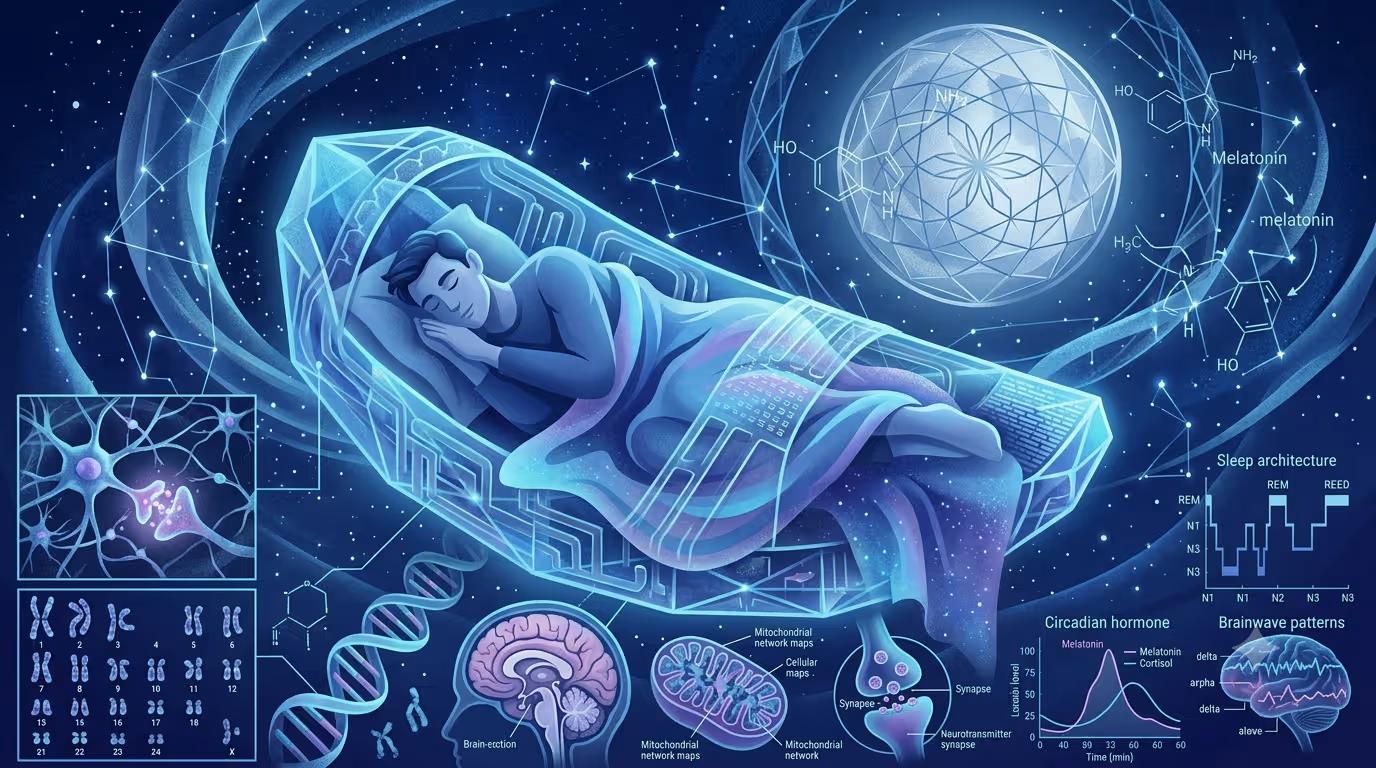
Enhances melatonin production
Magnesium helps to produce melatonin, the primary hormone responsible for regulating the circadian rhythm (AKA our daily sleep-wake cycle).
“When magnesium is absorbed, it promotes the creation of melatonin,” Rohrscheib says. “When melatonin levels are really high, that usually indicates that it's nighttime and it's time to sleep. So, it helps your brain and body prepare for sleep. When melatonin levels are really low during the daytime, that tells the brain and body that you need to be awake and energized. Magnesium helps to make sure that that melatonin is properly synthesized in your brain and maintained at high enough levels for sleep.”
Calms the nervous system and muscles
The brain’s main excitatory neurotransmitter—a type that stimulates movement and activity—is glutamate. One of the glutamate receptors in the brain is the N-methyl-D-aspartate (NMDA) receptor. Magnesium inhibits the activity of the NMDA receptor. The result is a quieting, relaxing effect on muscles and the nervous system, which helps you sleep. Magnesium also helps to lower body temperature and dilate blood vessels to further promote sleep.
Assists GABA production
Magnesium promotes the production of gamma-aminobutyric acid (GABA), the brain’s primary inhibitory neurotransmitter. These have the opposite effect of the excitatory ones, like glutamate. They make sure the central nervous system doesn’t overfire, which helps you move your muscles and limbs properly and calms the body down.
“GABA calms and relaxes the nervous system, which is essential for sleep,” Rohrscheib says. “GABA is at its highest during those hours when we're trying to fall asleep. When we are asleep, it inhibits the action of other neurotransmitters that are more excitatory, like glutamate.”
Regulates the stress response
Cortisol is the main stress hormone, and its production is stimulated by another hormone: adrenocorticotropic hormone (ACTH). By reducing the amount of ACTH that’s released, magnesium indirectly works to decrease cortisol levels.
Ideally, cortisol should be highest during the day to promote wakefulness and lowest at night to allow us to sleep. Cortisol and melatonin are thought to mutually interact, though with opposite purposes. When our stress skyrockets from work, kids, and a full calendar, our cortisol levels rise, too. And if cortisol remains high, it’s thought to impact melatonin production, resulting in poor sleep.
Magnesium can also inhibit the production of free radicals, which causes oxidative stress in the body, along with the release of even more stress hormones. But stress works on a loop with magnesium. As stress increases, more magnesium is excreted through the kidneys, which can lead to a deficiency.
Benefits of Magnesium for Sleep
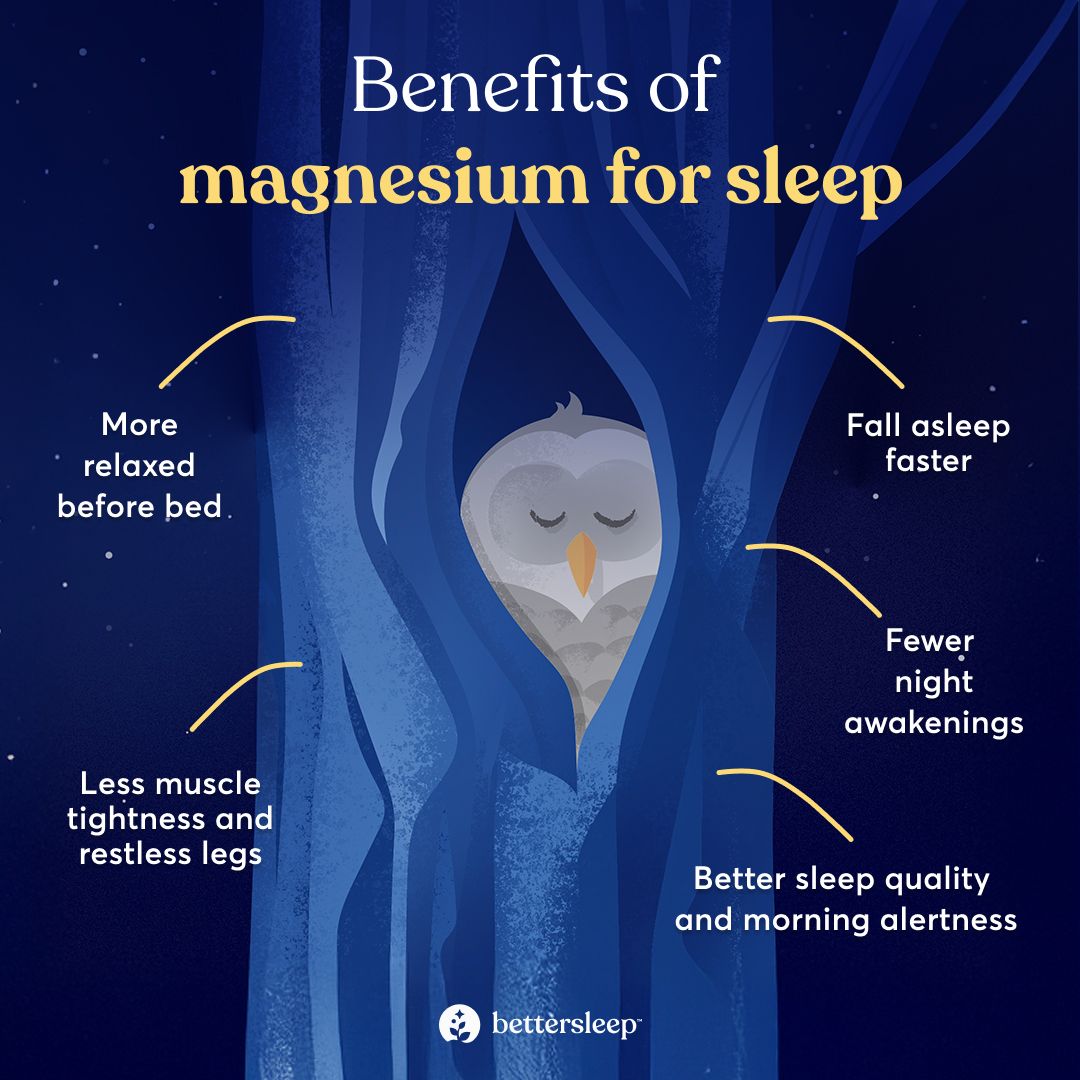
Magnesium’s effect likely won’t be dramatic. But what it can do is encourage better sleep. Here are some of the benefits of magnesium for sleep:
- More relaxation: Magnesium can improve that “wired” feeling before bed.
- Less muscle tightness: Magnesium can lead to fewer leg cramps, and may help improve symptoms of restless leg syndrome.
- Shorter time falling asleep: Magnesium can reduce sleep latency, or the time it takes to fall asleep.
- Fewer awakenings during the night: It can also increase the amount of deep, restorative slow-wave sleep.
- Better sleep quality: People report feeling more alert and well-rested in the morning when taking magnesium.
Which Magnesium Is Best for Sleep
There are several varieties of magnesium, but not every one is the same—and not every type is good for sleep.
Magnesium glycinate is widely considered to hold the top spot for sleep, and it’s Rohrscheib’s pick, too. It binds to glycine, which is an amino acid that can promote sleep.
“The type of magnesium that's best for sleep is magnesium glycinate,” Rohrscheib says. “The reason for this is because it gets absorbed faster and more readily by the gut. It also crosses into the blood brain barrier, where it can actually act upon all the systems.”
Magnesium glycinate also tends to be gentler on the GI system than other types, especially if you have a sensitive stomach.
Magnesium L-threonate is another good choice for sleep, though it may not be as widely available as glycinate. It also crosses the blood-brain barrier.
A third option for sleep is magnesium taurate. It’s bound to the amino acid taurine, which supports GABA production for a calming effect.
Magnesium citrate and magnesium oxide are also common varieties, but they’re not the best for sleep. Plus, they have more impact on the GI system (both are used as laxatives for constipation—probably not the best at bedtime).
Best Magnesium for Sleep: How to Choose a Product
The potency and quality of magnesium supplements are different from brand to brand, so it’s important to do some due diligence before buying one.
- Choose a brand that’s been evaluated and tested by a third-party for safety and purity. Look for the seals on the labels or on the company’s website from testing companies like NSF International or United States Pharmacopeia (USP).
- Make sure to read the labels carefully to determine the amount of elemental magnesium and ensure you’re choosing the right type of magnesium for sleep.
- Avoid mega-doses, as too much can cause GI or other side effects. Make sure you’re not inadvertently getting too much from other sources, like multivitamins or electrolyte products (which commonly contain magnesium).
- Steer clear of “proprietary blends,” which don’t disclose all of their ingredients. Also avoid other added ingredients, such as herbs or melatonin. You won’t be able to accurately assess whether the magnesium is working if it’s mixed with other things.
- Talk to your doctor before starting any supplements. This is especially important if you’re already taking other medications or supplements.
- Similarly, talk to your doctor about your sleep problems. You may need more evaluation for possible sleep disorders.
How Much Magnesium for Sleep
Start as low as you can at first, with either the smallest possible dosage or half of a larger one. More than the recommended amount of magnesium isn’t better.
“If you take really high doses, it can cause gastrointestinal issues, which can make your sleep a lot worse,” Rohrscheib says. “It can also cause an overly sedative effect, where you're getting too much, and that can mess with your sleep cycle. It can initially cause you to crash, but then cause sleep fragmentation later in the night.”
For most people, 300 to 400 milligrams for sleep should do the trick, though some eventually try up to 450 or 500 milligrams, Rohrscheib says. “Certainly I would not exceed that dose unless you are working with the doctor specifically,” she says.
If you’re using it for sleep and relaxation, “You should aim to take it at night, within one to two hours of going to bed,” Rohrscheib adds.
You might not notice a difference the first night. “Sometimes it can take a few days to a few weeks to see any effects,” Rohscheib says. “If you take it on night one and you don't feel like it's improved your sleep, that's OK. Stick with it.”
If you start having any side effects or if you notice your sleep changes very quickly and dramatically, it’s probably best to talk to your doctor.
When Magnesium Won’t Help
Magnesium is generally considered safe for most people, but that doesn’t mean it’s going to work for everyone.
“Magnesium is not a magic fix to chronic sleep issues,” Rohrscheib says. “If you’re somebody with a legitimate sleep disorder, like chronic insomnia or sleep apnea, taking a magnesium supplement is really not going to be that effective for you. Relying on a supplement is problematic in itself, because you probably need medical care.”
It cannot fix a sleep disorder, nor can it fix sleep problems caused by medications, mental health issues, or other health conditions. Without addressing and treating the root cause of the sleep problems, magnesium is little more than a Band-Aid.
Magnesium also won’t work if you also have “bad” sleep habits: caffeine or alcohol late in the day, screens too close to sleep, inconsistent bedtimes and wake-up times, a bedroom that’s too hot or bright.
Food Sources of Magnesium
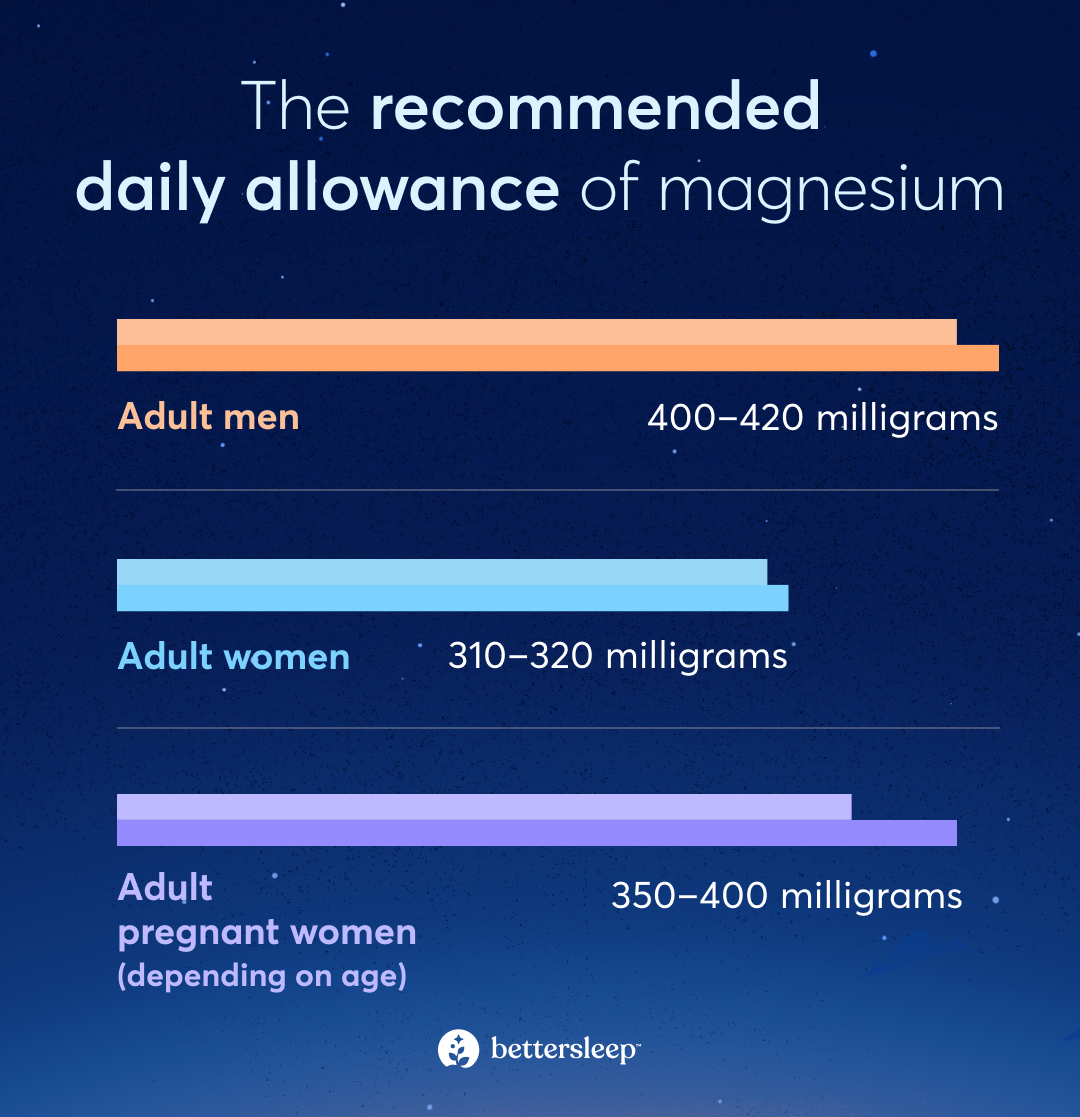
You might already be getting adequate magnesium through your diet. The Recommended Daily Allowance (RDA) of magnesium is 400–420 milligrams per day for adult men and 310–320 milligrams per day for adult women (and 350–400 milligrams for adult women, depending on age, during pregnancy).
Our magnesium needs change as we get older. Research has found older adults may need more, due to age-related decline in intestinal absorption of the mineral. Lower magnesium levels are associated with frailty and chronic inflammation.
Women are more at risk for bone and muscle loss and cardiovascular disease during menopause. Research has found magnesium during perimenopause is linked to improvements in bone and cardiovascular health, as well as vasomotor, mood, and sleep symptoms.
Magnesium is naturally present in some foods, including nuts and seeds (especially pumpkin and chia), leafy greens, yogurt, bananas, beans, lentils, whole grains, and dark chocolate.
Feeling a little peckish before bed? A small snack of magnesium-rich foods can satisfy your stomach and help you slumber. Try a small bowl of either instant plain oatmeal or plain yogurt topped with bananas and peanut butter or a sprinkling of nuts and seeds.
Food-based sources of magnesium also include other important nutrients necessary for good health: fiber, protein, healthy fats, and other vitamins and minerals.
If you eat a healthy, well-balanced diet that regularly includes these foods, you may not be technically deficient in magnesium, but you still might struggle with sleep. A magnesium supplement for sleep still could help (but the inverse is true, too. You could be magnesium-deficient but still sleep great every night).
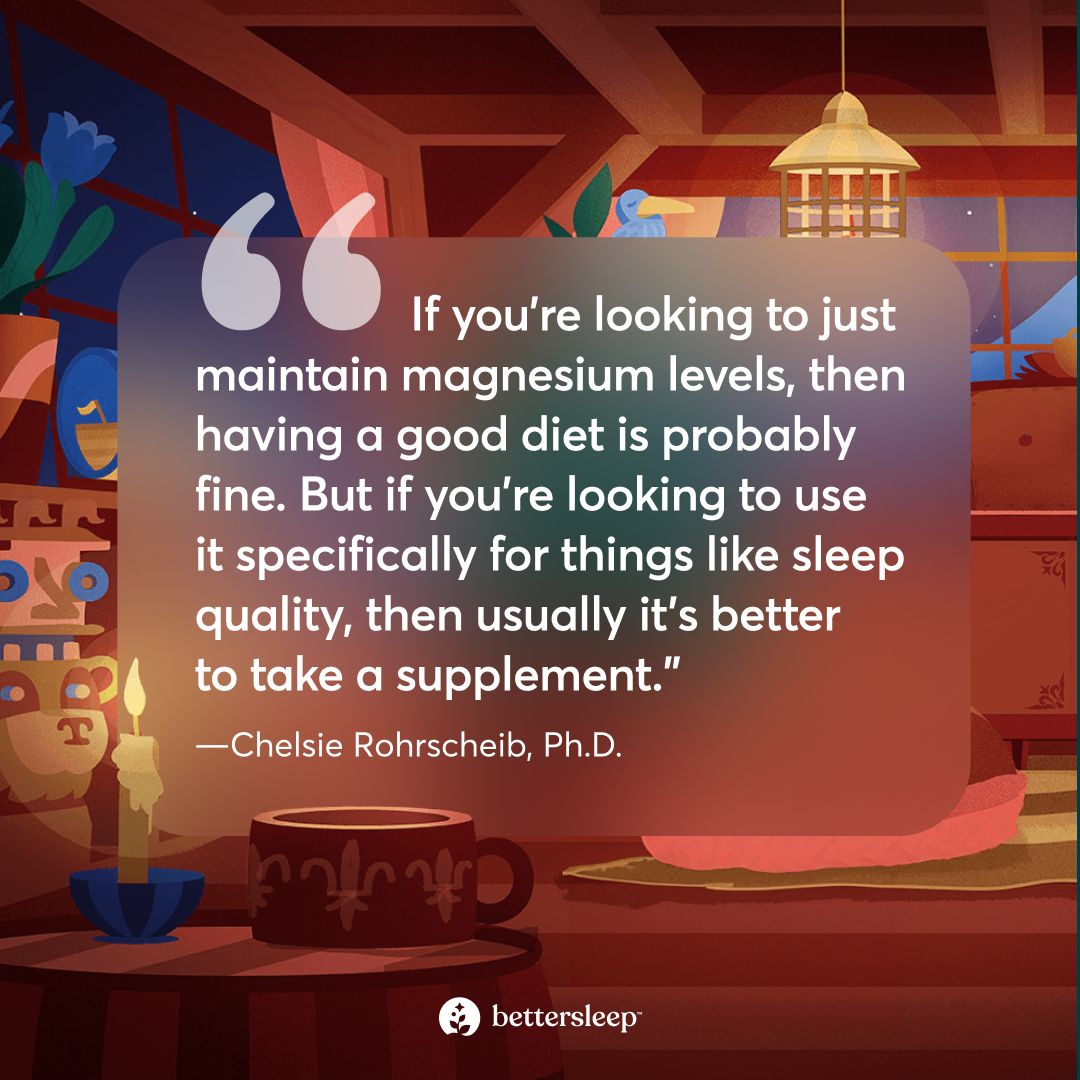
“Having magnesium in your diet and in your system is good, but it's not going to be as effective on sleep as taking a supplement before bed, where you're getting a bigger dose of it and it's getting absorbed more rapidly in your gut,” Rohrscheib says. “If you're looking to just maintain magnesium levels, then having a good diet is probably fine. But if you're looking to use it specifically for things like sleep quality, then usually it's better to take a supplement.”
Methods Beyond Magnesium That Improve Sleep Quality
Magnesium works best when it’s paired with other good sleep habits. Here are some ways to set yourself up for slumber.
- Use the BetterSleep app to help create a wind-down routine. Try breathing exercises, body scans, relaxing audio, or meditation to create calm.
- Wake up at the same time every day (even on the weekends—sorry) to keep your circadian rhythm steady.
- Keep your mornings bright and your evenings dim. This supports proper melatonin production. Turn off screens and go analog after dark.
- Make sure your bedroom is up to par. The room should be as cool, dark, and quiet as possible. The BetterSleep app has sleep (like white or pink noise) and nature sounds that can drown out outside noise.
- If stress keeps you awake at night, try journaling, setting aside specific worry time (well before sleep time), or making tomorrow’s to-do list to put your mind at ease before bed.
The Bottom Line
Magnesium is a naturally occurring mineral in food and a popular supplement for sleep. It works by promoting muscle and nerve relaxation and regulating important sleep-related hormones. Research has backed its effectiveness for sleep, but it won’t fix sleep issues caused by sleep disorders, medication, and underlying health conditions. Magnesium is considered to be generally safe for most people.
BetterSleep has tons of tools for your most restful, rejuvenating sleep night after night. Download the BetterSleep app for guided meditations and movement routines to help you unwind in the evening, plus soothing bedtime stories and sleep sounds that will have you nodding off in no time.
Key Takeaways
- Research has found that magnesium can promote better sleep.
- Magnesium can improve sleep by relaxing muscles and nerves, aiding melatonin and GABA production, and regulating cortisol.
- The possible benefits of magnesium for sleep are falling asleep faster, waking up less overnight, feeling more calm and relaxed, and getting more restorative sleep.
- Magnesium glycinate is recommended for sleep. Magnesium L-threonate and taurate may also help sleep. Other forms are not recommended for sleep.
Frequently Asked Questions (FAQs)
Which form of magnesium is best for sleep?
Magnesium glycinate is the most-recommended choice for sleep. Magnesium L-threonate and taurate may also improve sleep.
Is it good to take magnesium before bed every night?
If your physician has given you the OK to take magnesium and you don’t have a sleep disorder that needs other treatment, taking a modest dose every night is generally considered to be safe.
Can magnesium help with headaches?
Yes. Oral magnesium (especially magnesium oxide) is often recommended for people with migraine.
Is magnesium good for menopause?
Poor sleep is common during the menopause transition. Research has shown magnesium during perimenopause is associated with improved bone and cardiovascular health, as well as vasomotor, mood, and sleep symptoms. If sleep problems are caused by hormonal imbalances or another health issue, though, magnesium might not be effective.
What are the signs of lacking magnesium?
Early signs of magnesium deficiency are fatigue, nausea, vomiting, weakness, and loss of appetite.