Do Babies Need Complete Darkness to Sleep?
TL;DR
- Newborns don't require complete darkness but benefit from dim lighting during sleep
- Circadian rhythms develop around 3-4 months, making darkness more important
- Gradual transition from dim to darker environments supports natural development
- Night lights can be used safely if they emit minimal blue light
- Consistency in lighting patterns helps establish healthy sleep-wake cycles
Do Babies Need Complete Darkness to Sleep?
The relationship between lighting and infant sleep is more nuanced than many parents realize. While complete darkness isn't necessary for newborns, the lighting environment plays a crucial role in developing healthy sleep patterns. Research shows that infants' circadian rhythms don't fully develop until around 3-4 months of age, meaning their sleep patterns are initially independent of light-dark cycles.
How Do Circadian Rhythms Develop in Infants?
Early Development: During the first few months of life, babies' sleep patterns are primarily driven by hunger and comfort rather than circadian cues. Studies indicate that melatonin production doesn't begin until around 3 months of age. Light Sensitivity: As babies mature, they become increasingly sensitive to light exposure. Research demonstrates that exposure to bright light during evening hours can suppress melatonin production and delay sleep onset. Environmental Cues: Consistent lighting patterns help infants learn to distinguish between day and night. Clinical studies show that babies exposed to regular light-dark cycles develop more predictable sleep patterns earlier.
What Lighting Conditions Are Optimal for Different Ages?
Newborns (0-3 months):
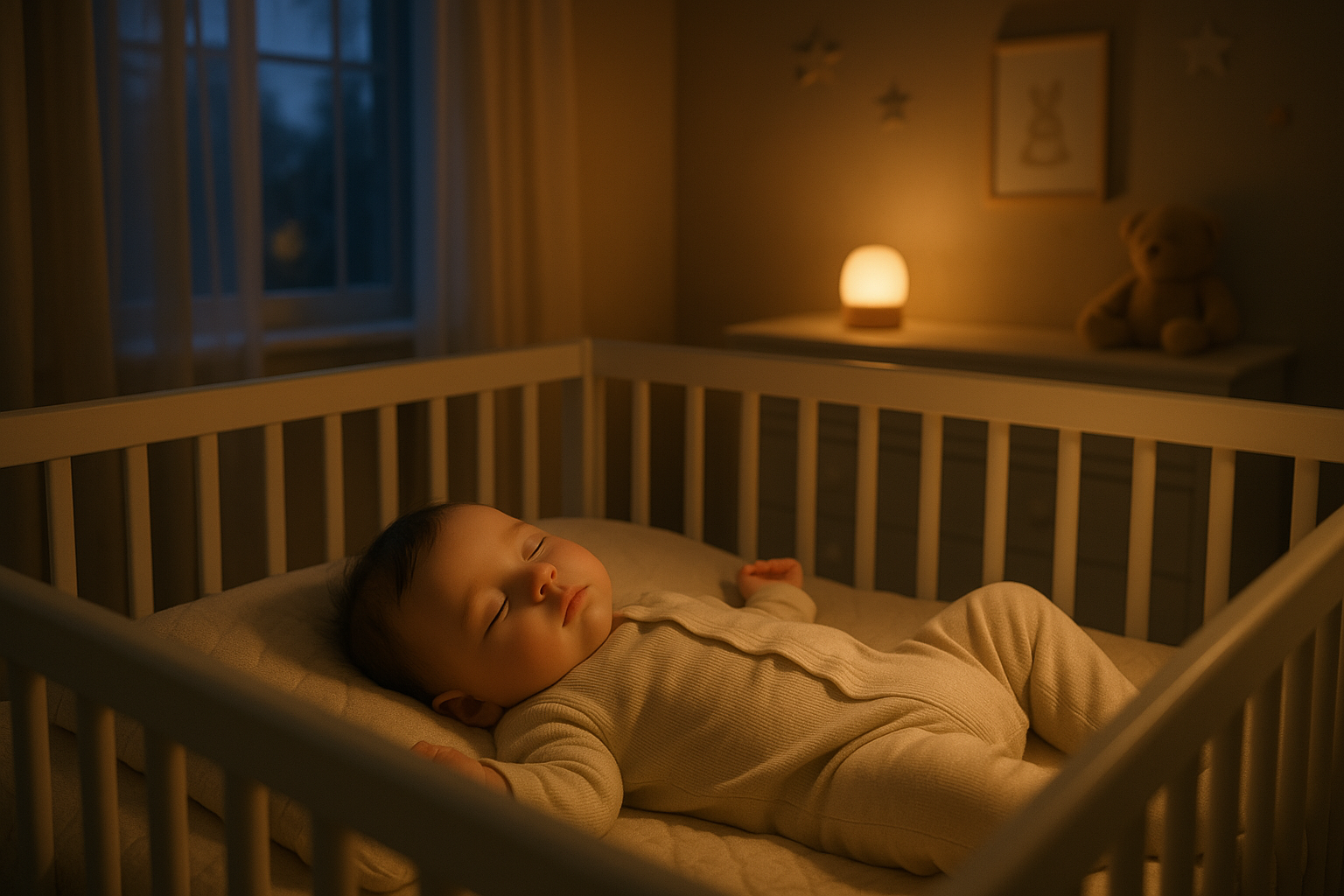
- Dim lighting is sufficient; complete darkness not necessary
- Room should be dark enough to distinguish from daytime
- Soft night lights can provide comfort without disrupting sleep
Infants (3-6 months):
- Darker environment becomes more important as circadian rhythms develop
- Minimize light exposure during night feedings
- Begin establishing consistent lighting routines
Older Infants (6+ months):
- Darker sleep environment supports established circadian rhythms
- Complete darkness not required but beneficial
- Consistent lighting schedule reinforces sleep-wake cycles
How Does Light Exposure Affect Sleep Quality?
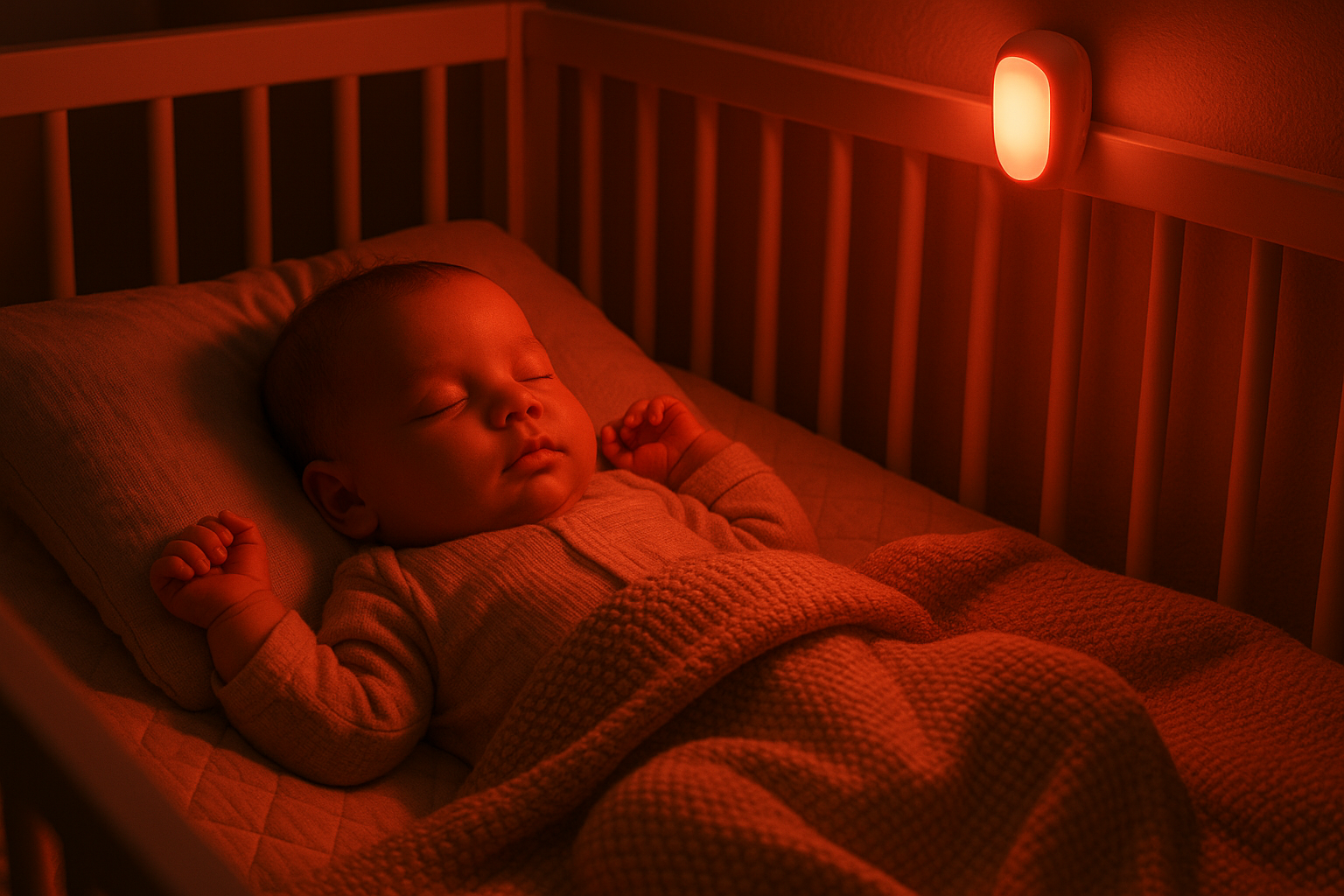
Blue Light Impact: Research shows that blue light exposure in the evening can significantly impact sleep quality by suppressing melatonin production. This is particularly relevant for older infants. Red Light Benefits: Red light has minimal impact on circadian rhythms. Studies suggest that red night lights can provide necessary visibility without disrupting sleep patterns. Natural Light Exposure: Daytime exposure to natural light helps strengthen circadian rhythms. Clinical evidence indicates that babies who receive adequate daytime light exposure sleep better at night.
| 0-6 weeks | Dim lighting acceptable | Not developed | 14-17 hours |
|---|---|---|---|
| 6-12 weeks | Gradual darkening | Beginning development | 14-16 hours |
| 3-6 months | Darker environment | Developing | 12-15 hours |
| 6-12 months | Dark with minimal light | Well-established | 12-14 hours |
| 12+ months | Consistent dark environment | Mature | 11-13 hours |
Conclusion
While babies don't require complete darkness to sleep, the lighting environment should evolve with their developmental needs. Newborns can sleep comfortably in dim lighting, but as circadian rhythms develop around 3-4 months, a darker environment becomes increasingly beneficial. The key is creating consistent lighting patterns that support natural sleep-wake cycle development while ensuring safety and comfort for both baby and caregivers.